
Kombucha has moved well past the health food aisle and onto the dinner table, and for good reason. Its natural effervescence, layered acidity, and wildly diverse flavor profiles make it one of the most exciting examples of culinary kombucha pairings available to home cooks today. But pairing it well takes more than grabbing a bottle and hoping for the best. The wrong match can flatten a dish or make your kombucha taste sharp and out of place. The right one? It can rival a well-chosen wine. Here is exactly what you need to know to get it right.
Table of Contents
- Key takeaways
- 1. Understanding the principles behind good kombucha food pairings
- 2. Kombucha pairings with savory dishes
- 3. Kombucha pairings with cheeses and appetizers
- 4. Kombucha pairings with desserts and sweet dishes
- 5. Comparing kombucha flavor combinations across dish types
- My honest take on experimenting with kombucha at the table
- Discover Aboocha’s pairings-ready kombucha lineup
- FAQ
Key takeaways
| Point | Details |
|---|---|
| Acidity is your friend | Kombucha’s natural acidity cuts through fat and spice, making it ideal for rich savory dishes. |
| Contrast beats harmony with cheese | Citrus or fruit-forward kombuchas often outperform matched flavors when paired with aged or fresh cheeses. |
| Sweetness calibration matters for desserts | Match or slightly exceed your dessert’s sweetness level to avoid a sour clash. |
| Carbonation cleanses the palate | Soft effervescence resets your taste buds between bites, especially with fatty or salty foods. |
| Flavor category guides your choice | Fruity, floral, herbal, and spiced kombuchas each have distinct pairing strengths across dish types. |
1. Understanding the principles behind good kombucha food pairings
Before you start pulling bottles from the fridge, it helps to know what you are actually working with. Kombucha brings four key variables to any pairing: acidity, carbonation, sweetness, and flavor character. Each one interacts differently with food.
Acidity works the same way lemon juice does on a piece of grilled fish. It lifts the dish, cuts through richness, and refreshes the palate. Carbonation kept soft provides structure and freshness without overwhelming the food. Think of it as the drink’s job to complement, not compete.
Sweetness is where most people go wrong. A dry, tart kombucha next to a dessert will taste sour and unpleasant. A fruity, lightly sweet kombucha next to a savory dish can taste cloying. Matching the sweetness level of your kombucha to the dish category is the single most useful habit you can develop.
Flavor character falls into four broad categories:
- Fruity: Mango, raspberry, peach, passionfruit. Bright, crowd-pleasing, versatile.
- Floral: Rose, jasmine, chrysanthemum, osmanthus. Delicate and elegant, best with light dishes.
- Herbal/spiced: Ginger, turmeric, lemongrass, mint. Bold and assertive, great with rich or spicy food.
- Earthy/complex: Original, black tea base, coffee. Grounding, works well with umami-heavy dishes.
Pro Tip: If your dish is bold and heavily seasoned, reach for an equally assertive kombucha like ginger or sour plum. Delicate dishes deserve delicate pairings. Matching intensity is the fastest shortcut to a great pairing.
2. Kombucha pairings with savory dishes
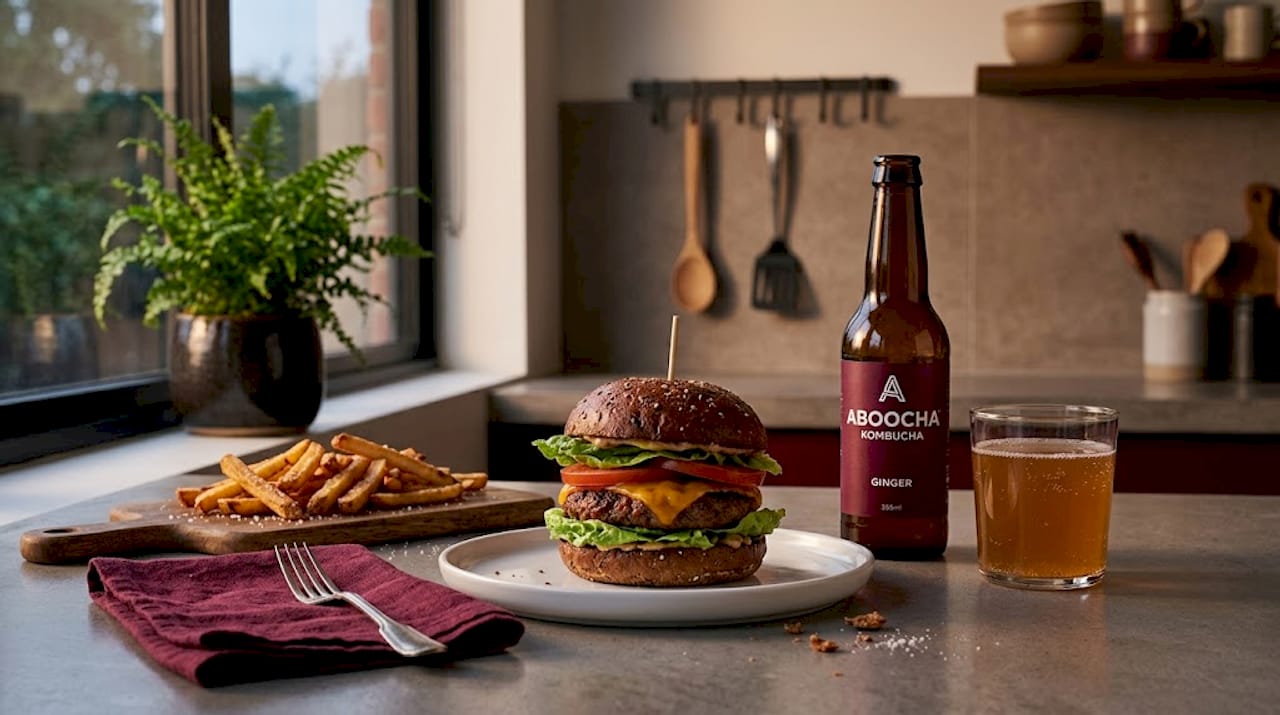
This is where examples of culinary kombucha pairings get genuinely exciting. Kombucha’s acidity and effervescence cut through fat in rich savory dishes, making it a natural partner for burgers, grilled meats, and anything with a heavy sauce.
Ginger-based kombucha is the go-to for spicy burgers. The heat of the burger amplifies the ginger’s warmth, and the carbonation scrubs the palate clean between bites. Fruity varieties like mango, raspberry, and peach pair beautifully with classic cheeseburgers, where their brightness contrasts the savory depth of the beef and cheese. Aboocha’s Sour Plum Kombucha is a standout here. Its tartness mirrors the role of a good pickle, cutting through the fat without overpowering the meat.
For seafood, the approach shifts. White-tea kombucha pairs with monkfish, while citrus-based kombuchas complement prawn and lime dishes beautifully. The logic is the same as pairing white wine with fish: you want something light enough to let the seafood’s natural sweetness come through. Check out Aboocha’s Blue Pea Flower and Lemongrass Kombucha for a floral, citrus-forward option that works wonderfully with grilled white fish or steamed shellfish.
Vegetarian dishes are often overlooked in kombucha pairing conversations, but they reward experimentation. Here are some specific savory kombucha food pairings worth trying:
- Ginger kombucha + spicy black bean burger: Heat amplifies heat in the best way, and the carbonation resets the palate.
- Mango kombucha + grilled chicken tacos: The fruity sweetness mirrors the char and balances the spice.
- Sour plum kombucha + BBQ ribs: Tartness cuts through the sticky, sweet sauce without clashing.
- Lemongrass kombucha + Thai green curry: Herbal notes echo the dish’s aromatics.
- Passionfruit kombucha + fish tacos with slaw: Tropical brightness lifts the citrus in the slaw.
- Original kombucha + mushroom risotto: Earthy base notes complement the umami without competing.
- Turmeric kombucha + roasted cauliflower: Warm spice echoes the caramelized edges of the vegetable.
Beyond flavor, probiotics and antioxidants in kombucha support gut wellness after indulgent meals, which makes these pairings as functional as they are delicious.
3. Kombucha pairings with cheeses and appetizers
Cheese is where kombucha pairing gets genuinely nuanced, and where contrast almost always wins over harmony. Citrus kombucha cuts richness in fresh goat cheese, while fruit-forward or spiced kombucha pairs well with salty aged cheeses. The contrast principle creates a dynamic tasting experience that harmony pairings rarely achieve.
Effervescence acts as a palate cleanser between bites, which is why kombucha works so well on a cheese board. Each sip resets your palate, letting you taste the next cheese with full clarity. Here is a comparison table to guide your selections:
| Cheese type | Recommended kombucha profile | Why it works |
|---|---|---|
| Chèvre (fresh goat cheese) | Citrus or floral (e.g., lemon, rose) | Acidity cuts the creaminess; floral notes echo the cheese’s tang |
| Brie or Camembert | Fruity (e.g., peach, mango) | Sweetness balances the rich, buttery rind |
| Comté (aged) | Spiced or honeyed (e.g., ginger, chrysanthemum) | Warm notes complement the nutty, caramelized depth |
| Parmigiano-Reggiano | Fruit-forward or sour (e.g., sour plum, raspberry) | Tartness cuts the saltiness and amplifies savory umami |
| Blue cheese | Herbal or earthy (e.g., original, lemongrass) | Earthiness mirrors the funk without amplifying sharpness |
Aboocha’s Snow Chrysanthemum Kombucha is a particularly strong choice for aged cheeses. Its subtle floral sweetness and goji berry notes play beautifully against the crystalline, nutty depth of a well-aged Comté or Parmigiano.
Pro Tip: If you are hosting a kombucha and cheese tasting, pour small amounts and serve them at room temperature. Cold kombucha can mute its own flavor, and cold cheese mutes its own complexity. Let both breathe for ten minutes before you start.
4. Kombucha pairings with desserts and sweet dishes
Dessert pairings require the most discipline of any kombucha food pairing category. The core rule is simple: match or slightly exceed dessert sweetness in your kombucha. A kombucha that is drier than the dessert will taste aggressively sour by comparison, no matter how good it is on its own.
The second rule is to echo a specific flavor note from the dessert rather than introduce new complexity. A chocolate tart paired with a raspberry kombucha works because raspberry and chocolate are a known, trusted combination. Introducing a ginger kombucha alongside the same tart creates a clash that neither the dessert nor the drink deserves.
Here are the dessert pairing do’s and don’ts worth committing to memory:
Do:
- Pair fruit-forward kombucha with fruit tarts, berry pies, and citrus cakes.
- Use floral kombucha (rose, jasmine, lychee) with light desserts like panna cotta or shortbread.
- Try a lightly sweet original kombucha with dark chocolate to let the bitterness shine.
- Match tropical kombucha with coconut-based desserts for a seamless flavor echo.
Don’t:
- Pair a dry, unflavored kombucha with anything heavily sweetened. The sourness will dominate.
- Use a spiced kombucha (ginger, turmeric) with delicate desserts like vanilla custard. The spice will overwhelm.
- Serve kombucha ice cold with dessert. A slightly warmer temperature lets the sweetness come forward.
- Overthink it. If the kombucha flavor appears in the dessert, it will almost certainly work.
Aboocha’s Sakura Lychee Rose Kombucha is a natural with floral desserts, particularly anything with rose water, almond, or stone fruit. Its lychee sweetness and soft rose character make it feel like it was designed for a French patisserie.
5. Comparing kombucha flavor combinations across dish types
Not every kombucha is equally versatile, and knowing the strengths and limits of each flavor category saves you from a lot of trial and error. Here is a practical overview of how major kombucha flavor profiles perform across different dish types:
| Kombucha flavor category | Best with | Avoid pairing with |
|---|---|---|
| Fruity (mango, peach, raspberry) | Burgers, grilled chicken, fruit desserts, soft cheeses | Delicate white fish, subtle vegetable dishes |
| Floral (rose, jasmine, chrysanthemum) | Seafood, light appetizers, floral desserts, fresh cheeses | Heavily spiced or smoky dishes |
| Herbal/spiced (ginger, lemongrass, turmeric) | Spicy dishes, BBQ, aged cheeses, curries | Delicate desserts, mild fish |
| Earthy/complex (original, black tea, coffee) | Mushroom dishes, umami-rich foods, dark chocolate | Sweet desserts, delicate salads |
| Sour/tart (sour plum, citrus) | Fatty meats, salty cheeses, fried foods | Dry or tart desserts |
One category that home cooks consistently underuse is the earthy and complex group. Aboocha’s Coffee Kombucha paired with a mushroom and truffle pasta is a combination that feels genuinely restaurant-worthy. The roasted bitterness of the coffee base amplifies the umami of the mushrooms in the same way a dark beer would, but with the added brightness of kombucha’s natural acidity. Sommelier-quality kombuchas are designed as calm conversation partners in fine dining, and the earthy category is where that philosophy shows most clearly.
For multi-course meals, the practical approach is to start light and build intensity. Open with a floral or citrus kombucha alongside appetizers, move to a fruity or herbal variety with the main course, and finish with something sweet and fruit-forward alongside dessert. You can find a detailed guide on how to pair kombucha with food across every meal type to help you plan a full menu.
My honest take on experimenting with kombucha at the table
I’ll be direct: I came to kombucha pairings as a skeptic. My first few attempts were underwhelming because I treated kombucha like sparkling water. I picked whatever was in the fridge and called it a pairing. The results were predictably forgettable.
What changed my thinking was applying the same logic I use for wine and food pairing. The moment I started thinking about kombucha as a structured beverage with its own acidity, weight, and flavor arc, the pairings started clicking. A sour plum kombucha next to fatty pork belly was the first pairing that genuinely surprised me. The tartness did exactly what a good Burgundy does: it made the fat taste cleaner and the meat taste more of itself.
What I have learned is that the best culinary uses for kombucha are the ones where the drink earns its place at the table rather than just occupying a glass. That means thinking about what the dish actually needs. Does it need brightness? Acidity? A floral lift? Once you answer that question, the right kombucha becomes obvious. The experimentation is the fun part. Not every pairing will work, and that is fine. The ones that do will genuinely change how you think about both the food and the drink.
— Luna
Discover Aboocha’s pairings-ready kombucha lineup
If you are ready to start experimenting, having the right bottles on hand makes all the difference. Aboocha’s flavor lineup was built for exactly this kind of culinary exploration, with lower sugar content and botanical blends that hold their own at the table without overwhelming the food.
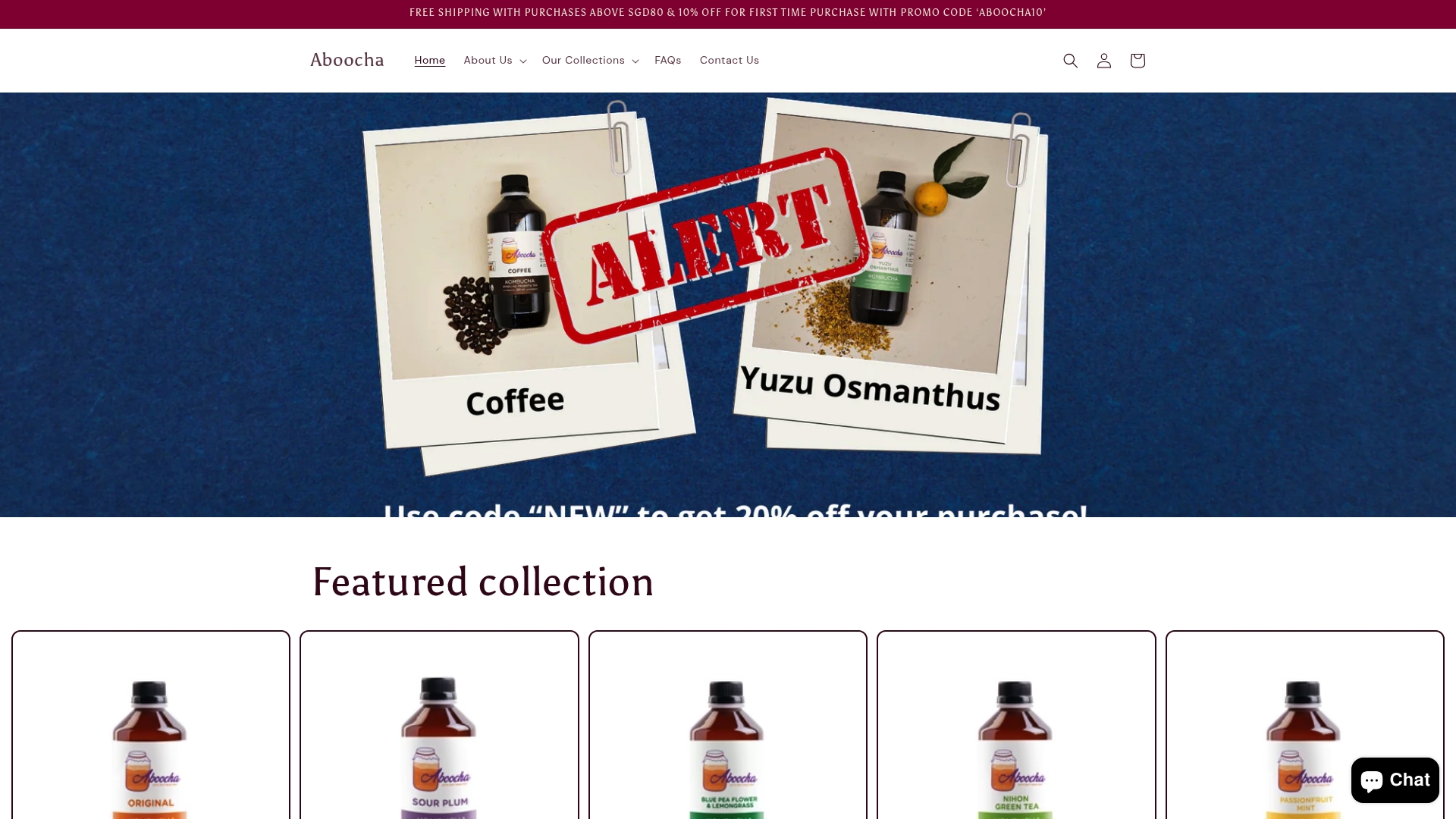
Aboocha’s Original Kombucha is the most versatile starting point, working across savory dishes, cheese boards, and even dark chocolate desserts. The Passionfruit Mint Kombucha is a standout for grilled meats and summer dishes, while the Snow Chrysanthemum Kombucha brings a floral elegance that elevates cheese pairings and light appetizers. Each bottle is crafted with the kind of flavor clarity that makes pairing decisions feel intuitive rather than guesswork. Explore the full Aboocha range at aboocha.com and find your next favorite match.
FAQ
What are the best dishes with kombucha for beginners?
Start with burgers or grilled chicken paired with a fruity kombucha like mango or peach. These pairings are forgiving, crowd-pleasing, and immediately show how kombucha’s acidity complements savory food.
How do you pair kombucha with meals across multiple courses?
Begin with a floral or citrus kombucha for appetizers, move to a fruity or herbal variety with the main course, and finish with a lightly sweet kombucha alongside dessert. Building from light to bold intensity mirrors how wine pairings work across a full menu.
Can kombucha replace wine in food pairings?
Yes, and non-alcoholic pairings require the same care as a wine list to deliver a complete dining experience. Kombucha’s acidity, carbonation, and flavor complexity make it a genuine alternative rather than a compromise.
Which kombucha flavor combinations work best with cheese?
Citrus or floral kombuchas work best with fresh, soft cheeses like chèvre, while fruit-forward or spiced varieties pair better with aged cheeses like Comté or Parmigiano. Contrast almost always outperforms matching flavors in cheese pairings.
What kombucha should I avoid pairing with desserts?
Avoid dry, unflavored, or heavily spiced kombuchas with sweet desserts. A kombucha that is less sweet than the dessert will taste aggressively sour. Always match or slightly exceed the dessert’s sweetness level for the best result.