
Acidity is defined as the primary force that prevents sweet drinks from tasting flat, heavy, or syrupy. Understanding how acidity balances sweetness in drinks is the foundation of professional beverage formulation, from cocktail bars to kombucha breweries. Acids stimulate sour receptors and trigger salivation, which suppresses sweetness perception and creates a refreshing, bright mouthfeel. The result is a drink that tastes alive rather than one-dimensional. Beverage scientists and mixologists call this interaction “flavor balance,” and it governs everything from the pH of a well-made cocktail to the tartness of a fermented drink like Aboocha’s Yuzu Osmanthus kombucha.
How acidity balances sweetness in drinks: the science
Acidity works on sweetness through two distinct sensory mechanisms. First, acid stimulates sour receptors and the trigeminal nerve, which directly suppresses the brain’s perception of sweetness. Second, acid increases salivation, which dilutes sugar molecules on the tongue and creates a clean, refreshing mouthfeel that counters the heaviness of high-sugar drinks.
The timing of acid addition also matters more than most people realize. Adding acid late in the preparation process preserves volatile aromatic compounds. Those aromatics are what give a drink its “lift,” the bright, almost effervescent quality you notice on the first sip of a well-made lemonade or a citrus-forward cocktail. Add the acid too early and heat or prolonged mixing drives off those aromatics, leaving a flat sourness with no brightness.
Salivation is an underrated factor in drink acidity sweetness balance. When your mouth produces more saliva, it physically rinses away residual sugar, making the next sip feel fresher. This is why a glass of fermented drinks with natural organic acids feels more drinkable than a comparably sweet soda.
Key sensory effects of acidity on sweetness:
- Sour receptor activation suppresses sweetness signals before they reach full intensity
- Trigeminal nerve stimulation adds a physical brightness sensation beyond taste alone
- Increased salivation rinses sugar from taste receptors between sips
- Volatile aromatic preservation (when acid is added late) lifts the overall flavor profile
Pro Tip: Add citrus juice or an acid solution as the final ingredient before serving. This single step preserves aromatic brightness and gives your drink a noticeably fresher, more vibrant flavor.
What ratios do mixologists use to balance acidity and sweetness?
The most widely used framework in cocktail formulation is the 2:1:1 golden ratio: 2 parts spirit, 1 part sweetener, and 1 part sour. This ratio creates a structural equilibrium where no single element dominates. The spirit provides the backbone, the sweetener softens the alcohol burn, and the acid cuts through both to deliver brightness.
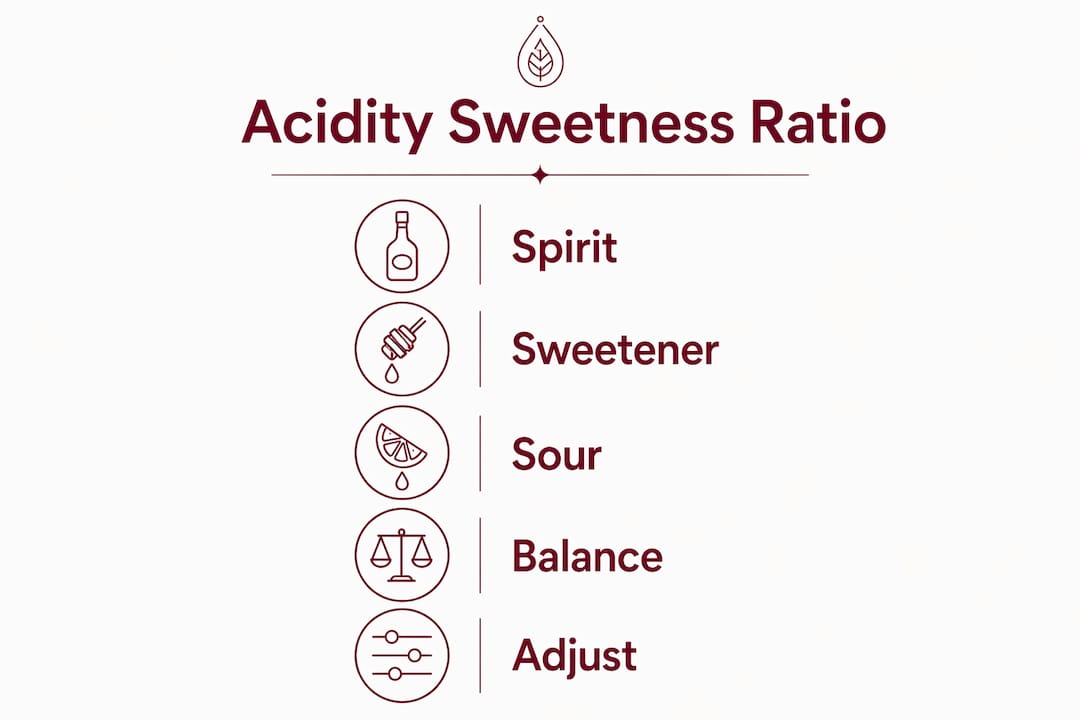
The ratio is a starting point, not a fixed rule. High-proof or assertive spirits require adjustment. A standard 2:1:1 build with a 100-proof rye whiskey will taste harsh because the spirit’s intensity overwhelms the sweetener and acid. Scaling down to 2:0.75:0.75 restores equilibrium by reducing the total sweetness and acidity, letting the spirit’s character show without burning.
Here is a practical framework for applying ratio adjustments:
- Start with 2:1:1. Use this as your baseline for standard 80-proof spirits. It works for most classic sours, daiquiris, and margaritas.
- Test and taste. After mixing, identify whether the drink tastes too sweet, too sharp, or too boozy. Each problem points to a specific adjustment.
- Scale down for high-proof spirits. Move to 2:0.75:0.75 when using spirits above 90 proof to prevent the sweetener and acid from clashing with the spirit’s intensity.
- Use acid solutions for precision. A citric acid solution (typically 10% citric acid dissolved in water) lets you add acidity dropwise without adding volume or diluting texture.
- Adjust sweetener type last. Honey syrup, agave, and simple syrup each have different viscosities and sweetness intensities. Swap the sweetener type only after you have the ratio right.
Pro Tip: When a cocktail tastes too sweet but you want to avoid dilution, use a citric acid solution added dropwise rather than squeezing more citrus. You get precise control without changing the drink’s texture or volume.
Sweetness plays a structural role that goes beyond flavor. Sweetness anchors body and intensity, preventing acidity or alcohol from dominating the palate. Remove too much sweetener and the drink tastes thin and harsh. Add too much and it becomes cloying. The balance between sweetness and acidity is what gives a well-made drink its sense of completeness.

What types of acids appear in beverages and how do they differ?
Not all acids taste the same, and the type of acid in a drink shapes the entire sweetness vs acidity experience. The three most common acids in beverages are citric, malic, and ascorbic acid. Each has a distinct flavor profile and a different effect on perceived sweetness.
| Acid | Primary sources | Flavor character | Effect on sweetness |
|---|---|---|---|
| Citric acid | Lemon, lime, orange | Sharp, bright, quick | Fast suppression, clean finish |
| Malic acid | Apple, grape, pear | Soft, lingering, smooth | Gradual suppression, longer tail |
| Ascorbic acid | Berries, kiwi, fortified drinks | Mild, slightly tart | Subtle suppression, antioxidant benefit |
Citric acid delivers a sharp front punch that dissipates quickly. This is why lemon and lime juice feel bright but not overwhelming in a well-made cocktail. Malic acid, found in apples and grapes, produces a softer sourness that lingers on the palate. Drinks built on malic acid feel rounder and more complex. Ascorbic acid, better known as vitamin C, adds mild tartness and serves a preservation role in many bottled beverages.
The practical implication is that swapping acid types changes the entire character of a drink. A cocktail built with lemon juice (citric) will taste sharper and more immediate than the same recipe built with verjuice (malic). Understanding organic acids in fermented drinks like kombucha reveals a similar principle: the mix of acetic, lactic, and gluconic acids produced during fermentation creates a layered sourness that no single acid can replicate.
How does acidity work across cocktails, coffee, fermented drinks, and soft drinks?
The importance of acidity in beverages shows up differently depending on the drink category, but the core principle stays the same: acid prevents sweetness from becoming cloying and gives the drink a sense of freshness.
- Cocktails: Acidity lifts the spirit’s aromatic profile and rounds the sweetness of syrups. A daiquiri without enough lime juice tastes flat and boozy. The citrus pH target of 3.0–3.5 in a balanced cocktail creates brightness without harshness.
- Coffee: Natural acids in light-roasted coffee enhance fruitiness and brightness. A well-extracted Ethiopian pour-over has a malic and citric acid profile that makes the coffee taste almost like fruit juice. Over-extraction destroys those acids and leaves bitterness behind.
- Fermented drinks: In kombucha and other fermented beverages, acidity increases drinkability and perceived freshness. The organic acids produced during fermentation suppress residual sweetness and create a clean, effervescent finish. Aboocha’s Sour Plum kombucha is a direct example: the natural tartness of plum combined with fermentation acids creates a drink that feels refreshing rather than sweet.
- Soft drinks: Acid regulators in soft drinks maintain flavor sharpness over the product’s shelf life and prevent the drink from tasting heavy as sugars concentrate during storage. Phosphoric acid in cola and citric acid in lemon-lime sodas both serve this function.
The common thread across all four categories is that acidity defines the edges of a drink’s flavor. Without it, sweetness spreads out and fills the entire palate, leaving no contrast and no interest.
Common mistakes when balancing acidity and sweetness
The most frequent error is treating sweetness as just a flavor rather than a structural element. When a drink tastes too sharp, the instinct is to add more sweetener. But adding sweetener without adjusting acid creates a drink that is both sweet and sour rather than balanced. The fix is to reduce acid first, then reassess.
- Over-acidifying produces a harsh, mouth-puckering drink that no amount of sweetener fully corrects. Start with less acid than you think you need and build up.
- Under-acidifying leaves a drink tasting flat and syrupy. If a cocktail or juice blend feels heavy, a few drops of citric acid solution will sharpen it immediately.
- Ignoring temperature: Balance shifts as a drink warms. A cocktail that tastes perfect ice-cold may taste too sweet at room temperature because cold suppresses sweetness perception. The Golden Ratio serves as a flexible map that accounts for these shifts.
- Skipping salt: A small pinch of salt binds to bitter receptors and makes both sweetness and acidity appear more vibrant. Salt enhances perceived harmony without increasing the quantity of either sweet or sour elements.
Pro Tip: When a drink tastes bitter rather than sour, add a tiny pinch of salt before reaching for more acid or sweetener. Salt resolves bitterness and often reveals that the acidity and sweetness were already in the right proportion.
The best approach to how to balance sweet drinks is to adjust one variable at a time. Change the acid, taste, then change the sweetener if needed. Changing both simultaneously makes it impossible to know which adjustment worked.
Key Takeaways
Acidity balances sweetness in drinks by suppressing sweetness perception, increasing salivation, and preserving aromatic brightness, with the 2:1:1 ratio serving as the professional baseline for achieving this balance.
| Point | Details |
|---|---|
| Acidity suppresses sweetness | Acid stimulates sour receptors and increases salivation, reducing how intensely you perceive sugar. |
| The 2:1:1 ratio is the baseline | Two parts spirit, one part sweetener, one part sour creates structural equilibrium in most drinks. |
| Acid type changes flavor character | Citric acid is sharp and quick; malic acid is soft and lingering; ascorbic acid is mild with antioxidant benefits. |
| Sweetness is structural, not decorative | Sweetener softens alcohol burn and rounds acidity; removing too much makes drinks thin and harsh. |
| Salt resolves bitterness | A small pinch of salt enhances the apparent harmony of acid and sweetness without adding more of either. |
Acidity is the most underrated tool in beverage formulation
Most people think about sweetness first when they taste a drink. They reach for more sugar when something tastes off, or they dilute it when it tastes too heavy. Acidity rarely gets the credit it deserves.
After years of tasting and analyzing beverages, I am convinced that acidity is the soul of a drink’s freshness. It is not just sourness. It is the element that defines where a flavor starts and where it ends. Without it, sweetness spreads across the entire palate and leaves nothing interesting behind. With it, every sip has a beginning, a middle, and a clean finish.
The 2:1:1 ratio changed how I think about drink formulation. It is not a recipe. It is a map. Once you understand why it works, you can move away from it deliberately, adding more acid for brightness or more sweetness for richness, and always know how to return to balance. That confidence is what separates a drink that tastes good from one that tastes complete.
What I find most interesting is how fermented beverages like Aboocha’s kombucha demonstrate this principle naturally. The fermentation process produces a blend of organic acids that no formula can fully replicate. The result is a drink where acidity and sweetness coexist without either one dominating. That is the standard every beverage should aim for.
— Luna
Aboocha’s approach to acidity and sweetness in every bottle
Aboocha builds each kombucha flavor around the principle that acidity and sweetness must work together, not compete. The result is a lineup where lower sugar content never means a flat or thin taste. Instead, natural fermentation acids create the brightness that keeps each sip refreshing.
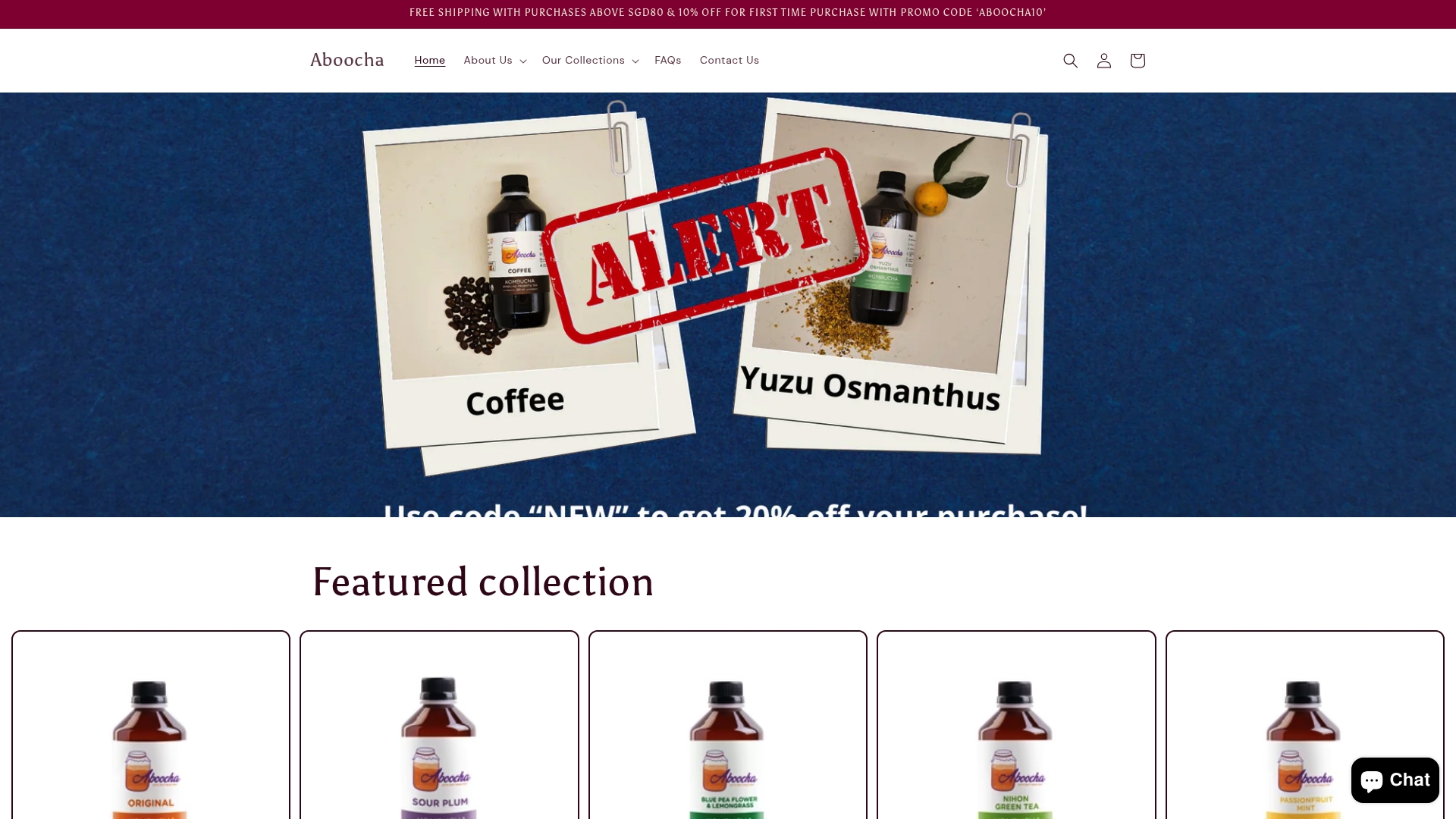
Flavors like Sour Plum and Yuzu Osmanthus show exactly how acidity enhances flavor without overwhelming sweetness. The tartness lifts the fruit notes and prevents the drink from tasting heavy, which is the same principle professional mixologists apply with the 2:1:1 ratio. If you want to taste what well-balanced kombucha bundles look like in practice, Aboocha’s curated selections are a direct way to experience the science covered here. Each bundle gives you a range of flavor profiles so you can taste how different acid and sweetness combinations change the character of a drink.
FAQ
What does acidity do to sweetness in a drink?
Acidity stimulates sour receptors and increases salivation, which suppresses sweetness perception and creates a cleaner, brighter finish. Without enough acidity, sweet drinks taste flat and heavy.
What is the best ratio of acid to sweetness in cocktails?
The 2:1:1 ratio (2 parts spirit, 1 part sweetener, 1 part sour) is the professional baseline for balanced cocktails. High-proof spirits require scaling down to 2:0.75:0.75 to maintain equilibrium.
Which acid is best for balancing sweetness in drinks?
Citric acid delivers the sharpest, quickest brightness and works best in citrus-forward drinks. Malic acid produces a softer, longer-lasting sourness suited to apple or grape-based beverages.
Why does salt improve the acidity and sweetness balance?
Salt binds to bitter taste receptors, reducing bitterness and making both sweetness and acidity appear more vivid and harmonious without increasing the quantity of either element.
How does acidity in fermented drinks differ from acidity in cocktails?
Fermented drinks like kombucha produce a blend of organic acids (acetic, lactic, gluconic) during fermentation, creating layered sourness. Cocktails rely on a single added acid, typically citric from citrus juice, for a more direct and immediate effect.