
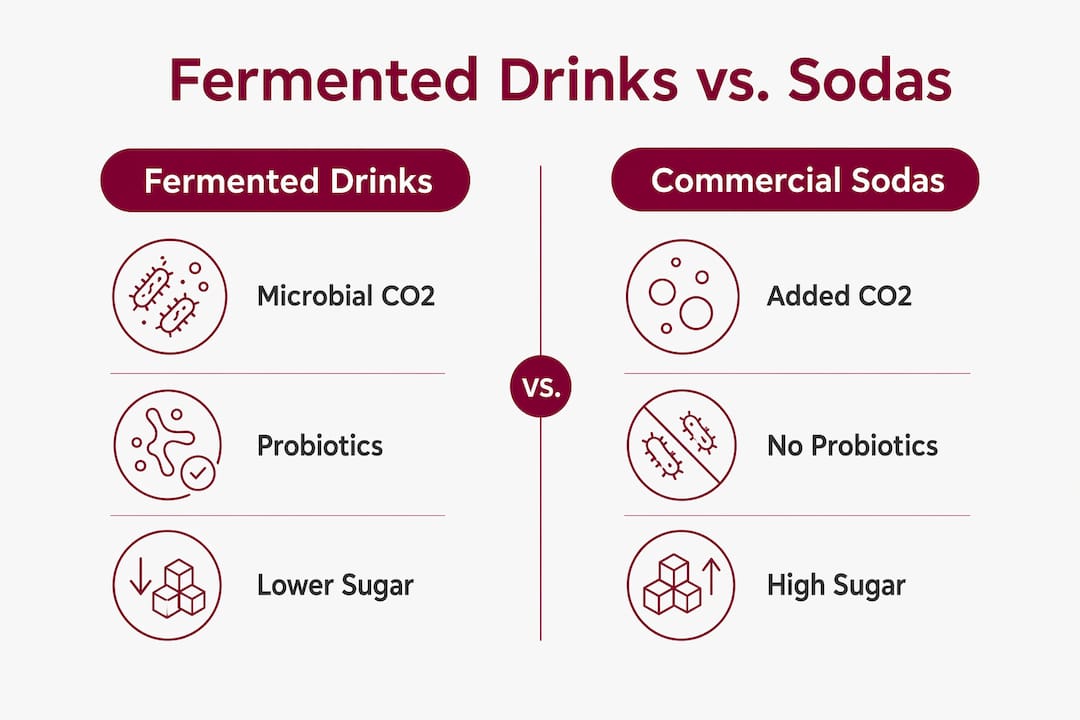
Fermented drinks are defined as beverages produced through microbial activity, where live bacteria and yeasts convert sugars into organic acids, carbon dioxide, and flavor compounds. This process is the core reason how fermented drinks differ from sodas, which rely on injected CO2 and manufactured sweeteners rather than any biological transformation. Kombucha, kefir, and fermented sodas each carry probiotics, bioactive compounds, and a complexity of flavor that commercial soft drinks simply cannot replicate. If you are weighing healthier alternatives to soda, understanding what actually happens inside the bottle is the most useful place to start.
How fermented drinks differ from sodas in carbonation and flavor
The carbonation in fermented drinks is a byproduct of microbial metabolism, not a manufacturing step. When lactic acid bacteria (LAB) or a SCOBY (symbiotic culture of bacteria and yeast) consume sugars, they release CO2 as a natural waste product. That gas, trapped in a sealed bottle, creates the fizz you feel. The result is a softer, more variable carbonation than what you get from a soda can.
Fermented sodas use LAB, which produce lactic acid and generate a milder, less vinegary tang. Kombucha, by contrast, uses a SCOBY that produces acetic acid, giving it a sharper, more complex bite. Kombucha also contains caffeine because it is brewed from tea, while LAB-fermented sodas are caffeine-free. This distinction matters for consumers who are sensitive to stimulants or who want a specific flavor profile.

The flavor in fermented beverages comes from a layered ecosystem. Lactic acid bacteria and yeasts produce a range of metabolites, including organic acids, esters, and alcohols, that create depth, dryness, and a finish that evolves on the palate. Sodas are engineered for a single, consistent hit of sweetness. There is no evolution, no dryness, and no complexity because the flavor is designed to be immediately satisfying and uniform across every batch.
Pro Tip: If you are new to fermented drinks, start with a LAB-fermented soda before moving to kombucha. The milder acidity is a gentler introduction to the flavor category.
| Feature | Fermented drinks | Commercial sodas |
|---|---|---|
| Carbonation source | Microbial CO2 production | Injected CO2 gas |
| Flavor profile | Complex, layered, dry finish | Uniform, sweet, engineered |
| Caffeine | Present in kombucha (tea-based) | Present in cola varieties |
| Live cultures | Yes (LAB, SCOBY, or yeast) | No |
What goes into commercial sodas
Artificial carbonation in sodas involves injecting pressurized CO2 directly into a liquid, maintaining consistent fizziness without any biological process. This method gives manufacturers precise control over carbonation levels and shelf life, but it produces none of the metabolic byproducts that make fermented drinks nutritionally interesting. The fizz is identical from the first sip to the last, and from one bottle to the next.
The ingredient list in a typical commercial soda tells the rest of the story:
- High-fructose corn syrup or sucrose: The primary sweetener in most sodas, present in quantities that contribute to metabolic stress with regular consumption.
- Artificial sweeteners: Diet sodas substitute aspartame, sucralose, or acesulfame potassium, which eliminate calories but do not provide any probiotic or bioactive benefit.
- Phosphoric acid: Added for tartness and to extend shelf life, not as a fermentation byproduct.
- Artificial flavors and colors: Engineered to produce a consistent sensory experience, not derived from any natural fermentation process.
- Preservatives: Sodium benzoate and similar additives prevent microbial growth, which is the exact opposite of what fermented drinks are designed to encourage.
The design goal of a commercial soda is repeatability and mass appeal. Every can of a major cola brand tastes identical because the process is purely industrial. There is no living culture, no organic acid production, and no nutritional transformation. The beverage delivers sugar, carbonation, and flavor, and nothing more.
Are fermented drinks healthier than sodas?
Fermented drinks carry probiotics, and regular consumption of fermented beverages introduces beneficial bacteria that improve immune response and reduce inflammation. Milk kefir alone contains 10 to 50 or more bacterial strains per cup, and eight weeks of daily intake has been linked to measurable improvements in skin hydration. These are outcomes that no commercial soda can produce.
The sugar comparison is equally significant. Fermented sodas have lower sugar because the fermentation process consumes sugars as fuel for microbial activity. Commercial sodas retain or add sugars because there is no biological process consuming them. Lower sugar content directly supports better metabolic health and reduces the blood sugar spikes associated with regular soda consumption.
Kombucha adds another layer of nutritional value through its bioactive compounds. Fermentation byproducts in kombucha include catechins, theaflavins, tannins, and organic acids with antioxidant and anti-inflammatory effects. These compounds act on intestinal signaling pathways relevant to metabolic and immune health. Scientific reviews confirm that the health value of fermented drinks extends beyond probiotics to these bioactives, which sodas contain none of.
Pro Tip: Dietitian Amy Davis advises choosing low-sugar fermented drinks consistently to realize probiotic benefits without offsetting them with excess sugar. Consistency matters more than quantity.
One honest caveat: the gut microbiome changes from fermented drink consumption are temporary without ongoing intake. Drinking kombucha once a week will not transform your gut health. Daily or near-daily consumption is what the research supports for sustained benefit. For more on how these beverages interact with your digestive system, the gut health benefits of fermented drinks are worth understanding before you commit to a routine.
How flavor and drinking experience differ
Fermented drinks provide a more sophisticated experience than the uniform sweetness and carbonation of sodas. Consumers who expect a soda-like experience are often surprised by the dryness, acidity, and layered finish of a well-made kombucha or fermented soda. That surprise is worth managing before you dismiss the category.
Here is what to expect from each:
- Fermented drinks: Moderate, softer carbonation with a dry or tart finish. Flavor evolves as you drink. Pairs naturally with food because the acidity cuts through fat and salt the way a good wine does.
- Commercial sodas: Aggressive carbonation with an immediate, uniform sweetness. Designed to be consumed alone or with fast food. The flavor does not evolve.
Pairing fermented drinks with meals is not just a preference. Pairing fermented drinks with food helps integrate them into your diet and reduces the temptation to consume them as sugary standalone treats. Aboocha’s Yuzu Osmanthus, for example, pairs cleanly with light seafood or salads, where its floral acidity complements rather than competes. For a practical guide on how to match fermented beverages with specific meals, the kombucha food pairing guide is a useful reference.
Functional Drinks Club experts describe fermented drinks as grown-up beverages with complexity that is distinct from sweet sodas. That framing is accurate. If you approach fermented drinks expecting soda, you will be disappointed. If you approach them expecting something closer to a craft beverage with nutritional value, the experience lands very differently.
Kombucha vs. fermented sodas vs. traditional sodas
The differences between sodas and kombucha are not just about health. They reflect entirely different production philosophies and ingredient bases.
| Beverage type | Base ingredient | Culture used | Acid produced | Caffeine |
|---|---|---|---|---|
| Kombucha | Sweetened tea | SCOBY | Acetic acid | Yes |
| Fermented soda | Fruit juice or sugar water | LAB | Lactic acid | No |
| Commercial soda | Water | None | Phosphoric acid (added) | Varies |
Authentic fermentation requires live cultures converting sugars to acids and CO2. Industrial processes often replace traditional cultures with standardized starter cultures for consistency, which can reduce the microbial diversity of the final product. This is a meaningful distinction when you are buying for health reasons rather than just flavor.
Consumer caution is warranted here. Not all labeled fermented sodas are true fermented drinks. Some brands use forced carbonation with added sugar and apply fermentation language as marketing. Reading the label for live cultures, organic acids, or a listed SCOBY or LAB culture is the only reliable way to verify authenticity. A product that lists “natural flavors” and “carbonated water” with no mention of a culture is almost certainly not genuinely fermented.
Pro Tip: Look for the phrase “contains live cultures” or a listed pH below 3.5 on the label. These are reliable indicators of authentic fermentation rather than marketing language.
Aboocha’s Sour Plum kombucha is a useful reference point. It is brewed with a SCOBY, produces acetic acid, and carries the characteristic tartness and complexity of genuine kombucha. The organic acids in kombucha that give it this profile are also responsible for many of its health properties.
Key takeaways
Fermented drinks outperform sodas on every nutritional measure because live microbial activity produces probiotics, organic acids, and bioactive compounds that artificial carbonation cannot replicate.
| Point | Details |
|---|---|
| Carbonation source matters | Microbial CO2 in fermented drinks delivers probiotics; injected CO2 in sodas delivers nothing beyond fizz. |
| Sugar is consumed, not added | Fermentation reduces sugar content naturally, making fermented drinks a better metabolic choice than sodas. |
| Bioactives go beyond probiotics | Kombucha’s catechins and organic acids act on immune and metabolic pathways that sodas do not touch. |
| Flavor requires adjustment | Fermented drinks are drier and more complex than sodas; pairing with food improves the experience. |
| Label reading is non-negotiable | Authentic fermented drinks list live cultures; marketing language alone does not confirm genuine fermentation. |
Why I think most people are switching for the wrong reason
I have watched the fermented drinks category grow for years, and the most common mistake I see is people switching from soda to kombucha purely for the health halo, then abandoning it within a month because the flavor does not match their expectations. The health benefits are real, but they require consistency. One bottle a week will not move the needle on your gut microbiome.
What actually sustains the habit is learning to appreciate the flavor on its own terms. Fermented drinks are not sodas with benefits. They are a different category entirely, closer to a craft beverage than a soft drink. The dryness, the acidity, the way a good Sour Plum kombucha finishes clean rather than sweet. These are features, not flaws. Once you stop comparing them to soda, the experience becomes genuinely enjoyable rather than medicinal.
The other thing I would push back on is the assumption that all fermented drinks are equal. A product with “fermented” on the label and a long list of artificial flavors is not the same as a SCOBY-brewed kombucha with a verified live culture count. Read the label. If the brand cannot tell you what culture they use and what the pH of the final product is, that is a signal worth taking seriously.
— Luna
Try Aboocha’s authentic low-sugar kombucha
If you are ready to move away from commercial sodas, Aboocha offers a direct path to genuine fermented beverages without the guesswork.
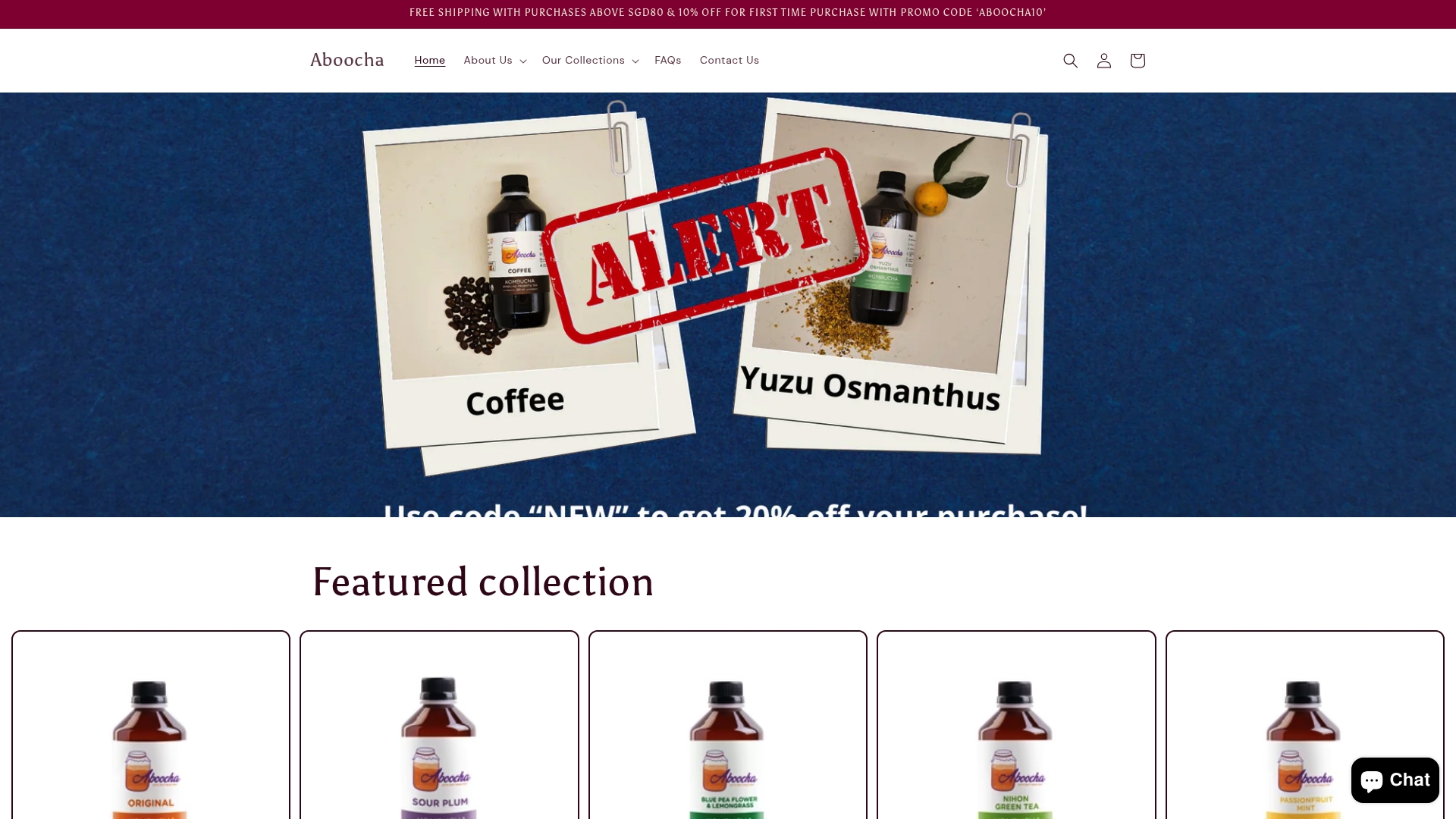
Aboocha brews every batch with a live SCOBY, keeps sugar content low through full fermentation, and uses no artificial flavors or preservatives. Flavors like Sour Plum and Yuzu Osmanthus are designed for people who want complexity and health value in the same bottle. The Aboocha bundles let you sample multiple flavors at once, which is the most practical way to find what works for your palate. For something more adventurous, the Aboocha x Deefruit collaboration brings unique fruit-forward fermented flavors built on the same authentic fermentation standard.
FAQ
What makes fermented drinks different from sodas?
Fermented drinks use live bacteria and yeasts to produce carbonation and organic acids naturally, while sodas rely on injected CO2 and added sugars with no microbial activity. This difference determines both the flavor complexity and the nutritional value of each beverage.
Are fermented drinks actually healthier than soda?
Yes, fermented drinks contain probiotics, bioactive compounds like catechins, and lower residual sugar than commercial sodas. The benefits require consistent daily or near-daily consumption to produce measurable gut health improvements.
How can I tell if a fermented drink is authentic?
Look for “contains live cultures” on the label, a listed bacterial or yeast culture such as LAB or SCOBY, and a pH below 3.5. Products that only list carbonated water and natural flavors are likely not genuinely fermented.
Does kombucha have more caffeine than soda?
Kombucha contains caffeine because it is brewed from tea, while LAB-fermented sodas are caffeine-free. Most cola sodas also contain caffeine, so the comparison depends on which fermented drink and which soda you are comparing.
Can fermented drinks replace soda completely?
Fermented drinks work well as soda replacements for people who want carbonation without the sugar load and empty calories. Pairing them with meals rather than drinking them alone maximizes both the flavor experience and the probiotic benefit.