
Added sugar in drinks refers to any sugar incorporated during manufacturing or preparation, distinct from the naturally occurring sugars found in whole fruit or milk. The FDA defines added sugars as those added during processing or preparation, with a daily recommended limit of less than 50 grams or 10% of total calories. Sugary beverages are the single largest source of added sugar in the American diet, and understanding what is added sugar in drinks is the first step toward making smarter choices. This guide breaks down where added sugars hide, how much popular drinks contain, what the health consequences are, and how to find better alternatives.
What is added sugar in drinks and how do you spot it?
Added sugars in beverages are not one ingredient. They appear under dozens of names, and manufacturers use this variety to obscure how much sugar a product actually contains. Common forms include table sugar (sucrose), high-fructose corn syrup, dextrose, fructose, maltose, fruit juice concentrates, agave nectar, cane juice, and honey. Each of these qualifies as an added sugar because it is introduced during production, not present naturally in the base ingredient.
The FDA now requires the Nutrition Facts label to list added sugars separately from total sugars, expressed in grams per serving and as a percentage of the Daily Value. That percentage is based on a 50-gram daily limit. A drink showing 25 grams of added sugar has already delivered 50% of your daily allowance in one serving. The challenge is that serving size manipulation contributes directly to sugar intake confusion, since many bottles contain two or even three servings while appearing to be a single-serve container.

The ingredient list offers a second layer of information. Ingredients are listed by weight, so a sugar appearing first or second signals it dominates the formula. Manufacturers sometimes split sugar across multiple forms, such as listing both corn syrup and cane sugar separately, so each appears lower on the list individually. Recognizing multiple sugar aliases is the practical skill that separates informed shoppers from everyone else.
Pro Tip: Front-of-package claims like “natural,” “organic,” or “made with real fruit” carry no legal requirement to be low in added sugar. A 2025 study found that 50% of “no sugar” drinks still contained detectable sugar levels. Always check the Nutrition Facts panel, not the marketing copy.
- Table sugar (sucrose)
- High-fructose corn syrup
- Fruit juice concentrates
- Agave nectar and honey
- Dextrose, maltose, and fructose
- Cane juice and evaporated cane juice
How much sugar do popular drinks actually contain?
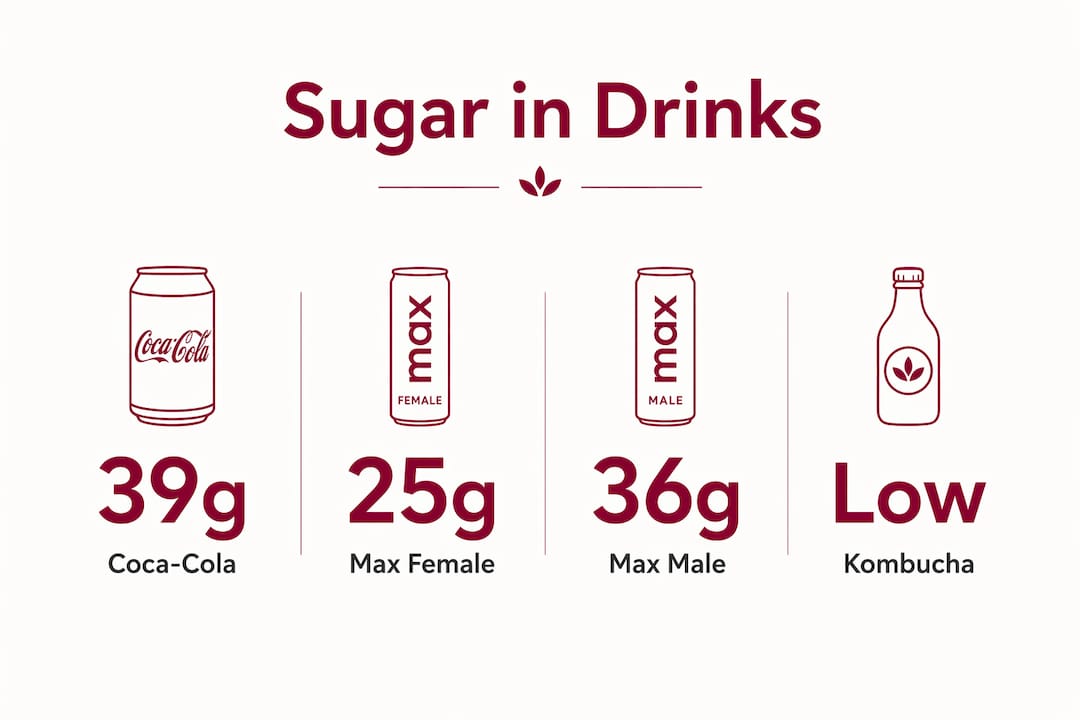
The numbers are more alarming than most people expect. A 12-ounce can of Coca-Cola contains about 39 grams of sugar, close to 78% of the average daily intake recommendation in a single serving. Mountain Dew reaches 46 grams per 12 ounces, exceeding the FDA’s 50-gram daily limit before you have finished one can. Energy drinks, sweetened coffees, and bottled fruit drinks often land in the same range, yet their packaging rarely makes that obvious.
The American Heart Association sets a stricter standard: no more than 25 grams of added sugar per day for women and 36 grams for men. By that measure, one can of soda pushes most adults past their entire daily budget. Sweetened coffees from major chains regularly contain 40 to 60 grams of sugar per serving, depending on size and flavor. Bottled teas and sports drinks, often perceived as healthier choices, typically deliver 20 to 35 grams per bottle.
| Drink | Serving size | Added sugar (grams) | % Daily Value (50g limit) |
|---|---|---|---|
| Coca-Cola | 12 oz | 39g | 78% |
| Mountain Dew | 12 oz | 46g | 92% |
| Sweetened iced tea | 16 oz | 32g | 64% |
| Bottled fruit drink | 12 oz | 28g | 56% |
| Sports drink | 20 oz | 34g | 68% |
| Unsweetened kombucha | 8 oz | 2 to 4g | 4 to 8% |
The table makes one pattern clear: a single sugary drink can consume the majority of your daily added sugar budget before a meal is eaten. Drinks labeled “half sugar” or “lightly sweetened” still frequently deliver 15 to 20 grams per serving, which is not trivial when the AHA limit for women is 25 grams total.
Pro Tip: Experts advise checking the % Daily Value for added sugars on the Nutrition Facts label rather than relying on the gram count alone. A value above 20% in a single drink signals a high-sugar product regardless of how it is marketed.
What are the health risks of too much added sugar from drinks?
Excess added sugar from beverages delivers what nutrition experts call empty calories: calories with no fiber, protein, vitamins, or minerals attached. Because liquid sugar does not trigger the same satiety signals as solid food, people consume more total calories without feeling full. This mechanism is a direct driver of weight gain and metabolic disruption.
The downstream health consequences are well-documented. The CDC reports that 30% of Americans already exceed 15% of their daily calories from added sugars, and without dietary changes, 40% of youth are projected to develop type 2 diabetes. Drinking one can of soda per day increases type 2 diabetes risk by 26%, a figure that reflects how directly liquid sugar hits the bloodstream compared to sugar consumed with fiber-rich food.
The health risks associated with high added sugar intake from beverages include:
- Obesity: Liquid calories do not reduce hunger, leading to overall calorie excess.
- Type 2 diabetes: Rapid blood sugar spikes from sugary drinks impair insulin sensitivity over time.
- Heart disease: High sugar intake raises triglycerides and blood pressure, two primary cardiovascular risk factors.
- Dental decay: Sugar feeds oral bacteria that produce enamel-eroding acids, and beverages coat teeth continuously.
- Gout: Fructose, common in sodas and fruit drinks, raises uric acid levels, triggering gout flares.
“The evidence linking sugar-sweetened beverages to chronic disease is now strong enough that public health agencies treat them as a primary dietary risk factor, not a minor indulgence.” — CDC, Rethink Your Drink
The youth data deserves particular attention. Children and teenagers consume a disproportionate share of their added sugar through drinks, including sodas, sports drinks, and flavored milks. Early exposure to high sugar intake sets metabolic patterns that persist into adulthood, making beverage choices in childhood a long-term health variable, not just a short-term nutrition concern.
How to choose low or no added sugar beverage options
Reducing added sugar from drinks does not require eliminating flavor or enjoyment. The most effective approach is replacing high-sugar beverages with options that satisfy without the metabolic cost. Plain water is the obvious baseline. Unsweetened tea, black coffee, and sparkling water with no added sweeteners are the next tier. These options contain zero added sugar and are widely available.
For people who find plain water or black coffee difficult to sustain, low-sugar fermented beverages like kombucha offer a middle path. Kombucha delivers carbonation, complex flavor, and gut-supporting probiotics with a fraction of the sugar found in soda. Aboocha’s kombucha varieties, including Sour Plum and Yuzu Osmanthus, are specifically formulated with lower added sugar content, making them a practical daily alternative for health-conscious drinkers.
When evaluating “sugar-free” or “zero sugar” drinks, check the sweetener used. Stevia and monk fruit are generally well-tolerated, but some people find their aftertaste unpleasant, which reduces long-term adherence. Artificial sweeteners like aspartame and sucralose have mixed research profiles and may affect gut microbiome composition. The safest bet for most people is beverages sweetened with nothing at all, or with minimal natural fermentation-derived sugars.
Practical steps for reducing added sugar in your drink routine:
- Swap one sugary drink per day with sparkling water or unsweetened tea for two weeks before making further changes.
- Use the % Daily Value on labels as your primary filter: reject any drink above 10% DV per serving as a regular choice.
- Explore low-sugar drink alternatives that still deliver flavor, so the transition feels sustainable rather than punishing.
- Read ingredient lists for sugar aliases before trusting front-of-package claims.
- Dilute fruit juices with water at a 1:3 ratio to cut sugar content while retaining some flavor.
Gradual reduction works better than abrupt elimination for most people. Taste preferences adapt within two to four weeks of lower sugar intake, meaning drinks that once seemed bland will start tasting satisfying.
Key takeaways
Added sugar in beverages is the most concentrated and least visible source of excess sugar in the American diet, and label literacy is the single most effective defense against overconsumption.
| Point | Details |
|---|---|
| Definition of added sugar | Added sugars are introduced during processing, not naturally present in the base ingredient. |
| Daily limits | The FDA sets 50g per day; the AHA recommends 25g for women and 36g for men. |
| Sugar in popular drinks | A single can of soda can consume 78 to 92% of the daily added sugar limit. |
| Health consequences | Excess intake links directly to obesity, type 2 diabetes, heart disease, and dental decay. |
| Practical reduction | Replace one sugary drink daily with unsweetened or low-sugar alternatives and verify labels. |
Why I stopped trusting drink labels and started reading them
I spent years assuming that drinks marketed as “natural” or “lightly sweetened” were meaningfully different from soda. They are not, at least not by the margin the packaging implies. A bottled green tea labeled “made with real honey” can carry 28 grams of added sugar per bottle. That is more than a full day’s allowance for many women, dressed up in wellness language.
What changed my approach was learning to treat the front of a package as advertising and the Nutrition Facts panel as the actual product description. Once that mental shift happens, the gap between how drinks are sold and what they actually contain becomes impossible to ignore. A drink with “no artificial sweeteners” can still contain 40 grams of cane sugar. “Organic” tells you about farming practices, not sugar content.
The other thing I have found consistently true: people underestimate how much sugar they drink compared to how much they eat. Solid food comes with texture, chewing time, and satiety signals. Liquid sugar bypasses all of that. You can drink 80 grams of sugar in ten minutes and still feel hungry. That is not a willpower problem. It is a physiology problem, and the solution is structural: change what you keep in the refrigerator, not just your intentions.
My honest recommendation is to start with one substitution and make it boring. Replace your afternoon soda with sparkling water or a low-sugar kombucha for two weeks. Do not try to overhaul everything at once. The goal is building a habit that does not require constant decision-making, because the drinks that are worst for you are also the ones most aggressively marketed and most readily available.
— Luna
Try Aboocha’s low-sugar kombucha as your next drink swap
If you are looking for a beverage that delivers real flavor without the sugar load of conventional drinks, Aboocha’s kombucha is worth trying. The Barley Rose Kombucha 250ml is brewed to keep added sugar content low while delivering the carbonation and complexity that makes a drink genuinely satisfying. It supports gut health through live cultures and offers a flavor profile that stands apart from standard kombucha options.
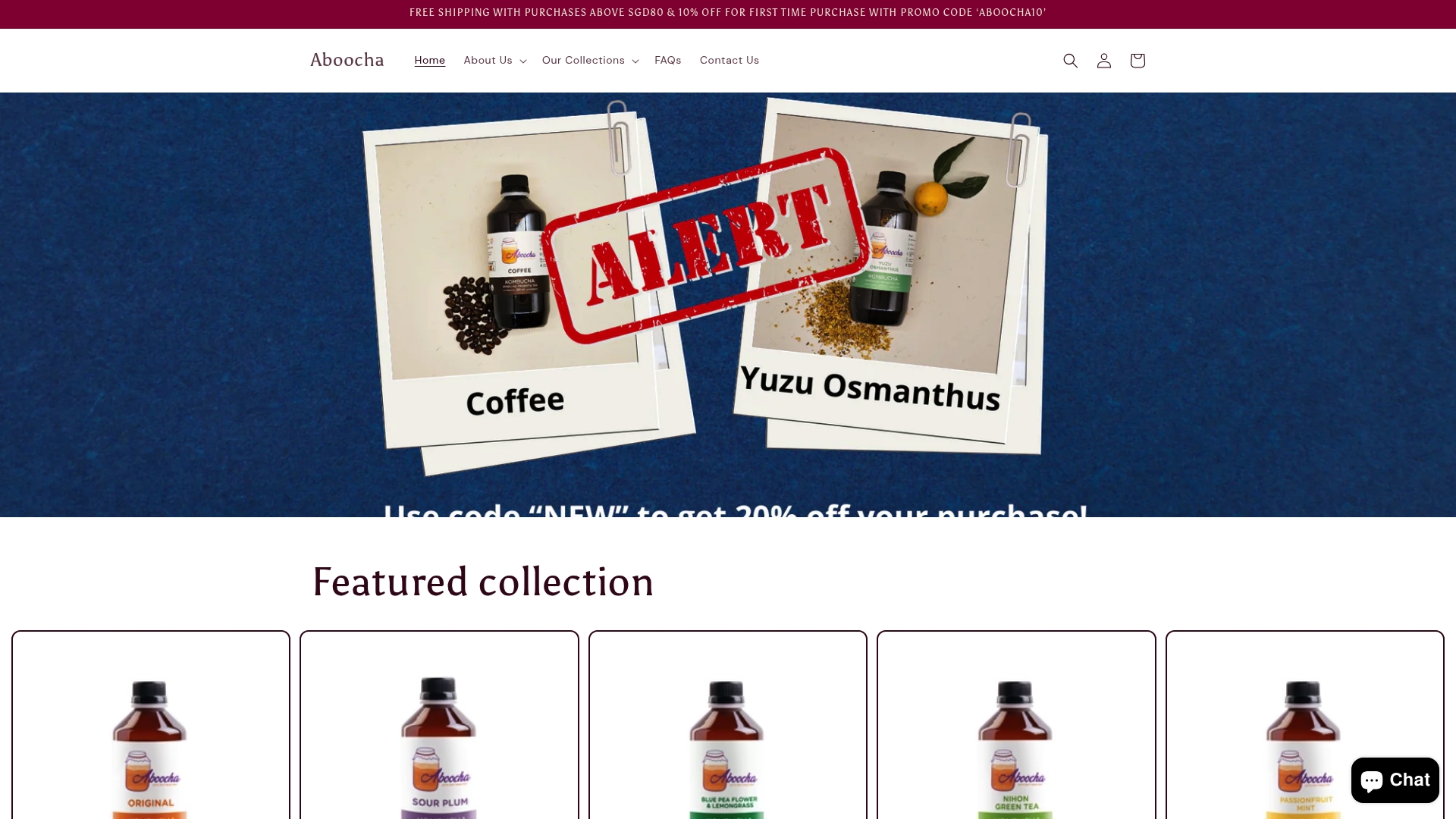
Aboocha’s subscription plans make it easy to keep low-sugar, probiotic-rich drinks stocked without the effort of repeated ordering. For anyone working to reduce added sugar from their daily beverage routine, starting with a drink that tastes good and supports digestion is a practical, sustainable first step.
FAQ
What is the difference between added sugar and natural sugar in drinks?
Natural sugars occur in whole fruits and milk without any processing. Added sugars are introduced during manufacturing, such as the corn syrup in soda or the cane juice in bottled tea, and they carry no nutritional benefit beyond calories.
How much added sugar is too much in a single drink?
The FDA recommends no more than 50 grams of added sugar per day total. The American Heart Association sets the limit lower, at 25 grams for women and 36 grams for men, meaning a single 12-ounce soda can exceed those thresholds in one serving.
Are “no sugar” or “zero sugar” drinks actually sugar-free?
Not always. A 2025 study found that 50% of drinks labeled “no sugar” contained detectable sugar levels. Always verify by checking the Nutrition Facts panel rather than relying on front-of-package claims.
What are the best sugar-free beverage options?
Plain water, unsweetened tea, black coffee, and sparkling water with no added sweeteners contain zero added sugar. Low-sugar fermented drinks like kombucha are a good option for people who want carbonation and flavor with minimal sugar content.
Why do sugary drinks cause more harm than sugary food?
Liquid sugar bypasses the satiety signals that solid food triggers, so you consume more calories without feeling full. This makes sugary beverages a more direct driver of weight gain and insulin resistance than equivalent sugar consumed in solid form.