
Yes, kombucha contains caffeine, but not much of it. A typical bottled serving carries somewhere between 10 and 35 mg, compared to roughly 95 mg in an 8-ounce cup of coffee. That’s less caffeine than a cup of black tea in most cases, since kombucha starts as brewed tea before fermentation gets to work on it.
- Coffee (8 oz): ~95 mg
- Black tea (8 oz): ~40–70 mg
- Kombucha (8 oz / 240 ml): ~10–35 mg
The wide range matters. Two bottles sitting side by side on a store shelf can carry noticeably different caffeine loads depending on the tea used and how long fermentation ran. If you’re sensitive to caffeine or watching a daily limit, checking the label is worth the ten seconds it takes.
Key Takeaways
Kombucha caffeine content typically ranges from 10 to 35 mg per 8-ounce serving, far below coffee’s roughly 95 mg, but the exact amount depends on tea base, brew strength, and fermentation time.
| Point | Details |
|---|---|
| Typical caffeine range | An 8-ounce kombucha usually contains 10 to 35 mg of caffeine, well under a cup of coffee. |
| Tea base drives the number | Black tea kombucha starts higher than green or white tea versions before fermentation even begins. |
| Serving size can double intake | A 16-ounce bottle often counts as two servings, so finishing it doubles the printed caffeine figure. |
| Fermentation reduces but doesn’t erase caffeine | Microbial activity and SCOBY uptake lower caffeine somewhat, but the reduction varies by batch. |
| Sensitive drinkers should time it | Caffeine’s 6 to 8 hour half-life means even a small dose can affect sleep if consumed late in the day. |
Table of Contents
- What Puts Caffeine in Kombucha in the First Place
- How Much Caffeine Is Actually in a Bottle?
- Will Kombucha Keep You Up at Night?
- Choosing a Lower-Caffeine Kombucha
- Where Aboocha Fits for Caffeine-Conscious Drinkers
- Why the Caffeine Panic Around Kombucha Is Overblown
- Sources
- FAQ
What Puts Caffeine in Kombucha in the First Place
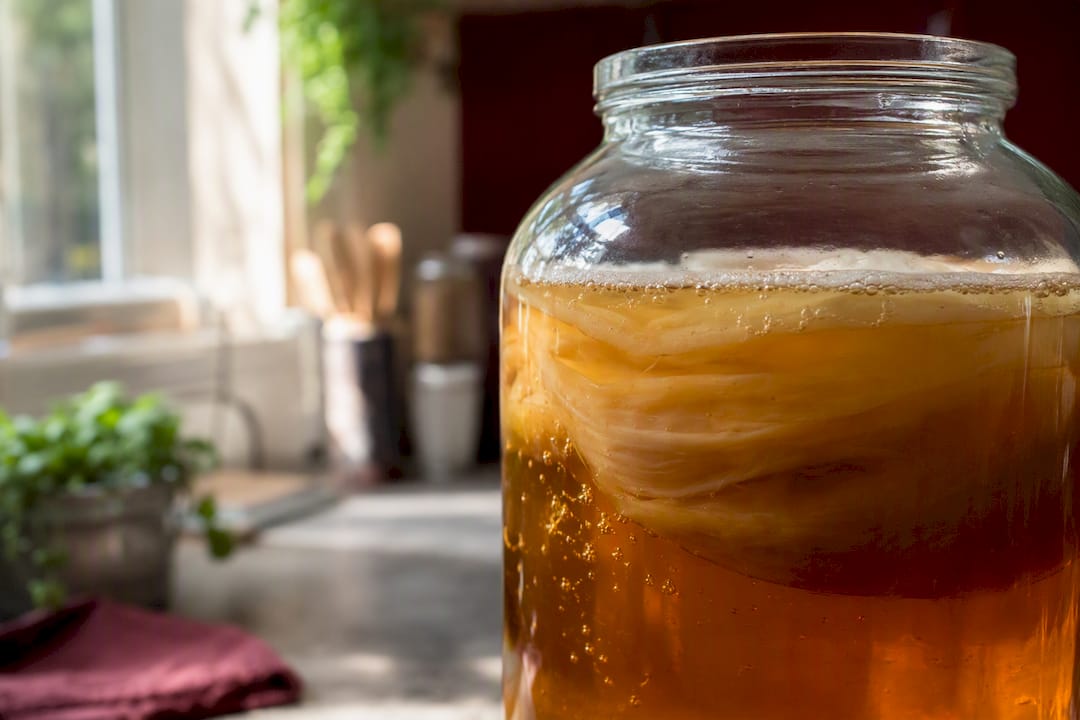
Kombucha starts life as sweetened tea, usually black, green, or oolong, and that tea is where every milligram of caffeine originates. There’s no caffeine added separately. The SCOBY (the bacteria and yeast culture that drives fermentation) needs that tea base as food, and caffeine happens to come along for the ride.
Fermentation changes things, but not in a clean, predictable way. Research on the changes in caffeine and phenolic compounds during kombucha fermentation shows caffeine levels tend to drop compared to the starting tea, though the size of that drop depends heavily on fermentation conditions and which microbial strains are doing the work. Some research on SCOBY uptake of stimulants during fermentation suggests the culture itself can pull caffeine out of the liquid as it grows, which helps explain why a finished bottle often measures lower than the tea that went into it. It doesn’t mean caffeine disappears. It just means it’s an unreliable variable rather than a fixed number.
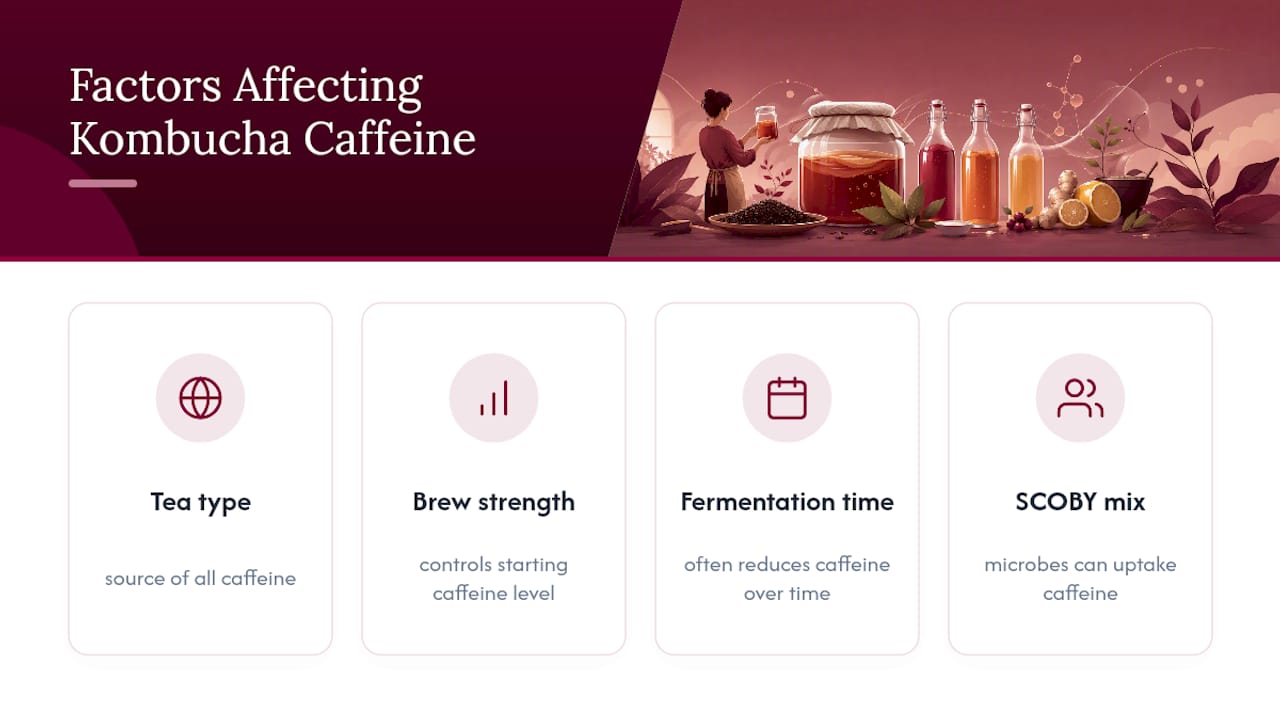
The caffeine content in kombucha varies based on factors such as the type of tea, brew strength, dilution after fermentation, total fermentation time, and microbial composition of the SCOBY.
How Much Caffeine Is Actually in a Bottle?
Numbers vary more than most people expect, and part of the reason is that “serving size” isn’t standardized across brands. A comparative analysis of nine commercial kombucha products using HPLC testing and metabolomic analysis found substantial differences in both caffeine and tea catechin levels from product to product, tied directly to production method and tea base.
Rough ranges by size:
- 240 ml (8 oz): roughly 14 to 35 mg, based on a practical caffeine estimate for kombucha that uses tea baselines adjusted for fermentation loss
- 330 ml bottle: scales up proportionally, often landing in the high teens to mid 40s mg
- 16 oz bottle: can easily double the 8-oz figure, since many bottles are sold as a single container but technically represent two servings
That last point trips people up constantly. A brand might list caffeine “per 8 oz serving” on a 16-ounce bottle, so if you drink the whole thing (which most people do), you’re getting double the printed number. Brand-reported figures for popular kombucha brands often land in the single digits to low 20s mg per 8-ounce serving, but those numbers come from each company’s own testing, not a shared industry standard, so treat any printed figure as an estimate rather than a guarantee.
Will Kombucha Keep You Up at Night?
For most people, no. The caffeine dose in a standard bottle is well below what triggers a stimulant response, and a Cleveland Clinic podcast with dietitian Julia Zumpano notes that the typical bottle simply doesn’t deliver enough caffeine to produce the jittery buzz people associate with coffee or energy drinks. If you feel wired after a bottle, that reaction is more likely tied to the fizz, sugar content, or a personal sensitivity than to a genuine caffeine spike.
Still, context matters for certain people:
- Healthy adults: the FDA-referenced upper bound is around 400 mg of caffeine per day, so a 20 mg kombucha barely dents that total on its own, but it adds up alongside coffee, tea, or soda.
- Pregnant individuals: guidance caps daily intake around 200 mg, and a kombucha serving eats into that budget faster than it would for someone with no limit.
- Caffeine-sensitive people: even small doses close to bedtime can interfere with sleep, since caffeine has a half-life of roughly 6 to 8 hours in most adults.
Pro Tip: If you’re sensitive to caffeine, treat kombucha the way you’d treat a weak cup of tea. Finish your last bottle at least 6 to 8 hours before bed, and count it toward your daily total the same way you would a latte.
Choosing a Lower-Caffeine Kombucha
Picking a gentler option doesn’t require giving up kombucha altogether. A few adjustments make a real difference:
- Look for kombucha brewed from green or white tea rather than black. It starts with less caffeine before fermentation even begins.
- Favor smaller bottles over 16-ounce ones if you’re trying to cap intake without cutting the drink entirely.
- Check the label for a stated caffeine amount, and note whether it’s listed per serving or per bottle.
- If a brand doesn’t publish a number, it’s reasonable to reach out and ask whether they have lab data available.
If you brew at home, blending a decaffeinated tea with a small amount of caffeinated tea gives you more control than guessing. Shortening steep time before fermentation also reduces the starting caffeine load, and tracking fermentation days helps you dial in a consistent result batch after batch. For a caffeine-free base entirely, resources like this guide to caffeine-free chai are worth a look if you want flavor without any stimulant at all.
Pro Tip: Homebrewers chasing a lighter caffeine profile often underestimate how much steep time affects the final number. Cutting steep time by even two or three minutes on the front end can meaningfully lower where you land.
Where Aboocha Fits for Caffeine-Conscious Drinkers
Aboocha builds its kombucha around lower sugar content and flavor-forward recipes like Sour Plum and Yuzu Osmanthus, designed for people who want a functional, gut-friendly drink without the sugar crash that comes with many conventional options. That same health-first approach applies to caffeine awareness.
A few things worth knowing:
- Aboocha’s subscription plans let regular drinkers manage intake predictably instead of guessing bottle to bottle.
- Educational content on tea selection and fermentation helps readers understand what’s actually driving flavor and stimulant content in their kombucha.
- Readers watching caffeine closely can check product labeling directly or reach out to Aboocha for specifics on a given batch.
If you’re deciding what to stock in your fridge, Aboocha’s product lineup is a reasonable starting point for anyone who wants flavor variety and gut-health benefits without the sugar load of a typical kombucha aisle option.
Why the Caffeine Panic Around Kombucha Is Overblown
The internet treats kombucha caffeine like a mystery ingredient, but the research tells a pretty boring story: it’s tea, fermented, with a caffeine load that rarely competes with anything you’d call a stimulant. What gets lost in most coverage is that the real variable isn’t whether kombucha has caffeine. It’s serving size math that most drinkers never do.
The advice to “just check the label” is fine but incomplete, since plenty of labels list per-serving numbers on multi-serving bottles without saying so clearly. That’s the gap worth closing. If you’re pregnant, sensitive to caffeine, or just trying to keep evenings calm, the priority isn’t finding a zero-caffeine kombucha. It’s understanding that a 16-ounce bottle might be giving you double what you think, and adjusting from there.
Conventional wisdom treats kombucha as either a health tonic or a caffeine trap. Neither framing helps you make a real decision. The tea base and the bottle size do more to answer your question than any blanket rule ever will.
— Luna
This article is general information, not a substitute for advice from a qualified doctor. Consult a qualified healthcare professional about your own circumstances before acting on anything here.
Sources
- Does Kombucha Live Up to the Hype? with Julia Zumpano, RD — Cleveland Clinic podcast
- Comparative chemical and microbial analysis of commercial kombucha products — PMC
- The changes of contents of main phenolic compounds and caffeine of kombucha produced by fermentation — PubMed
- Does Kombucha Have Caffeine? How Much and Why It Varies — TrackCaffeine
FAQ
Will Kombucha Keep You Awake at Night?
For most people, no. The caffeine amount in a standard serving is too low to disrupt sleep, though caffeine-sensitive drinkers should avoid it within 6 to 8 hours of bedtime.
Is Kombucha High in Caffeine?
No, kombucha is generally low in caffeine compared to coffee. A typical 8-ounce serving contains roughly 10 to 35 mg, versus about 95 mg in a same-size cup of coffee.
Why Do I Feel Buzzed After Drinking Kombucha?
That reaction is more likely tied to carbonation, sugar, or personal sensitivity than to caffeine, since Cleveland Clinic’s nutrition experts note the typical dose is too small to produce a real stimulant effect.
Is Kombucha Stronger Than Coffee?
No, kombucha carries far less caffeine than coffee. A standard bottle contains a fraction of the roughly 95 mg found in an 8-ounce cup of coffee.
Does Kombucha Caffeine Content Vary by Brand?
Yes, significantly. Lab testing across nine commercial kombucha products found wide differences in caffeine tied to tea base, brewing method, and fermentation time.