
Tasting notes for kombucha describe a fizzy, tart, and lightly sweet fermented tea with flavor layers ranging from floral and fruity to earthy and spicy. The specific notes in any bottle depend on the tea base, fermentation duration, and any added botanicals. Kombucha’s flavor profile is not fixed. It shifts with every batch, every tea choice, and every secondary fermentation decision. Learning to read those shifts transforms a casual sip into a genuinely rewarding sensory experience. Whether you are new to kombucha or deep into homebrewing, a structured approach to tasting unlocks far more than just “sour or sweet.”
What do tasting notes for kombucha actually mean?
Tasting notes for kombucha are a descriptive vocabulary used to identify and communicate the specific flavors, aromas, textures, and aftertastes present in a given brew. The practice borrows from wine and specialty coffee sensory assessment, where trained tasters map perceived flavors to chemical compounds. In kombucha, this matters because the drink’s flavor complexity is genuinely rooted in biochemistry. Flavor complexity emerges from biochemical transformations of tea polyphenols and microbial metabolism, producing compounds like linalool, 2-phenylethanol, and methoxyphenols that define its nuanced character.
Understanding these notes helps you choose the right bottle, troubleshoot a batch that tastes off, and communicate preferences clearly. For first-time drinkers, a beginner’s tasting framework makes the experience far less confusing and far more enjoyable.
How does the base tea shape kombucha’s flavor profile?
The starting tea is the single biggest variable in kombucha flavor. Tea base fundamentally dictates the final profile: green tea produces fresher, vegetal, lighter notes; oolong yields pronounced floral and fruity character; black and pu-erh teas create heavier, earthier, fermentation-forward aromas. These differences are not subtle. A green tea kombucha and a pu-erh kombucha taste like entirely different beverages even when brewed under identical conditions.
| Tea Base | Primary Flavor Notes | Aroma Character |
|---|---|---|
| Green tea | Fresh, vegetal, light | Grassy, clean |
| Oolong | Floral, fruity, complex | Orchid, stone fruit |
| Black tea | Bold, malty, tannic | Earthy, robust |
| Pu-erh | Deep, earthy, fermented | Woody, mushroom-like |
The chemistry behind these differences is worth knowing. During fermentation, the SCOBY (symbiotic culture of bacteria and yeast) transforms polyphenols and catechins from the tea into aromatic compounds. Green tea’s high catechin content converts into lighter volatile compounds, while black tea’s tannins yield darker, more complex metabolites. Oolong sits between the two, which explains its balanced floral-fruity signature.
Pro Tip: If you want a kombucha with delicate floral notes, start with a high-quality oolong. If you prefer something bold and earthy, a black tea base will deliver that character consistently.
How does fermentation time change the taste?
Fermentation timing is the second major lever in kombucha flavor control. Ideal harvest falls between 7 and 14 days, with warmer climates producing balanced tart-sweet profiles in 6 to 8 days and cooler environments requiring up to 14 days. The difference between a 7-day and a 14-day brew is dramatic.
Here is what happens at each stage:
- Days 1 to 4: The brew is mostly sweet tea with early signs of carbonation. Tartness is minimal. This stage is under-fermented for most palates.
- Days 5 to 8: Sweetness and tartness reach a pleasant balance. Light fruity and floral notes emerge. Most commercial kombucha targets this window.
- Days 9 to 14: Acidity increases sharply. Vinegar notes become detectable. The brew becomes more complex but less approachable for new drinkers.
- Beyond 14 days: Over-fermentation creates a sharply sour vinegar product, unsuitable for drinking but useful as starter liquid or in cooking.
Tracking fermentation by taste alone is subjective and inconsistent. Combining tasting with pH testing yields more consistent fermentation control. A pH above 3.5 signals under-fermentation; below 2.5 means the brew has crossed into overly acidic territory. The sweet spot for most drinkers sits between pH 2.5 and 3.5, where tartness is present but not punishing.
Pro Tip: Taste your kombucha every two days starting on day 5. Write down one word for each tasting: “sweet,” “balanced,” “tart,” or “sharp.” You will quickly learn your personal preference window.
What flavor categories and compounds define kombucha?
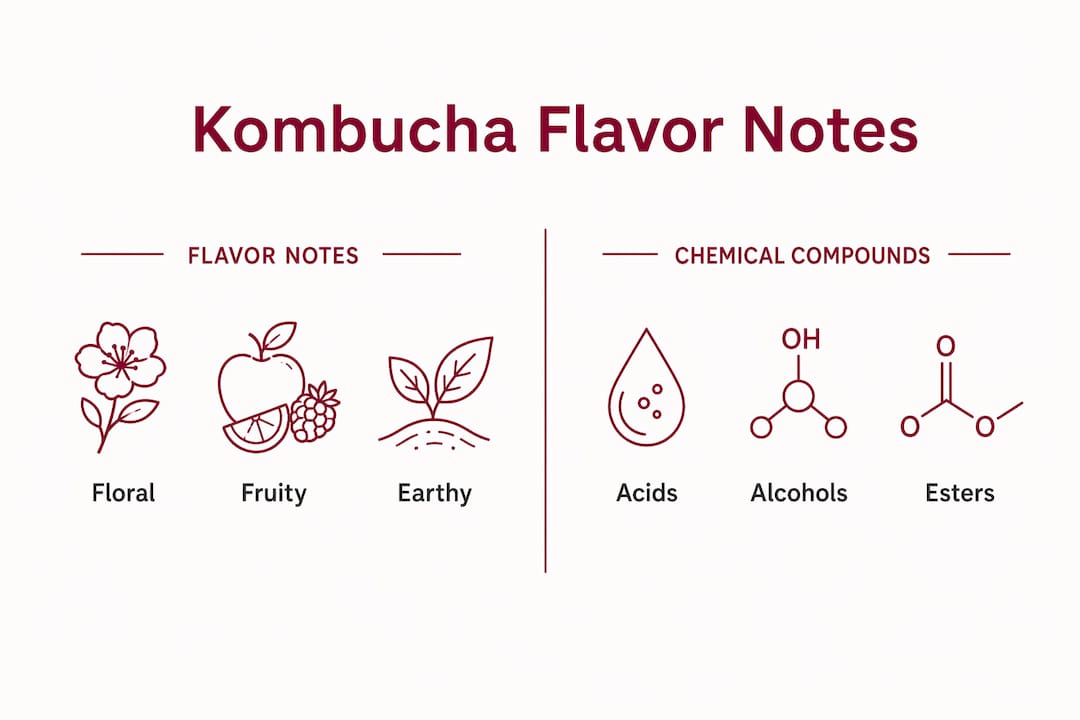
A precise kombucha tasting vocabulary links perceived flavors to specific chemical classes. Flavor notes map to chemistry in ways that allow for a more sophisticated tasting language beyond simple “sweet or sour” descriptions. The table below connects common tasting notes to their chemical origins.
| Flavor Note | Chemical Compound Class | Common Descriptors |
|---|---|---|
| Floral, rose-like | Linalool, 2-phenylethanol | Lavender, jasmine, rose |
| Fruity, citrus | Esters, terpenes | Lemon, peach, berry |
| Spicy, woody | Methoxyphenols | Clove, vanilla, smoke |
| Earthy, fermented | Organic acids, phenolics | Vinegar, mushroom, soil |
| Sweet | Residual sucrose, fructose | Honey, caramel, fruit |
Understanding organic acids in kombucha explains why tartness feels different from vinegar sharpness. Acetic acid drives the vinegar note; gluconic acid produces a softer, rounder sourness. Lactic acid adds a mild, yogurt-like tang. These three acids together create the layered tartness that defines well-made kombucha.
Flavor harmony in kombucha means none of these elements dominates. Sweetness softens tartness. Carbonation lifts aroma. Bitterness from tannins adds structure. When one element overpowers the others, the tasting notes become one-dimensional. Aboocha’s Yuzu Osmanthus, for example, achieves balance by pairing the bright citrus acidity of yuzu with the delicate floral sweetness of osmanthus, neither overwhelming the other.
How to taste kombucha at home like a pro
Tasting kombucha well requires a repeatable process. Follow these steps to get the most out of every sample:
- Chill the kombucha to 45 to 55°F. Serving temperature affects aroma release. Too cold suppresses volatiles; too warm amplifies acidity.
- Pour into a clear glass. Observe color, clarity, and carbonation level before tasting. A hazy brew with fine bubbles signals active fermentation.
- Smell before you sip. Hold the glass close and inhale slowly. Identify the dominant aroma: floral, fruity, earthy, or vinegary.
- Take a small sip and hold it briefly. Let the liquid coat your palate. Note the first impression (usually sweetness or tartness), the mid-palate (complexity), and the finish (aftertaste length and character).
- Assess mouthfeel. Is the carbonation sharp or soft? Does the texture feel thin or full? Mouthfeel is a legitimate tasting note, not just a background detail.
- Record your notes immediately. Memory fades fast. A single sentence per tasting builds a useful reference over time.
When sampling a batch during homebrewing, use a sanitized straw or spoon and never return the sampled portion to the jar. Contaminating the SCOBY with outside bacteria or saliva can ruin an entire batch. Discard the sample after tasting.
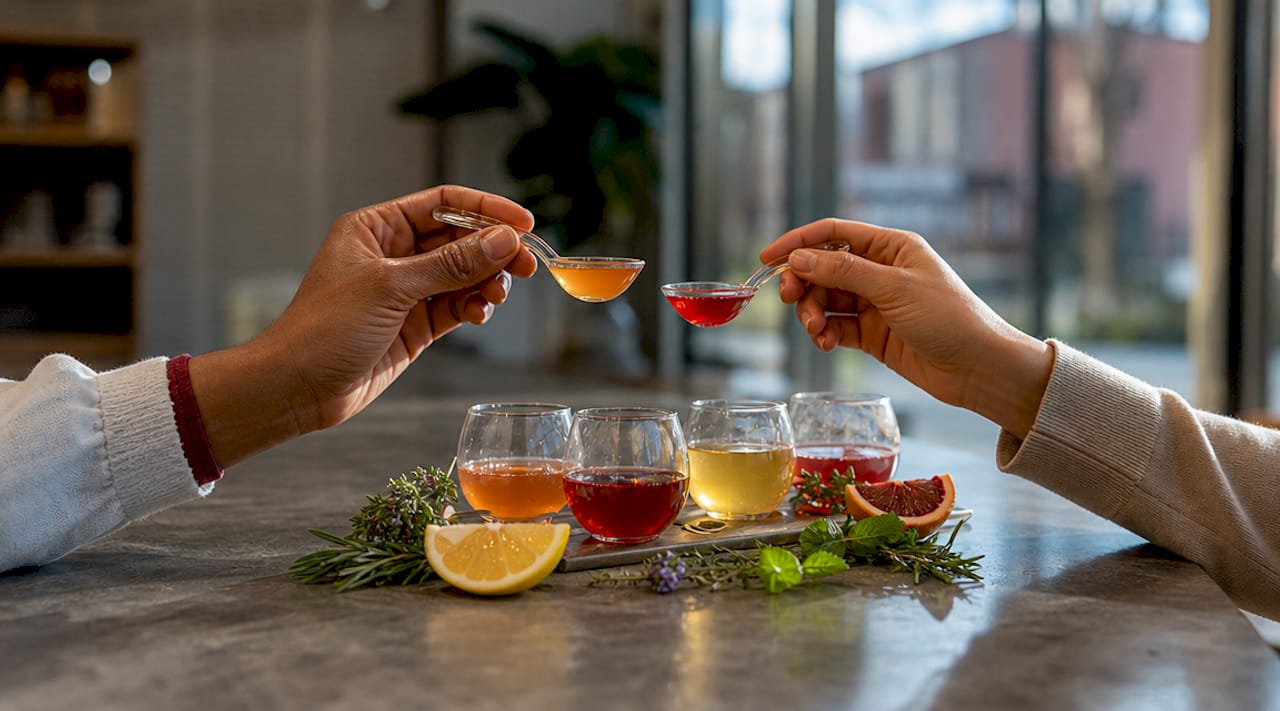
Pro Tip: Taste two or three kombucha varieties side by side. Contrast sharpens perception. You will notice differences in acidity, sweetness, and aroma that you would miss tasting each one alone.
How added flavors and botanicals change the tasting experience
Secondary fermentation is where kombucha flavor gets personal. Adding fruit, herbs, spices, or flowers during a second fermentation stage creates entirely new tasting notes layered on top of the base brew. Fruits high in sugar like pineapple and mango fuel carbonation and add tropical sweetness, while herbs and flowers like rose and lavender contribute aromatic complexity.
A few principles govern successful flavor additions:
- Concentration matters more than ingredient choice. Botanical ingredient concentration critically affects the final flavor. Pungent or bitter botanicals refresh in small amounts but overwhelm in large quantities.
- Balance tea tannins against botanical aromatics. Strong floral additions like lavender can turn soapy if they overpower the tea’s natural tannin structure. Aim for a ratio where the botanical enhances rather than replaces the base flavor.
- Fruit juice integrates more smoothly than whole fruit pieces. Juice distributes evenly through the liquid, creating consistent flavor throughout the bottle.
- Avoid medicinal off-notes by tasting during secondary fermentation. Check the brew at 24 and 48 hours. If the botanical note is already dominant at 24 hours, bottle immediately.
Aboocha’s Sour Plum flavor demonstrates this balance well. The tartness of plum amplifies the natural acidity of the base kombucha without creating a sharp or one-note profile. The result is a layered, fermented beverage flavor that rewards multiple sips.
Key takeaways
Kombucha’s flavor profile is defined by the interaction of tea base, fermentation time, organic acids, and botanical additions, and understanding each variable gives you direct control over what ends up in your glass.
| Point | Details |
|---|---|
| Tea base sets the foundation | Green tea yields light and vegetal notes; oolong gives floral and fruity; black and pu-erh produce earthy depth. |
| Fermentation timing controls tartness | Harvest between 7 and 14 days; use pH testing alongside tasting for consistent results. |
| Chemical compounds define flavor notes | Linalool drives floral notes; methoxyphenols create spicy and woody character; organic acids shape tartness. |
| Botanical balance prevents off-flavors | Add herbs and fruit in controlled amounts to avoid soapy or medicinal notes in secondary fermentation. |
| Structured tasting builds skill | Smell first, assess mouthfeel, record notes immediately, and compare varieties side by side. |
Why kombucha tasting is worth slowing down for
I have tasted hundreds of kombucha batches across green, black, and oolong bases, and the one thing that consistently surprises people is how much the same recipe can taste different across seasons. A batch brewed in August in a warm kitchen and the same recipe brewed in January taste like cousins, not twins. Temperature alone shifts the fermentation speed enough to change the acid balance, and that changes everything from the aroma to the finish.
Most people approach kombucha tasting the way they approach drinking soda: they just want to know if they like it. That works fine for casual consumption. But if you want to actually understand what you are tasting, you need to slow down and treat the first sip like information rather than refreshment. The floral note you detect in an oolong-based brew is not an accident. It is linalool, produced by the SCOBY metabolizing the tea’s polyphenols. Knowing that makes the flavor feel earned rather than random.
The other thing worth saying is that off-flavors are not failures. A batch that went too long and tastes sharply vinegary is telling you something precise about your fermentation environment. A brew that tastes flat and overly sweet tells you something else. Both are useful data points if you write them down. The brewers who develop the best palates are the ones who treat every imperfect batch as a lesson rather than a loss.
Aboocha’s approach to flavor, particularly in creations like Yuzu Osmanthus, reflects this philosophy. The flavor combinations are not arbitrary. They are built around how specific botanicals interact with the fermentation base, and tasting them with attention reveals that intentionality clearly.
— Luna
Explore Aboocha’s flavor-forward kombucha
Ready to put your tasting skills to work? Aboocha crafts kombucha with lower sugar content and distinct flavor profiles designed to reward attention. From the citrus brightness of Yuzu Osmanthus to the layered tartness of Sour Plum, each variety offers a genuinely different sensory experience.
The Aboocha bundles collection lets you sample multiple flavor profiles side by side, which is exactly the kind of comparative tasting that builds real flavor literacy fast. If you want something more specialized, the Aboocha x Deefruit collaboration set brings together premium ingredients and bold flavor concepts for enthusiasts who want to push their palate further.
FAQ
What are the basic tasting notes for kombucha?
Kombucha’s core tasting notes are tart, lightly sweet, and effervescent, with secondary notes ranging from floral and fruity to earthy and spicy depending on the tea base and fermentation time. Green tea kombucha tends toward fresh and vegetal; black tea kombucha reads as bold and malty.
How does fermentation time affect kombucha flavor?
Shorter fermentation (5 to 8 days) preserves more sweetness with mild tartness, while longer fermentation (9 to 14 days) increases acidity and introduces vinegar notes. Sensory acceptance peaks when residual sweetness and tang are in balance.
What causes floral notes in kombucha?
Floral notes in kombucha come primarily from linalool and 2-phenylethanol, aromatic compounds produced when the SCOBY metabolizes polyphenols from the tea. Oolong tea bases produce the most pronounced floral character due to their natural aromatic compound profile.
How do I know if my kombucha is over-fermented?
Over-fermented kombucha tastes sharply sour, with a strong vinegar character and little residual sweetness. A pH below 2.5 confirms over-acidification. The batch is still usable as starter liquid or a culinary vinegar substitute.
Can added fruits and herbs change kombucha tasting notes significantly?
Yes. Fruits like mango and pineapple add sweetness and boost carbonation, while herbs and flowers introduce aromatic complexity. The key is dosage: botanical concentration determines whether the addition enhances or overwhelms the base flavor.