
Natural sugar is the sugar found inherently in whole foods like fruits, vegetables, and dairy, while added sugar is any sugar introduced during food processing or preparation. Understanding what is natural sugar vs added sugar is the single most useful dietary distinction you can make. The FDA sets a daily limit of 50 grams of added sugars based on a 2,000 calorie diet. The American Heart Association and Harvard Health both point to added sugar overconsumption as a leading driver of chronic disease. Getting this difference right changes how you shop, eat, and drink.
What is natural sugar and where is it found?
Natural sugars are sugars that exist in whole foods before any processing occurs. Fructose in an apple, lactose in milk, and glucose in a sweet potato are all natural sugars. They arrive packaged with fiber, vitamins, minerals, and antioxidants that your body needs.
The most common natural sugar types include:
- Fructose: Found in fruits like berries, mangoes, and apples
- Glucose: Present in vegetables, grains, and some fruits
- Sucrose: Occurs naturally in beets, sugarcane, and some fruits
- Lactose: The sugar in dairy products like milk and yogurt
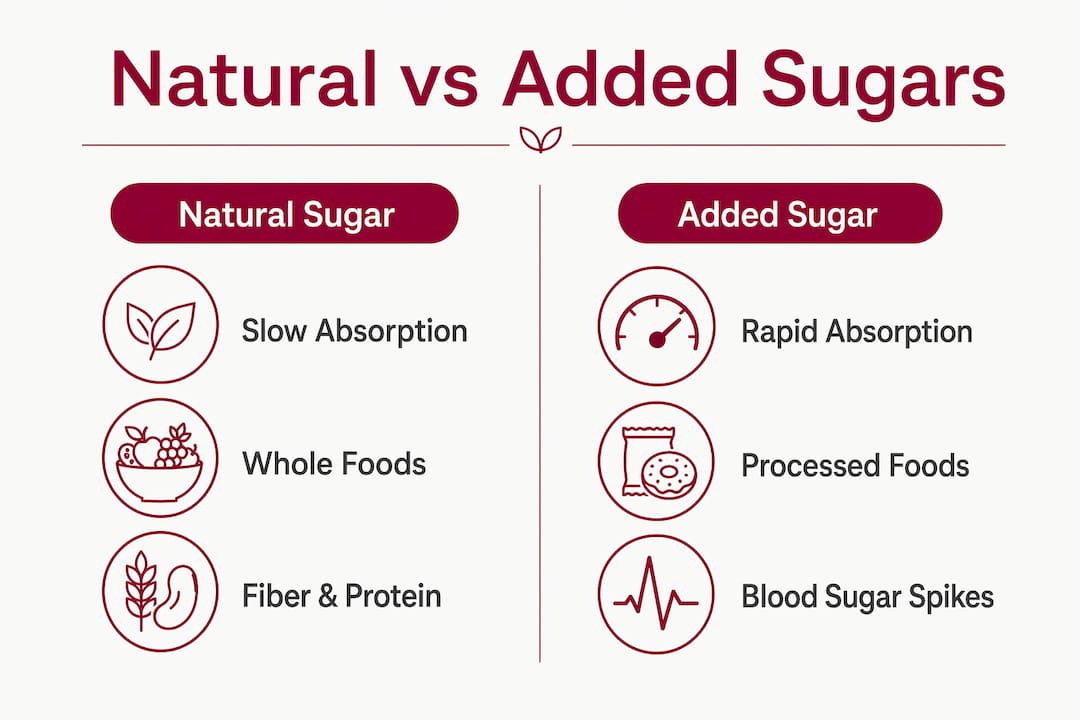
The food matrix concept explains why these sugars behave differently in your body. Fiber and protein in whole foods slow sugar absorption, reduce blood sugar spikes, and keep you feeling full longer. An orange delivers fructose alongside vitamin C, folate, and fiber. Orange juice delivers fructose with most of that fiber removed.
Natural sugar health benefits come from this surrounding nutrient package, not from the sugar molecule itself. The sugar in a cup of blueberries and the sugar in a candy bar may both break down to glucose and fructose. The blueberries slow that process down. The candy bar does not.

Pro Tip: Eat whole fruit instead of drinking fruit juice whenever possible. The fiber in whole fruit is what separates a healthy sugar source from a fast sugar hit.
What is added sugar and why is it a health concern?
Added sugars are sugars and syrups put into foods during processing or preparation. The FDA defines added sugars to include table sugar, high fructose corn syrup, honey, agave, and concentrated fruit juices. They show up in obvious places and in many places you would not expect.
Common added sugar examples include:
- Sodas and energy drinks: A single 12 oz can of cola contains roughly 39 grams of added sugar, nearly the entire daily recommended limit.
- Baked goods: Cookies, muffins, and pastries are built around added sugar as a primary ingredient.
- Condiments and sauces: Ketchup, barbecue sauce, and teriyaki sauce often contain several grams of added sugar per tablespoon.
- Flavored yogurts: Many low fat yogurts contain more added sugar than a serving of ice cream.
- Breakfast cereals: Even cereals marketed as healthy can contain 10–15 grams of added sugar per serving.
The scale of the problem is significant. 66% of 40,000 packaged food products analyzed contained at least one added sugar. That means two out of every three packaged items on a grocery store shelf are contributing to your added sugar intake, often without obvious labeling.
“Added sugars do not come with fiber or protein, leading to rapid absorption, blood sugar spikes, and increased hunger, which can promote overeating.” — Harvard Health
Excessive added sugar intake is linked to type 2 diabetes, heart disease, fatty liver disease, weight gain, and dental cavities. These are not theoretical risks. They are documented outcomes from population studies tracking long term dietary patterns.
How do natural and added sugars differ in the body?
Both natural and added sugars break down into glucose and fructose during digestion. The difference is not the molecule. The difference is the speed and the company those molecules keep.
The food matrix in whole foods slows sugar absorption. Fiber physically slows digestion. Protein triggers satiety hormones. Antioxidants reduce inflammation. None of these are present when you consume added sugars in processed foods.
| Factor | Natural sugar (whole foods) | Added sugar (processed foods) |
|---|---|---|
| Absorption speed | Slow, buffered by fiber | Rapid, no buffer |
| Blood sugar impact | Gradual rise and fall | Sharp spike and crash |
| Satiety effect | High, due to fiber and protein | Low, promotes overeating |
| Nutrient package | Vitamins, minerals, antioxidants | Minimal to none |
| Chronic disease risk | Low when from whole foods | High when overconsumed |
One of the most common misconceptions involves natural sweeteners. Honey, maple syrup, and agave are often marketed as healthier alternatives to white sugar. They are not. Honey and agave are classified as added sugars under FDA labeling and have similar physiological effects as refined sugar when consumed in large amounts. A quarter cup of maple syrup does provide 100% of the daily value for manganese, but it delivers that alongside a concentrated sugar load with no fiber to slow absorption.
The primary health danger of added sugar is the rapid absorption that causes blood sugar spikes and increased hunger. That cycle of spike and crash drives overeating more reliably than almost any other dietary pattern.
Pro Tip: When you see “made with honey” or “sweetened with agave” on a label, treat it the same as “contains added sugar.” The marketing language is different. The metabolic effect is not.
How to identify natural vs added sugars on nutrition labels
The Nutrition Facts label now separates “Total Sugars” from “Added Sugars” as a direct line item. This update, driven by FDA labeling reforms, gives you a clear number for how much sugar was put into a product versus how much arrived naturally. Total sugars includes both. Added sugars is the number that matters most for health decisions.
Reading ingredient lists is equally important. Added sugars hide in savory foods like tomato sauce, soups, salad dressings, and crackers under names most people do not recognize. Watch for:
- Dextrose, maltose, sucrose: All are added sugars with different chemical names
- High fructose corn syrup: The most common added sugar in American processed foods
- Juice concentrate: Counts as added sugar despite sounding like fruit
- Syrup variations: Brown rice syrup, corn syrup, malt syrup are all added sugars
- Evaporated cane juice: A marketing term for sugar
Ingredients are listed by weight, so if any form of sugar appears in the first three ingredients, that product is high in added sugar. A product can list five different sugar names to spread them out and make each one appear lower on the list. That is a real tactic used in food manufacturing.
For drinks specifically, the difference between natural and added sugar becomes especially visible. A guide to added sugar in drinks breaks down how regulatory recommendations apply to beverages, where added sugar is often the largest single ingredient by volume.
Pro Tip: Check the serving size before reading the added sugar number. A bottle that looks like one serving often contains two or three. Multiply accordingly.
Key Takeaways
Natural sugars from whole foods are metabolically safer than added sugars because fiber, protein, and antioxidants slow absorption and reduce blood sugar spikes.
| Point | Details |
|---|---|
| Natural sugar definition | Natural sugars occur in whole foods like fruit, dairy, and vegetables alongside fiber and nutrients. |
| Added sugar definition | Added sugars are introduced during processing and include honey, syrups, and juice concentrates. |
| The food matrix advantage | Fiber and protein in whole foods slow sugar absorption and reduce blood sugar spikes. |
| Label reading strategy | Check “Added Sugars” on the Nutrition Facts label and scan ingredient lists for hidden sugar names. |
| Natural sweetener misconception | Honey, agave, and maple syrup are classified as added sugars and carry similar metabolic risks when overconsumed. |
What I have learned from watching people misread sugar labels
The most persistent mistake I see is people treating “natural” as a synonym for “safe.” Honey is natural. Agave is natural. Concentrated grape juice is natural. All three are added sugars under FDA rules, and all three can have similar effects on blood sugar as white sugar when you consume them in large amounts. The word “natural” on a food label is a marketing claim, not a health guarantee.
What actually works is shifting focus from the sugar type to the food source. A whole mango has sugar. It also has fiber, vitamin C, and folate. A mango flavored energy drink has sugar and very little else. The distinction is not about the molecule. It is about what surrounds it.
I also think the elimination mindset backfires. Telling yourself you can never have anything sweet creates restriction cycles that tend to end in overconsumption. A better frame is mindful reduction. Swap a sweetened beverage for a lower sugar option. Choose whole fruit over fruit juice. Read labels on condiments, because that is where hidden added sugar accumulates fastest in most people’s diets.
The practical goal is not zero added sugar. The goal is staying under the FDA’s 50 gram daily limit while getting most of your sweetness from whole food sources. That is achievable without turning every meal into a calculation.
— Luna
Aboocha and the case for lower sugar drinks
Choosing drinks with less added sugar is one of the fastest ways to reduce your daily added sugar intake. Beverages are where most people exceed the FDA’s recommended limit without realizing it.

Aboocha crafts kombucha beverages with lower sugar content and flavor profiles built around real ingredients like Sour Plum and Yuzu Osmanthus. These are not stripped down or flavorless drinks. They are designed for people who want something genuinely satisfying without the added sugar load of conventional sodas or sweetened teas. Aboocha’s low sugar drink alternatives show how fermented beverages can deliver complexity and gut health benefits with far less added sugar. Subscription plans make it easy to keep better options on hand consistently. Visit Aboocha to see the full range.
FAQ
What is the difference between natural and added sugar?
Natural sugar occurs inherently in whole foods like fruit, dairy, and vegetables. Added sugar is any sugar introduced during food processing or preparation, including syrups, honey, and juice concentrates.
Are natural sugars healthier than added sugars?
Natural sugars in whole foods are generally healthier because fiber and protein slow their absorption and reduce blood sugar spikes. Added sugars lack this buffering effect and are linked to chronic disease when overconsumed.
Is honey a natural sugar or an added sugar?
Honey is classified as an added sugar under FDA labeling rules. Despite being minimally processed, it delivers concentrated sweetness without fiber and has similar metabolic effects as refined sugar when consumed in excess.
How much added sugar is too much per day?
The FDA recommends no more than 50 grams of added sugar per day based on a 2,000 calorie diet. The American Heart Association sets stricter limits, particularly for women and children.
How do I spot added sugars on a nutrition label?
Check the “Added Sugars” line on the Nutrition Facts label and scan the ingredient list for names like dextrose, high fructose corn syrup, malt syrup, and juice concentrate. If any sugar name appears in the first three ingredients, the product is high in added sugar.