
If you’ve picked up a bottle of kombucha or water kefir and wondered what does sparkling fermented drink mean, you’re asking exactly the right question. The phrase sounds simple but combines two distinct processes: fermentation (a biological transformation driven by microorganisms) and carbonation (dissolved CO2 creating bubbles). Not every sparkling drink is fermented, and not every fermented drink is sparkling. Understanding where those two qualities meet is the key to making smarter choices about what you put in your body.
Table of Contents
- Key takeaways
- What sparkling fermented drinks really mean
- Types of sparkling fermented drinks and how they’re made
- Health benefits and what to watch out for
- How to read labels and choose the right drink
- My honest take after years of watching this category grow
- Why Aboocha is worth trying first
- FAQ
Key takeaways
| Point | Details |
|---|---|
| Two processes, one drink | Sparkling fermented drinks combine biological fermentation with natural carbonation from CO2 produced by microbes. |
| Natural vs. added fizz | True fermented sparkle comes from trapped CO2 during fermentation, not injected gas like soda. |
| Probiotics vary widely | Not all sparkling fermented beverages contain clinically proven probiotic strains; benefits depend on product and handling. |
| Labels can mislead | Terms like “live cultures” and “naturally carbonated” require scrutiny. Read ingredient and fermentation details carefully. |
| Start slow | New drinkers should ease in with small servings to gauge how their gut responds before increasing intake. |
What sparkling fermented drinks really mean
The term you’ll see in scientific and food industry writing is fermented carbonated beverage. The everyday phrase “sparkling fermented drink” maps directly to that concept.
Fermentation is a chemical process in which yeast or bacteria break down sugars in a liquid. As they consume those sugars, they release byproducts: organic acids, alcohol in small quantities, and crucially, carbon dioxide gas. When that CO2 is trapped inside a sealed container, pressure builds, and the drink becomes fizzy. That is natural carbonation, and it is fundamentally different from the kind you find in soda.
Soda is made by forcing CO2 gas into liquid under pressure. There are no microbes involved, no fermentation, and no bioactive compounds created in the process. With sparkling fermented beverages, the fizz is a byproduct of biological activity. The bubbles you feel on your tongue are evidence that something living worked on that liquid.
Two specific microbial cultures are responsible for most of the sparkling fermented beverages you’ll find on store shelves. The first is a SCOBY (Symbiotic Culture of Bacteria and Yeast), used in kombucha production. The second is kefir grains, used in both dairy kefir and water kefir. Both cultures ferment sugars and produce CO2 as part of that process.
Carbonation depends on CO2 retention in sealed containers during and after fermentation. If the container is left open, the CO2 escapes and the drink goes flat. Timing the seal is part of the craft, and small producers often get creative here to hit the exact fizziness they want.
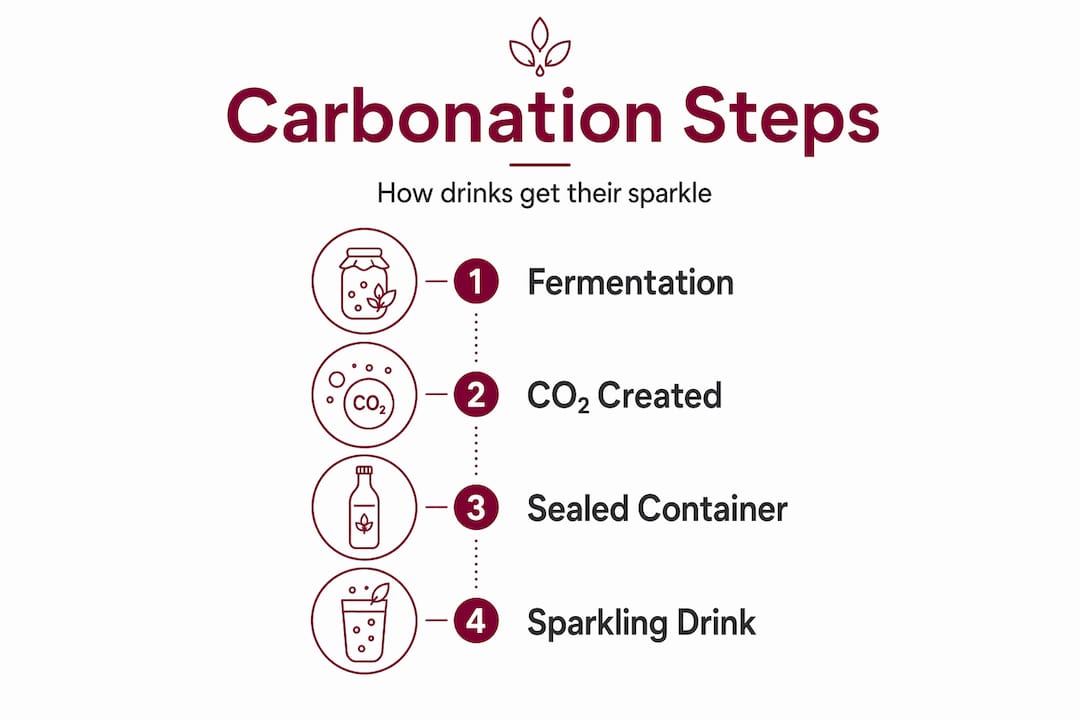
Pro Tip: If you’re buying from a store, look for drinks stored in the refrigerator section. Cold temperatures slow fermentation and help preserve both the carbonation and the live cultures inside.
Types of sparkling fermented drinks and how they’re made
Understanding the main fermented drink types helps you pick the one that fits your taste and health goals. Each drink starts from a different base and uses a different microbial culture, which changes the flavor, carbonation level, and nutritional profile significantly.
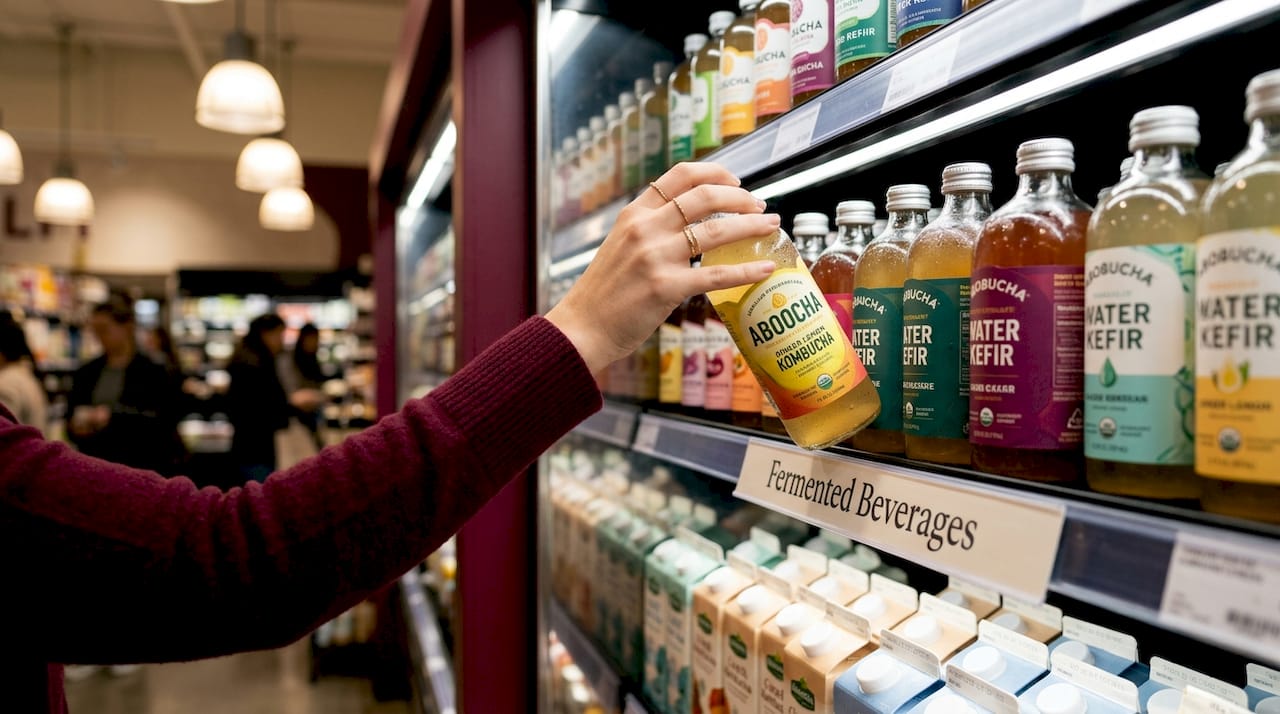
Kombucha starts with sweetened black or green tea. A SCOBY is added and ferments the liquid over one to four weeks. Fermenting tea with SCOBY produces organic acids, B vitamins, enzymes, and natural CO2. The result is a tangy, lightly sparkling drink with a complex flavor profile. A second fermentation stage in sealed bottles amplifies the carbonation and allows brewers to add fruit, botanicals, or other flavors.
Water kefir works differently. Water kefir is a traditionally fermented beverage that uses kefir grains (a different culture from kombucha’s SCOBY) added to sugar water or fruit juice. The grains produce lactic acid, a small amount of alcohol, and CO2. The result is lighter and sweeter than kombucha, with a milder taste, and works well for people who find kombucha too vinegary.
Dairy kefir is fermented milk using kefir grains. It can be lightly sparkling when freshly made and bottled, though most commercial versions are sold still. It carries a more pronounced probiotic load than plant-based alternatives.
Here’s how the main options compare side by side:
| Drink | Fermentation agent | Carbonation method | Taste profile | Key health aspect |
|---|---|---|---|---|
| Kombucha | SCOBY (bacteria and yeast) | Natural (trapped CO2) | Tangy, tart, slightly sweet | Organic acids, bioactive compounds |
| Water kefir | Kefir grains | Natural (trapped CO2) | Light, mildly sweet | Diverse microbial cultures |
| Dairy kefir | Kefir grains | Minimal, mostly still | Creamy, tangy | High probiotic concentration |
| Jun tea | SCOBY with honey and green tea | Natural (trapped CO2) | Floral, delicate | Similar bioactive profile to kombucha |
A few characteristics apply across all genuine sparkling fermented beverages:
- The carbonation is produced biologically, not injected mechanically
- Live microorganisms are present at the time of bottling (unless pasteurized after)
- Fermentation substrates (tea, juice, milk, sugar water) directly shape the flavor and compound profile
- Microbial community and compounds vary widely, even between batches from the same producer
If you’re curious about how these drinks pair with food, kombucha flavor pairing offers some genuinely creative combinations worth exploring.
Health benefits and what to watch out for
The health conversation around sparkling fermented drinks is real but needs calibration. The benefits are tied to specific bioactive compounds, live cultures, and acids created during fermentation. The role of kombucha acids in the body is one part of that larger picture.
Here is what the research actually supports:
- Kombucha and similar beverages contain organic acids (acetic, gluconic, lactic) that may support digestion and gut environment
- Probiotic bacteria present in live-culture beverages can contribute to microbial diversity in the gut
- Bioactive compounds like polyphenols (from tea in kombucha) have antioxidant properties
- Fermented beverages may support immune function through gut-immune axis interactions
Here is what the research is more cautious about:
- Health effects vary by product, microbe composition, and how the drink was handled after bottling
- Pasteurized sparkling fermented beverages lose their live cultures, reducing or eliminating probiotic benefit
- Overconsumption can cause bloating, gas, or digestive discomfort, especially for first-time drinkers
- People with compromised immune systems, those who are pregnant, or those with underlying health conditions should consult a doctor before adding fermented beverages regularly
Fermentation variables significantly influence the characteristics and safety of kombucha and similar drinks. There is no universal formula. Two bottles labeled “kombucha” can have meaningfully different microbial profiles, acid levels, and sugar content.
Pro Tip: Start with four to six ounces per day and observe how your body responds over a week before increasing your intake. Your gut microbiome takes time to adjust to new cultures.
For anyone picking up a sparkling fermented drink for the first time, this guide for first-time drinkers walks through what to expect and how to ease in sensibly.
How to read labels and choose the right drink
Knowing what sparkling beverages are is one thing. Picking a good one off the shelf is another. Marketing terms vary widely, and a few labels are worth decoding before you buy.
Follow these steps when evaluating any sparkling fermented drink:
- Check “naturally carbonated” vs. “carbonated.” “Naturally carbonated” means the fizz came from fermentation. “Carbonated” often means CO2 was added after the fact, like soda. The distinction matters for both authenticity and health claims.
- Look for “live cultures” or “raw.” These terms indicate the drink has not been pasteurized after fermentation and should contain active microorganisms. No live culture label often means the probiotic benefit is gone.
- Read the sugar content. Fermentation consumes sugar, so a well-fermented drink should have less sugar than the base liquid started with. High residual sugar may indicate the fermentation was cut short.
- Identify the substrate. What was fermented? Tea, juice, milk, or sugar water each produce different compounds and flavors. Knowing the base helps you predict the taste and nutritional profile.
- Check the storage condition at the store. Authentic live-culture sparkling fermented beverages should be refrigerated. Room-temperature storage for extended periods can alter microbial activity.
- Avoid misleading “probiotic” labels. Not every drink labeled “probiotic” contains clinically substantiated probiotic strains. A general claim without strain identification is a marketing move, not a health guarantee.
Shelf life matters too. Once opened, most sparkling fermented beverages should be consumed within three to five days. The CO2 escapes once the seal breaks, and the flavor profile shifts as fermentation continues slowly even in the fridge.
For those curious about how different sparkling beverages compare, probiotic soda versus fermented drinks is a useful comparison when navigating gut health drink options.
My honest take after years of watching this category grow
I’ve watched sparkling fermented beverages go from health food store obscurity to mainstream grocery shelves, and I have mixed feelings about what that growth has brought with it.
The genuine article, a well-made kombucha or water kefir with real live cultures and natural carbonation, is one of the most interesting things you can drink. The depth of flavor from secondary fermentation, the mild tang from organic acids, the fact that something alive made those bubbles. It’s a completely different category from soda.
What I’ve found genuinely frustrating is how loosely the term “fermented” now gets applied. I’ve seen products call themselves fermented beverages when they’ve been pasteurized, have added CO2, and list sugar content higher than a can of juice. The word “fermented” has become a marketing badge rather than a production method description.
My honest advice: quality varies more than marketing suggests. The brand, the batch, the storage conditions, and the specific culture used all shape what you’re actually drinking. Start with small amounts from transparent producers who tell you what’s in the bottle and how it was made. Treat the health claims as a bonus rather than the point. Drink it because it tastes good and makes you feel good. That’s a sustainable relationship with any beverage.
— Luna
Why Aboocha is worth trying first
If all of this has made you curious about trying a sparkling fermented drink done right, Aboocha is a strong starting point.
Aboocha’s Original Kombucha is naturally fermented using a live SCOBY culture, with lower sugar content than most commercial kombucha brands and clean, honest carbonation from the fermentation process itself. For something more unexpected, the Coffee Kombucha brings a distinct flavor profile that delivers the bioactive benefits of kombucha alongside a smooth, coffee-forward taste. Both options are crafted for people who actually care what’s in their bottle, not just what’s on the label.
FAQ
What does “sparkling fermented drink” mean?
A sparkling fermented drink is a beverage produced through fermentation, where microorganisms like yeast or bacteria break down sugars and release CO2, creating natural carbonation. The fizz is a biological byproduct, not injected gas.
Is kombucha a sparkling fermented drink?
Yes. Kombucha is fermented sweetened tea using a SCOBY, which produces CO2 during fermentation, making it naturally sparkling with a tangy flavor and bioactive compounds.
Are sparkling fermented drinks the same as probiotic sodas?
No. Sparkling fermented drinks produce their carbonation through live microbial fermentation, while probiotic sodas often add CO2 mechanically and may include probiotic strains as separate additions rather than through genuine fermentation.
How do I know if a sparkling fermented drink has live cultures?
Look for labels that say “raw,” “unpasteurized,” or “live cultures,” and check that the product is refrigerated. Pasteurized sparkling fermented beverages no longer contain active microorganisms.
Can sparkling fermented drinks cause side effects?
Yes, in some cases. Overconsumption can lead to bloating or digestive discomfort, especially when starting out. People with immune conditions or who are pregnant should consult a doctor before drinking them regularly.