
In this article, “cold chain beverage (Singapore)” means a chilled, ready-to-drink raw kombucha that must stay refrigerated from the moment it leaves production until you open it. The number to remember: 1.1–4.4°C (34–40°F), the range the Kombucha Brewers International recommends for raw, unpasteurized kombucha. Drop below that and fermentation stalls too hard; rise above it and yeast activity picks back up, building CO2, raising alcohol, and changing the flavor you paid for.
Table of Contents
- Why does refrigeration matter so much for raw kombucha?
- How to buy and transport chilled kombucha without breaking the cold chain
- How to store and serve kombucha at home
- What research says about kombucha’s digestive benefits
- How beverage cold chains work in Singapore
- Who keeps Singapore’s cold beverage supply running?
- What makes cold chain integrity hard to maintain in Singapore?
- What regulations govern cold chain beverages in Singapore?
- What technology keeps Singapore’s cold chain on track?
- How sustainable is Singapore’s beverage cold chain?
- Key Takeaways
- Why refrigeration is the one thing most buyers underestimate
- Aboocha delivers chilled kombucha that stays cold from bottle to fridge
- Useful sources
- FAQ
Why does refrigeration matter so much for raw kombucha?
Cold temperature slows yeast activity and arrests active fermentation inside a sealed bottle. That is the short answer. The longer one matters for safety.
Raw kombucha keeps fermenting after bottling. In a warm environment, yeast converts residual sugars into CO2 and ethanol faster than the label assumes. The result is a bottle under rising pressure, a flavor that drifts sour or vinegary, and an alcohol content that may creep above the legal threshold for a non-alcoholic beverage. In glass bottles, which producers prefer because glass tolerates carbonation pressure and does not leach flavor, that pressure buildup can cause leaks or, in extreme cases, breakage.
Industry consensus: The KBI’s official cold-storage guidance sets 34–40°F (1.1–4.4°C) as the standard for raw, unpasteurized kombucha — a range that slows fermentation without freezing the live cultures that give the product its value.
Specific risks when the cold chain breaks:
- Pressure buildup from excess CO2, leading to foaming or bottle failure
- Alcohol rise above non-alcoholic legal limits, creating a compliance problem
- Flavor drift toward harsh vinegar or off-notes
- Live culture counts drop as conditions favor certain microbes over others
- Label best-before dates become unreliable
Pro Tip: When a delivery arrives, press gently on the side of the bottle. A noticeably hard, drum-tight bottle suggests over-carbonation from temperature exposure in transit. Refrigerate it immediately, open it very slowly, and consume it soon.
How to buy and transport chilled kombucha without breaking the cold chain
Buy only products labeled “keep refrigerated” or explicitly marked “raw” when live cultures are what you want. That label is not marketing; it is a handling instruction.
At the point of purchase or on receipt of a delivery:
- Check that the retail display or delivery box is actually cold, not just cool
- Inspect the seal and cap for signs of leakage or swelling
- Feel the bottle: it should be cold to the touch throughout
- Ask the retailer how long the product has been out of refrigeration if you are unsure
For online orders, refrigerated shipping practices matter. Request cold-pack options or next-day refrigerated delivery when available. Accept only parcels that arrive cool. If a package has clearly warmed in transit, refrigerate it immediately and wait a few hours before opening to let pressure stabilize.
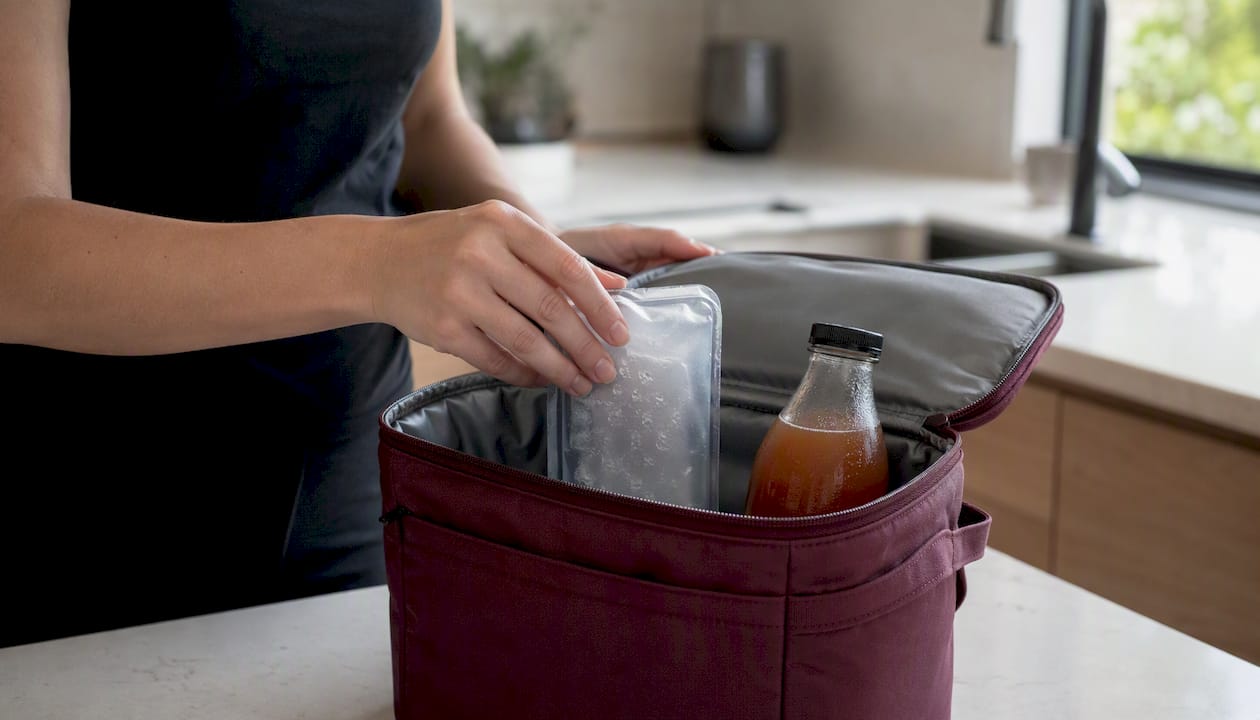
Pro Tip: A small insulated tote with a frozen gel pack costs very little and protects your kombucha during the commute home from a shop or market. The last mile is often the warmest part of the journey.
For readers curious about how local producers handle distribution, Aboocha’s guide to local fermented beverages in Singapore covers production and cold-storage context in detail.
How to store and serve kombucha at home
Keep kombucha at the back of a lower fridge shelf, upright, and away from the door. The door is the warmest part of most refrigerators because it opens frequently. The back of a lower shelf stays closest to the set temperature.
A few additional points:
- Keep bottles away from strong-smelling foods; kombucha can absorb odors through its cap
- Serve at fridge temperature (around 4°C / 39°F) for the best flavor and safest carbonation level
- Consume before the best-before date, and prioritize any bottle that has been out of the fridge for more than a couple of hours
Opening a fizzy bottle safely:
- Chill the bottle for at least two hours before opening
- Hold it upright and loosen the cap very slowly, just a crack, to let gas escape gradually
- Wait for the hiss to stop before removing the cap fully
- Tilt the bottle slightly over a glass to catch any foam
Signs that a bottle has experienced temperature stress at home:
- Excessive foam on pouring, more than a normal gentle fizz
- Cap that feels noticeably harder than when you bought it
- Slight bulging around the cap or bottle shoulders
What research says about kombucha’s digestive benefits
Clinical research published in peer-reviewed journals suggests that regular consumption of raw kombucha may modulate gut microbiota and ease some gastrointestinal symptoms. The key qualifier: benefits depend on live culture counts, which vary across brews and producers. A bottle that has been stored warm, or one that has been pasteurized, delivers far fewer active microbes.
Pasteurization kills the live cultures that drive probiotic effects. That is not a criticism of pasteurized kombucha as a beverage; it is simply a fact about what the heat process does. If gut microbiota support is your reason for buying, raw and refrigerated is the only category that delivers it.
From the research: A 2025 peer-reviewed review found that kombucha’s microbial communities, including acetic acid bacteria and yeasts, contribute to its potential health effects, but emphasized that product quality, storage conditions, and live culture viability all affect outcomes. Source: MDPI Fermentation, 2025
Practical implications for health-focused buyers:
- Choose raw, chilled kombucha for live cultures; pasteurized versions do not offer the same probiotic potential
- Watch sugar content; some commercial kombuchas add sugar post-fermentation
- Consult a healthcare professional before regular consumption if you are pregnant, immunocompromised, or managing a digestive condition
The fermented beverages review on PMC also notes that controlled pH and storage conditions are critical for preventing unwanted microbial growth, reinforcing why the cold chain is a health issue, not just a quality one.
This article is general information, not medical advice. Confirm any health-related decisions with a qualified professional.
How beverage cold chains work in Singapore
Singapore’s approach to refrigerated beverage distribution reflects its tropical climate: ambient temperatures regularly exceed 30°C, which means any gap in refrigeration accelerates spoilage and fermentation far faster than in a temperate market like Switzerland. Producers and distributors rely on refrigerated warehousing, temperature-controlled trucks, and insulated last-mile packaging to keep products within spec from factory to consumer. For a ready-to-drink beverage like raw kombucha, that chain must be unbroken.
Who keeps Singapore’s cold beverage supply running?
Singapore’s cold beverage supply depends on a network of cold-storage warehouse operators, refrigerated logistics providers, and last-mile couriers equipped with insulated vehicles or packaging. Retailers, from supermarkets to specialty health stores, maintain dedicated refrigerated display units. E-commerce brands handling raw kombucha typically partner with cold-chain couriers or use insulated packaging with gel packs for direct-to-consumer delivery, particularly for same-day or next-day orders.
What makes cold chain integrity hard to maintain in Singapore?
The primary challenge is the ambient heat. At 30°C or above, a bottle of raw kombucha left unrefrigerated for even a short period begins active fermentation again. Urban density adds complexity: last-mile delivery in Singapore involves frequent stops, elevator waits, and handoffs that expose products to warm air. Humidity accelerates label degradation and can affect seal integrity over time. These conditions make insulated packaging and rapid handoff protocols non-negotiable for raw products.
What regulations govern cold chain beverages in Singapore?
Singapore’s Singapore Food Agency (SFA) sets the standards for food safety, including temperature requirements for perishable beverages. Producers and importers must comply with the Sale of Food Act and relevant SFA guidelines covering storage, transport, and labeling of chilled products. Alcohol content declarations and best-before labeling are mandatory. For Swiss consumers ordering from Singapore-based brands, the producer’s compliance with SFA standards is the baseline; Swiss import rules under the FSA then apply on arrival.
What technology keeps Singapore’s cold chain on track?
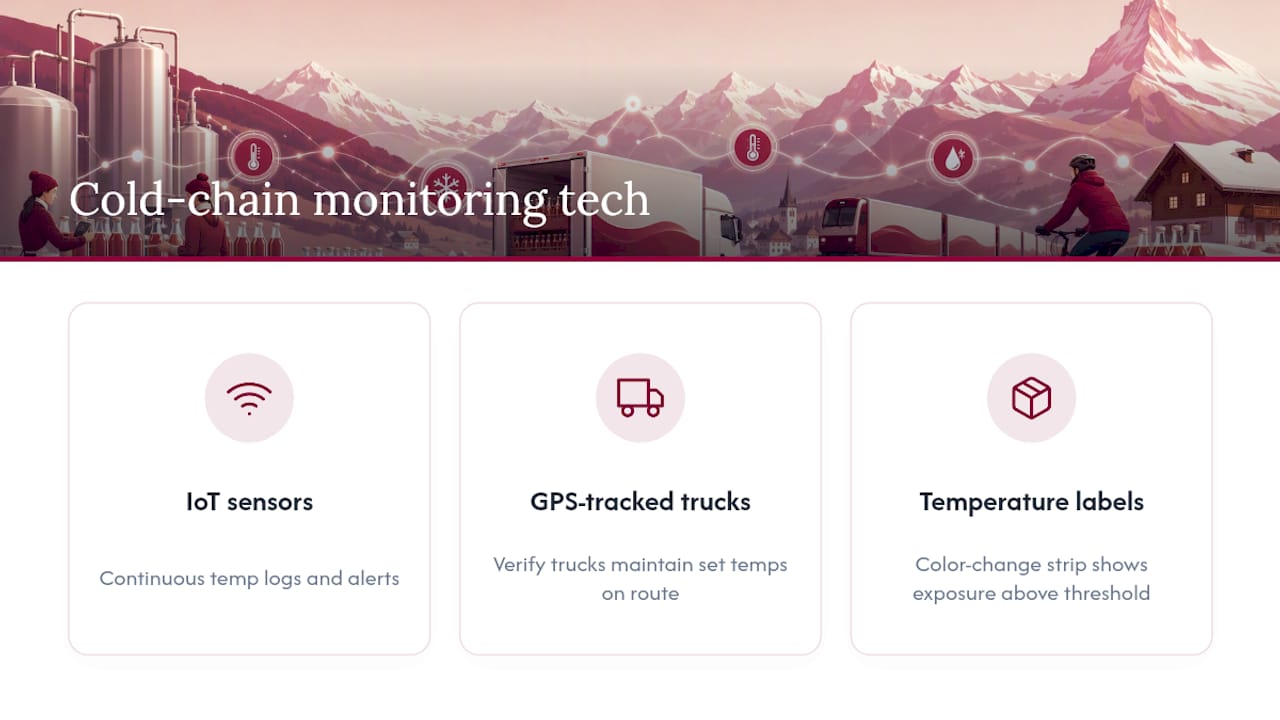
Real-time temperature monitoring is now standard across serious cold-chain operations in Singapore. IoT sensors attached to pallets or individual shipments log temperature continuously and alert operators to excursions. GPS-linked refrigerated vehicles allow dispatchers to verify that trucks maintain set temperatures throughout a route. At the consumer end, some brands include temperature-indicator labels on packaging, a simple color-change strip that shows whether a product has been exposed to warmth above a set threshold during transit.
How sustainable is Singapore’s beverage cold chain?
Refrigeration is energy-intensive, and Singapore’s cold-chain operators face pressure to reduce their carbon footprint. Responses include switching to natural refrigerants with lower global-warming potential, optimizing delivery routes to reduce idle time and fuel use, and designing insulated packaging from recycled or compostable materials. Some producers consolidate orders to reduce the number of refrigerated deliveries per customer, which cuts emissions per bottle delivered. For consumers, choosing a subscription delivery model over individual ad-hoc orders supports that consolidation.
Key Takeaways
Raw, refrigerated kombucha requires an unbroken cold chain from production to your fridge to preserve live cultures, maintain safe carbonation, and deliver the gut-health benefits you are buying it for.
| Point | Details |
|---|---|
| Recommended storage temperature | Keep raw kombucha at 1.1–4.4°C (34–40°F) from purchase to consumption. |
| Raw vs. pasteurized | Only raw, unpasteurized kombucha contains live cultures; pasteurization removes them. |
| Swiss label checks | Confirm “keep refrigerated,” declared alcohol %, best-before date, and producer contact before buying. |
| Home storage tip | Store upright at the back of a lower fridge shelf; never in the door. |
| Aboocha | Aboocha sells raw, chilled kombucha with low sugar and diverse flavors, available by bottle, set, or subscription for regular refrigerated delivery. |
Why refrigeration is the one thing most buyers underestimate
Most people buying kombucha for gut health focus on the label claims and the flavor. The cold chain rarely enters the conversation until something goes wrong. That is a mistake, because a bottle of raw kombucha that spent two days in a warm warehouse is not the same product as one that was kept at 4°C throughout. The live culture count drops, the flavor shifts, and the health rationale weakens.
The practical implication: where you buy matters as much as what you buy. A brand that controls its cold chain from production to your door is delivering a fundamentally different product than one that hands off to an unrefrigerated courier and hopes for the best. Swiss consumers have the FSA framework to hold producers accountable, but the label check is still on you.
Aboocha delivers chilled kombucha that stays cold from bottle to fridge
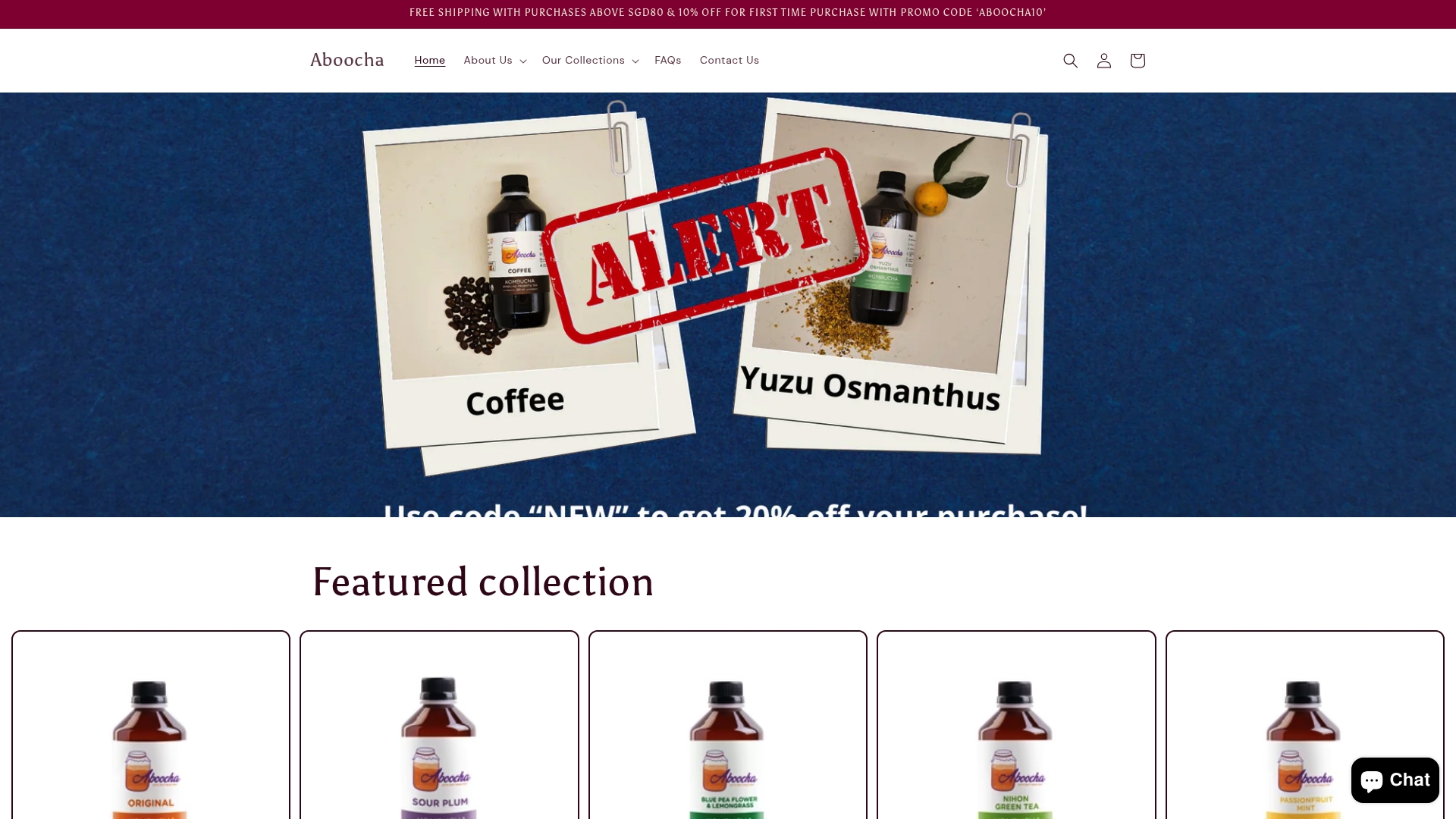
Aboocha’s raw kombucha is built for regular consumption by people who take gut health seriously. Every bottle ships chilled, with low sugar and flavors like Sour Plum and Yuzu Osmanthus that hold up best when the cold chain holds. The subscription model is not just convenient; it reduces the last-mile risk by consolidating deliveries on a schedule you control, so you are not waiting for a warm parcel on a hot afternoon.
Product highlights:
- Low-sugar formulations that keep fermentation predictable and alcohol content in check
- Flavor variety across individual bottles and curated sets
- “Keep refrigerated” handling built into every order and dispatch
- Subscription cadence options for regular delivery without reordering each time
When your order arrives, refrigerate it immediately. Do not leave it on a countertop while you unpack the rest of the delivery. That one habit protects everything the cold chain worked to preserve.
Browse Aboocha’s kombucha range or start a subscription to keep live-culture kombucha stocked in your fridge without the guesswork of one-off orders.
Useful sources
- KBI Official Guidance - Cold Storage for Raw, Unpasteurized Kombucha
- Microbial composition and potential health effects of kombucha (MDPI)
- 817.0 - Federal Act of 20 June 2014 on Foodstuffs and Utility Articles (Foodstuffs Act, FSA)
- Authorisation of novel foods (BLV/FSVO)
- Fermented beverages review (PMC)
- How to Ship Kombucha Safely | Brew Movers
- SWITZERLAND (beverage regulation summary)
- Keeping the Kombucha Cold Chain Intact | QProducts
FAQ
What temperature should raw kombucha be stored at?
Raw, unpasteurized kombucha should be kept at 1.1–4.4°C (34–40°F) at all times. This range slows fermentation, prevents excess CO2 and alcohol buildup, and preserves live cultures.
What is the difference between raw and pasteurized kombucha?
Raw kombucha is unpasteurized and contains live cultures; pasteurized kombucha has been heat-treated, which kills those cultures and removes the probiotic potential. Only raw kombucha requires refrigeration throughout its life.
How do I know if my kombucha has spoiled?
Discard any bottle with a putrid or rotten smell, visible mold, or a leaking or exploded container. Extreme bulging and an unusually strong alcohol odor are also signs that fermentation has gone too far.
Does Aboocha keep its kombucha refrigerated during delivery?
Yes. Aboocha ships its raw kombucha chilled and recommends refrigerating deliveries immediately on receipt to maintain the live cultures and flavor the product is designed to deliver.
Is raw kombucha regulated in Switzerland?
Yes. Under the Federal Food Safety Office (FSVO) and the Federal Act on Foodstuffs (FSA), producers are responsible for food safety throughout the supply chain, including storage and transport of fermented beverages.