
The craft beverage movement is a consumer-driven shift away from mass-produced drinks toward small-batch, independently made beverages that prioritize ingredient quality, transparency, and local roots. For kombucha buyers in Switzerland, that translates to one practical rule: look for producers who show you exactly what is in the bottle, how much sugar per 100 ml, and where the cultures come from.
Quick check before you buy:
- Sugar content listed clearly on the label (ideally low sugar content per 100 ml)
- A named producer with a traceable batch or production story
- Live cultures confirmed (unpasteurized, with visible sediment or a “contains live cultures” statement)
Table of Contents
- What does “craft” actually mean in Switzerland?
- Why craft kombucha is better for your gut
- How to spot a genuine craft kombucha producer
- How to read a kombucha label for low sugar
- Where to find craft kombucha in Switzerland
- Aboocha: low-sugar craft kombucha built for digestion
- Key Takeaways
- Why the “craft” label deserves more scrutiny, not less
- Aboocha: try low-sugar craft kombucha with a subscription
- Useful sources
- FAQ
What does “craft” actually mean in Switzerland?
Switzerland has no statutory definition for “craft” when it comes to non-beer beverages like kombucha. The word functions as a market signal, not a regulated standard. Swiss brewers themselves have pushed back against rigid definitions, preferring an ethos-based approach that centers independence, local raw materials, and artisan production over fixed output caps.
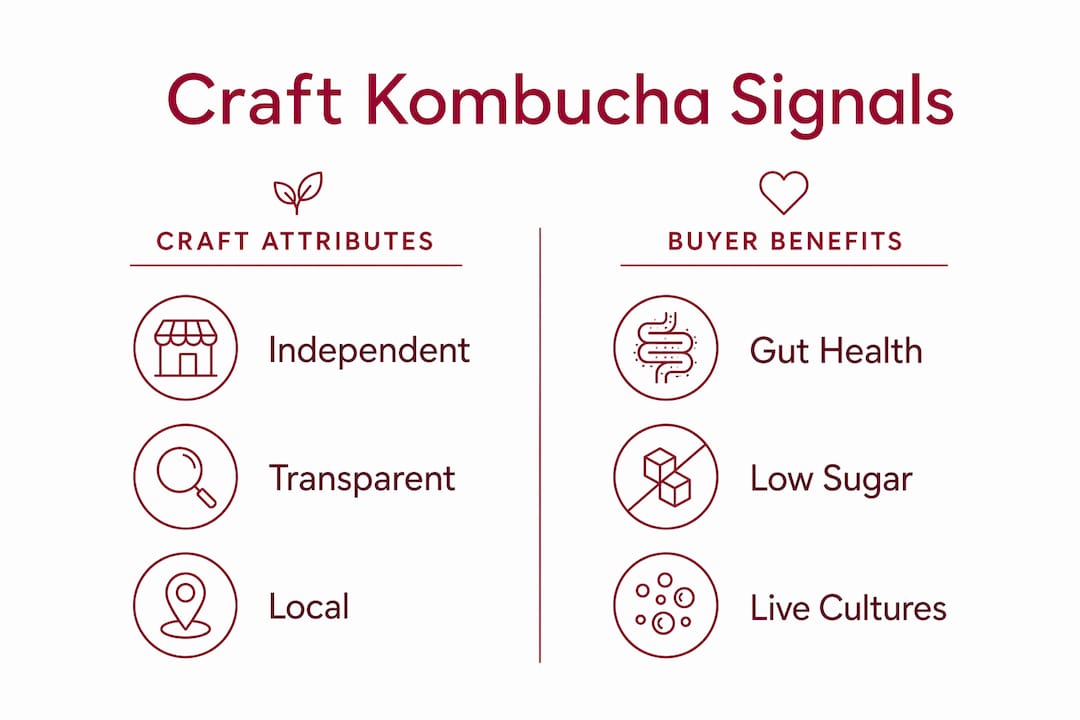
In practice, when a Swiss kombucha producer calls their product “craft,” you can reasonably expect:
- Independent ownership: No majority stake held by a large beverage conglomerate
- Small-batch production: Limited runs that allow quality control and recipe flexibility
- Local sourcing: Ingredients tied to Swiss or regional supply chains where possible
- Reusable packaging: Swing-top bottles or refillable formats as a sustainability commitment
Packaging matters more than many buyers realize. An autumn 2025 MIS Trend study found that about half of Swiss respondents say packaging directly influences their perception of product quality. For craft kombucha, a swing-top glass bottle is not just aesthetic — it signals a producer who thinks beyond single-use convenience.
| Craft signal | What it means for kombucha buyers |
|---|---|
| Independent ownership | Producer answers to consumers, not a corporate parent |
| Small-batch numbering | Traceability and quality control per run |
| Reusable packaging | Sustainability commitment; 83% CO₂ reduction after 15 bottle washes |
| Local sourcing statement | Fresher ingredients, shorter supply chain |
Why craft kombucha is better for your gut
Craft producers can pivot fast. Analysts note that smaller beverage businesses respond to consumer trends like lower-sugar profiles and digestive-health claims well before mass-market incumbents catch up. That agility shows up directly in the bottle.
For digestion, the attributes that matter most are:
- Live cultures: Unpasteurized kombucha retains the bacteria and yeast that support gut microbiome diversity. Pasteurization kills them.
- Low added sugar: Fermentation consumes sugar naturally; craft producers who extend fermentation time produce a drier, lower-sugar product.
- Minimal processing: Fewer stabilizers and artificial flavors mean less interference with the live culture environment.
- Transparent ingredient lists: You can verify what you are actually drinking.
Swiss craft producers also draw on terroir-driven ingredient choices — local botanicals, seasonal fruits, and regionally sourced teas — that create flavor complexity without relying on added sugar. That same creativity applies directly to botanical-infused kombucha formulations.
Pro Tip: Shake the bottle gently before buying. A small amount of natural sediment at the bottom is a good sign — it indicates live cultures are still active. A perfectly clear, shelf-stable kombucha has almost certainly been pasteurized.
Trust signals worth checking: lab-tested microbial counts, stated alcohol by volume (Swiss law requires this above 0.5% ABV), batch numbers, and a producer page that names the fermentation team.
How to spot a genuine craft kombucha producer
The craft beer movement, which took root in Switzerland as a direct reaction to hyperindustrialization, built its credibility on community transparency. Kombucha producers who carry that same ethos make it easy to verify their claims.
Checklist for evaluating a producer:
- Producer name, location, and ownership structure are publicly stated
- Batch numbers appear on the bottle or label
- Ingredient list names every component (tea type, sugar source, cultures, added botanicals)
- Local sourcing is specific (“Valais apple juice,” not just “natural flavors”)
- Packaging is reusable or returnable
What a genuine label should show:
- Sugar per 100 ml (not just per serving)
- Live culture statement or “unpasteurized” declaration
- Alcohol by volume
- Batch number or production date
- Producer contact details
Pro Tip: Search the producer’s name on Instagram or Google Maps. Craft kombucha makers with genuine community roots usually have tagged posts from local markets, event appearances, or customer photos. A brand with zero community footprint and a polished website but no real-world presence deserves extra scrutiny.
How to read a kombucha label for low sugar
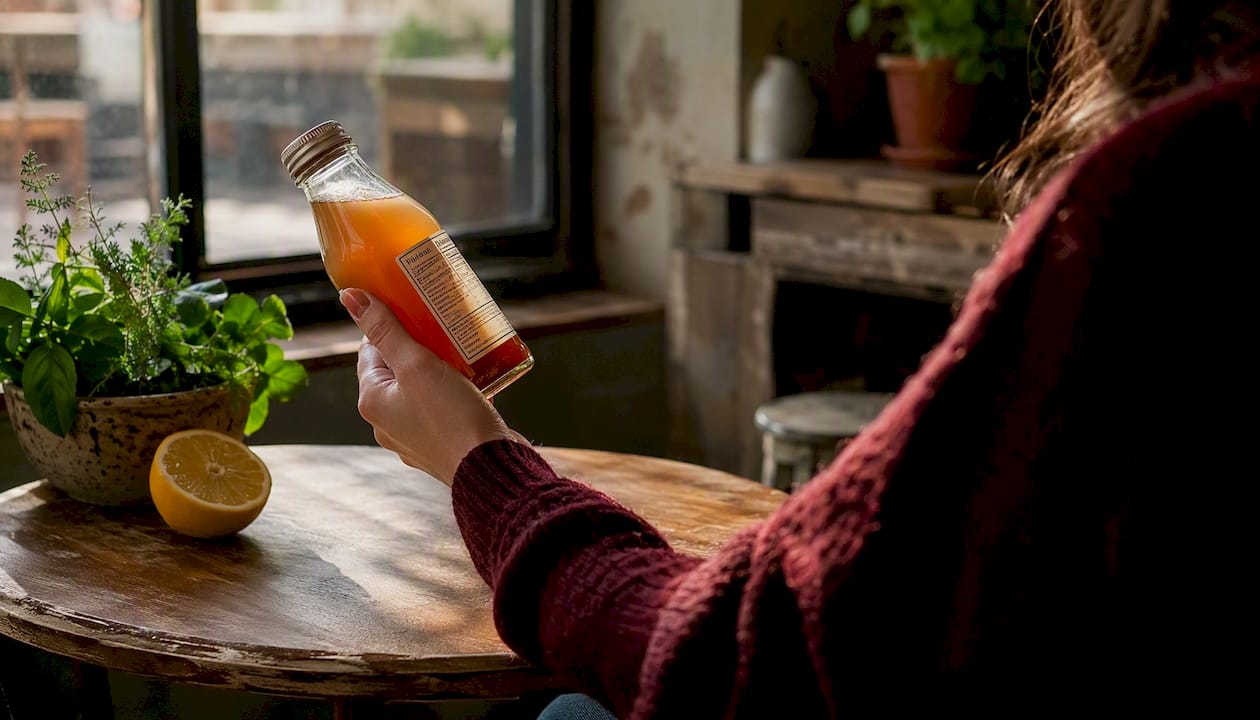
“Low sugar” has no universal legal threshold in Switzerland for fermented beverages, but a practical benchmark is under 5 g of sugar per 100 ml. Many mass-market kombuchas sit at 8–12 g per 100 ml, which is closer to a soft drink than a health beverage.
| Label element | What to look for | Why it matters |
|---|---|---|
| Sugar per 100 ml | Under 5 g | Reflects genuine fermentation, not sweetened dilution |
| Ingredients list | Named tea, water, cultures, specific botanicals | Vague “natural flavors” can mask added sugar sources |
| Pasteurization note | “Unpasteurized” or “contains live cultures” | Confirms gut-health benefit is intact |
| Alcohol by volume | Stated clearly | Required in Switzerland above 0.5% ABV; signals fermentation depth |
| Batch number | Present | Enables traceability and freshness verification |
Red flags to avoid: no sugar figure per 100 ml, “natural flavors” with no further detail, a pasteurized product marketed as probiotic, and no batch information anywhere on the label.
Before buying, confirm:
- Sugar is listed per 100 ml, not only per serving
- The product is not heat-treated after fermentation
- The producer can be contacted directly if you have questions
Where to find craft kombucha in Switzerland
Swiss buyers have more options than a few years ago. Channels worth checking:
- Farmers’ markets: Direct producer contact, batch freshness guaranteed, often the best place to ask about sugar content and cultures
- Specialty grocers and health-food shops: Coop Naturaline sections, Bio-Läden, and independent health stores increasingly stock small-batch fermented drinks
- Online direct-to-consumer: Producers ship directly, often with subscription options that lock in a regular delivery cadence
- Local taprooms and fermentation studios: Some Swiss craft producers sell on-site; you can taste before committing
When buying online or in-store, ask or check for:
- Batch date or production date (fresher means more active cultures)
- Sugar per 100 ml confirmed on the label
- Packaging return or refill program
Subscriptions are worth considering for digestion-focused buyers. A consistent weekly or biweekly delivery keeps live cultures in your routine without the variability of hunting down stock. Producers who offer subscriptions also tend to prioritize freshness over shelf life, which means less processing and lower sugar. Current formulation trends in the craft beverage industry show producers actively reducing sugar while maintaining flavor complexity — a balance subscriptions make easier to deliver consistently.
Aboocha: low-sugar craft kombucha built for digestion
Aboocha produces low-sugar, live-culture kombucha with a focus on digestive health and flavor variety. Flavors like Sour Plum and Yuzu Osmanthus are formulated to keep sugar content low while delivering genuine complexity, which is exactly what the craft movement promises and mass-market brands rarely deliver.
Key product attributes:
- Low added sugar across all flavor varieties
- Live cultures preserved through minimal processing
- Subscription plans available for consistent gut-health support
- Flavor sets for buyers who want to sample before committing
A subscription removes the guesswork from maintaining a fermented drink habit. You get fresh batches on a predictable schedule, with the same low-sugar profile every time.
Pro Tip: Start with a flavor set rather than committing to a single variety. Aboocha’s range covers both tart and floral profiles, so you can find what your palate and your gut respond to best before subscribing.
Key Takeaways
Genuine craft kombucha in Switzerland combines independent production, ingredient transparency, and live cultures — and under 5 g of sugar per 100 ml is the clearest signal you are buying the real thing.
| Point | Details |
|---|---|
| Check sugar per 100 ml | Look for under 5 g; mass-market kombuchas often reach 8–12 g per 100 ml |
| Prioritize live cultures | Unpasteurized products with visible sediment retain active gut-health benefits |
| Verify producer transparency | Batch numbers, named ingredients, and a real community presence confirm craft credentials |
| Choose reusable packaging | Swing-top glass bottles signal sustainability and quality; reused bottles reduce CO₂ by up to 83% after at least 15 washes |
| Aboocha subscription | Delivers low-sugar, live-culture kombucha on a consistent schedule for ongoing digestive support |
Why the “craft” label deserves more scrutiny, not less
The craft beverage movement gets romanticized in ways that can actually work against buyers. A beautiful label and a founder story do not guarantee low sugar or live cultures. The producers worth trusting are the ones who make verification easy: batch numbers you can trace, sugar figures you can read without a calculator, and a community presence that predates their marketing budget.
Switzerland’s resistance to a rigid craft definition is, counterintuitively, a feature. It keeps the emphasis on values rather than output caps. A producer brewing 500 liters a month with industrial sweeteners and pasteurization is not craft in any meaningful sense. A producer brewing 5,000 liters with local botanicals, extended fermentation, and transparent labeling is, regardless of what the label says.
For digestion-focused buyers, the movement’s most useful legacy is the expectation of transparency. Use it.
Aboocha: try low-sugar craft kombucha with a subscription
If you have been reading labels and coming up short, Aboocha is the direct answer. Every bottle is formulated for low sugar and live-culture integrity, with flavors like Sour Plum and Yuzu Osmanthus that prove you do not need sweetness to build complexity.
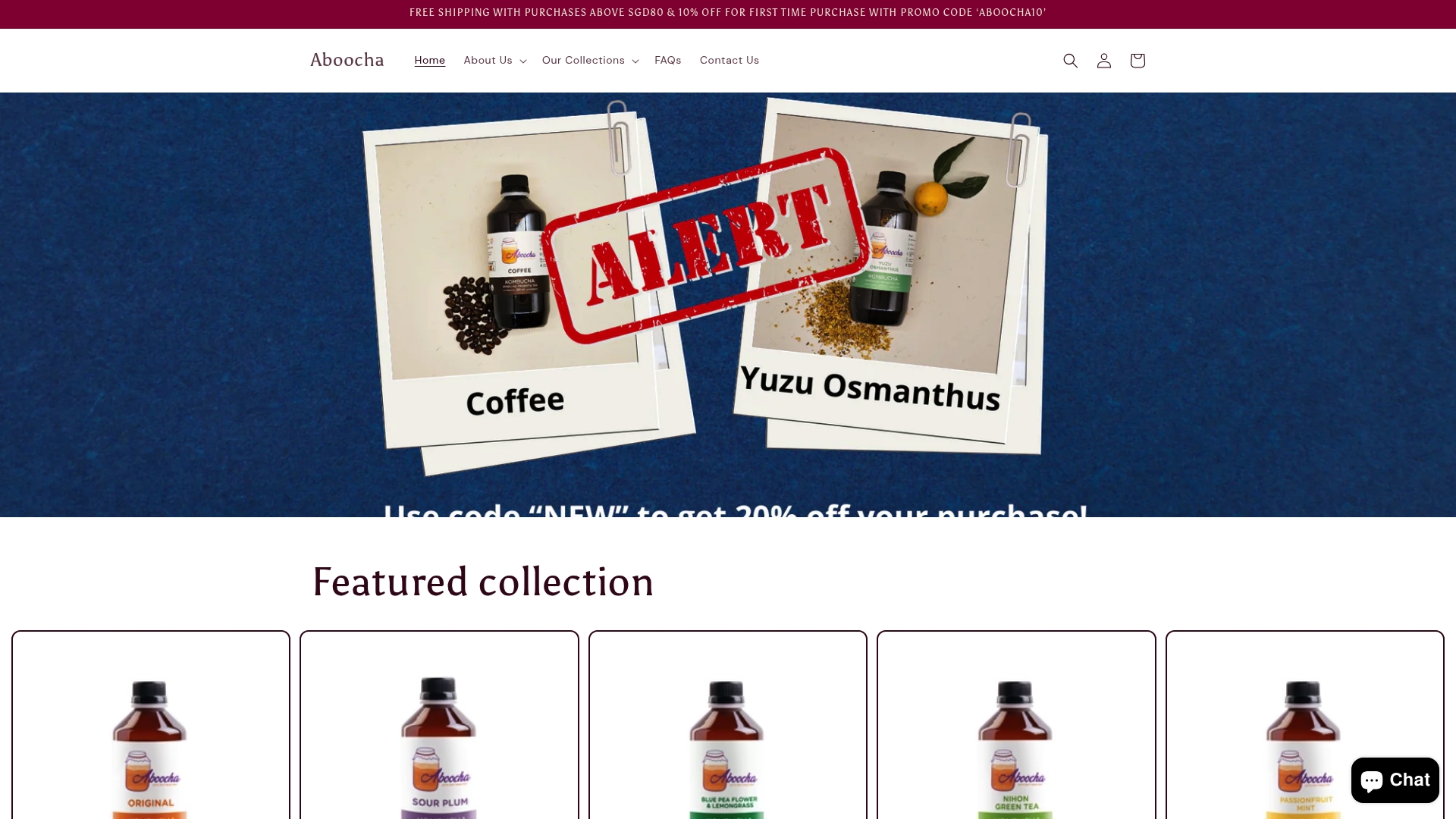
Subscription plans mean fresh kombucha arrives before your last bottle runs out, with no compromise on sugar content or culture activity. For buyers who want to start with a sampler, flavor sets let you test the range before committing. Visit Aboocha to browse current flavors, check subscription options, and place your first order.
Useful sources
- Craft Alcoholic Beverage Industry Overview — Congress.gov: U.S. legislative overview of craft beverage definitions; useful background on why no universal definition exists globally.
- Craft Brewer Definition — Brewers Association: The most widely cited formal definition of craft brewing; helpful for understanding what “small and independent” means in practice.
- Swiss Breweries Do Not Want a Definition of Craft Beer — Bierversuche: Primary source on how Swiss producers approach the craft label; directly relevant to kombucha buyers evaluating Swiss brands.
- The Future of Consumption and Packaging in Switzerland — Univerre: Data on packaging perception and lifecycle emissions; useful for evaluating reusable bottle claims.
- Microbrewery Trends in Switzerland — Univerre: Current Swiss craft beverage industry context, including sustainability expectations.
- Lakeside Craft Breweries: Romandy Revival — Enjoy Life Moments: Terroir-driven ingredient sourcing in Swiss craft production; applicable to kombucha botanical choices.
To verify a producer’s craft credentials, check their website for batch records, request a lab certificate for microbial counts and alcohol content, and search for their presence at Swiss farmers’ markets or fermentation events. Local brewer and fermentation associations can also confirm whether a producer is genuinely independent.
FAQ
What is the craft beverage movement in simple terms?
It is a shift toward small-batch, independently produced drinks that prioritize ingredient quality, transparency, and local roots over mass-market efficiency. No single legal definition exists globally or in Switzerland.
How much sugar should a low-sugar kombucha contain?
A practical benchmark is under 5 g of sugar per 100 ml. Many mass-market kombuchas contain 8–12 g per 100 ml, which undermines the digestive-health benefit.
Does “craft” on a kombucha label guarantee live cultures?
No. “Craft” is not a regulated term in Switzerland, so it does not guarantee unpasteurized production. Always look for an explicit “live cultures” or “unpasteurized” statement on the label.
Where can I buy genuine craft kombucha in Switzerland?
Farmers’ markets, specialty health-food shops, and direct-to-consumer online stores are the most reliable channels. Aboocha ships directly with subscription options that maintain freshness and consistent sugar content.
Why does reusable packaging matter for craft kombucha?
Reusable glass bottles are a credible craft signal and a sustainability commitment. A bottle washed at least 15 times reduces lifecycle CO₂ emissions by up to 83% compared to single-use alternatives.