
Probiotic drinks are beverages containing live beneficial microorganisms that support gut health by improving the balance of bacteria in your digestive system. The best probiotic drinks Singapore 2026 are defined by three non-negotiable qualities: clearly labeled strain identity, viable colony-forming unit (CFU) counts at expiry, and low sugar content. Products like Yakult, Curated Culture, and Biogrow ProGut lead the 2026 market because they meet at least two of these criteria. This guide breaks down exactly what separates effective gut-friendly drinks from clever marketing, so you can spend your money on products that actually work.
Which probiotic strains and CFU levels matter in 2026?
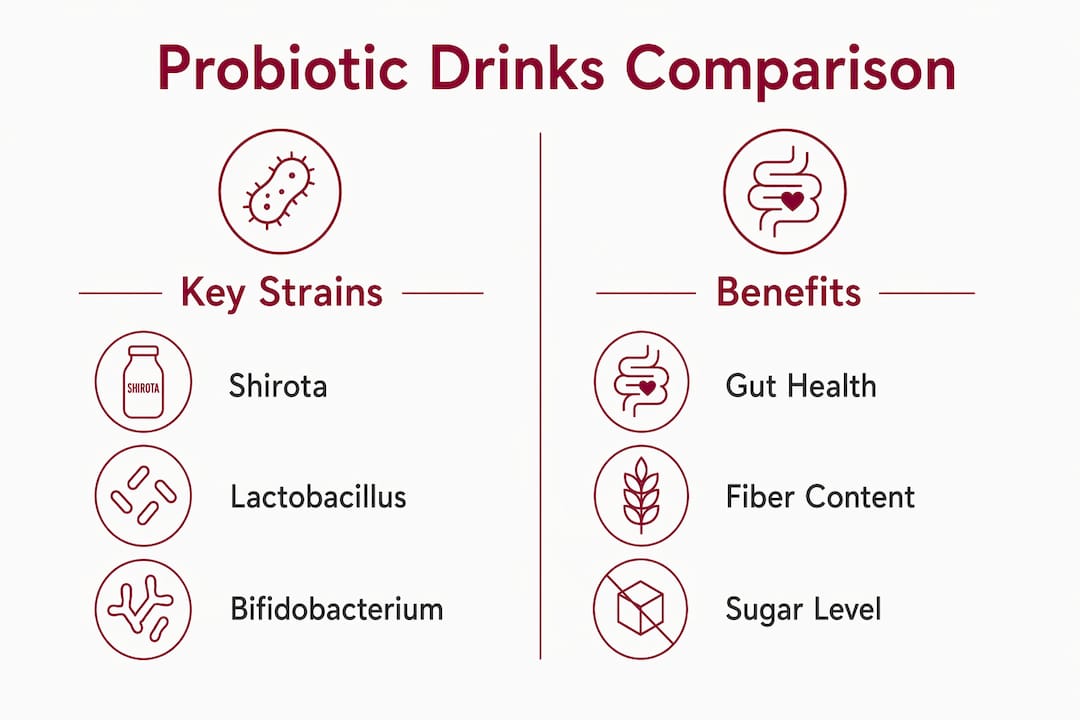
Strain identity is the single most important factor on any probiotic drink label. A product that says “contains probiotics” without listing genus, species, and strain ID is making a claim you cannot verify. The correct format looks like this: Lacticaseibacillus paracasei strain Shirota, or Bifidobacterium lactis BB-12. Generic terms like “Lactobacillus blend” tell you nothing about clinical effectiveness.
CFU counts are equally misunderstood. Most labels report CFU at the time of manufacture, not at the end of shelf life. By the time a product reaches your refrigerator, the count may be significantly lower. Singapore’s HSA enforces labeling on ingredients and CFU counts but does not require independent verification of live CFU at point of sale. That means a bottle claiming 10 billion CFU may deliver far less by the time you drink it.

Singapore consumers often misunderstand “10B CFU” claims. Strain identity and CFU at expiry are more reliable indicators than marketing “high dose” statements. Look for products that explicitly state CFU viability at end of shelf life, not just at manufacture.
Singapore’s tropical heat and humidity accelerate CFU degradation. Estimates show 10–50% of probiotics may die before you even purchase the product. That figure means a 10 billion CFU drink could deliver as few as 5 billion live cultures by the time it reaches your hands.
Encapsulation technology addresses this problem directly. Microencapsulated strains are coated in a protective layer that shields live bacteria from heat, moisture, and stomach acid. Products using this technology maintain higher CFU viability across the supply chain, which matters more in Singapore than in cooler climates.
Pro Tip: When reading a label, look for the phrase “CFU at expiry” or “guaranteed live cultures at best before date.” If the label only states CFU at manufacture, treat the count as an estimate, not a guarantee.
How do popular singapore probiotic drinks compare?
The 2026 market offers a wider range of top probiotic beverages than ever before. Here is how the leading options stack up across strain identity, CFU, sugar content, and convenience.
Yakult: the familiar standard
Yakult’s new peach flavor contains 10 billion live Lacticaseibacillus paracasei strain Shirota per bottle. This strain has decades of clinical research behind it confirming it survives transit through the digestive tract and reaches the intestines alive. The peach flavor launched for home delivery on July 1, 2026, and hit retail shelves on July 6, priced from S$3.50. The trade-off is sugar content. Yakult scores a Nutri-Grade D, meaning it carries a high sugar load relative to its volume. It works as an occasional gut health boost, but daily consumption adds up in sugar fast.
Curated culture: zero sugar and shelf stable
Curated Culture’s probiotic iced tea is zero sugar with a Nutri-Grade B rating, developed in partnership with the National University of Singapore. It uses patented probiotic strains and requires no cold chain, with a shelf life of approximately 24 months. Flavors include grape açaí and lychee rose. The product is stocked at over 350 locations across Singapore and Malaysia. For daily consumption, this is one of the strongest options available because it delivers live cultures without the sugar penalty.
Biogrow ProGut: fiber plus probiotics
Biogrow ProGut sachets combine B. lactis BB-12 at 1 billion CFU with Oat BG22 fiber, targeting constipation relief and bowel regularity. The product contains no added sugar, no preservatives, and requires no refrigeration. You mix it in cold water or juice. The fiber component adds a prebiotic effect, feeding the beneficial bacteria already in your gut. This dual action makes it a strong pick for anyone dealing with irregular digestion.
Other notable options
- Vitagen: A fermented milk drink with Lactobacillus acidophilus and L. casei, available in low-fat versions. Sugar content is moderate, and it is widely available at supermarkets across Singapore.
- Remedy Kombucha: A shelf-stable kombucha with live cultures and organic acids. Low-sugar versions under 5g per serving are preferable for daily gut health. Check the label carefully since sugar content varies by flavor.
- Kefir: A fermented dairy drink with a diverse strain profile. It is less standardized than sachets or bottled drinks, so CFU counts vary by brand and batch.
| Product | Key Strain | CFU | Sugar | Nutri-Grade |
|---|---|---|---|---|
| Yakult (Peach) | Shirota strain | 10 billion | High | D |
| Curated Culture | Patented strains | Not disclosed | Zero | B |
| Biogrow ProGut | BB-12 | 1 billion | None added | N/A (sachet) |
| Vitagen | L. acidophilus, L. casei | Not disclosed | Moderate | C |
| Remedy Kombucha | Mixed cultures | Varies | Low (check label) | Varies |
Pro Tip: For daily gut health maintenance, prioritize products with Nutri-Grade A or B ratings. Save higher-sugar options like Yakult for occasional use rather than making them your everyday drink.
Does sugar content affect probiotic drink effectiveness?
Excess sugar actively works against the gut health benefits you are trying to build. High sugar intake feeds harmful gut bacteria, which compete with the beneficial strains you are consuming. Unsweetened or low-sugar options are recommended for daily consumption in Singapore. Drinking a high-sugar probiotic product every day may improve one metric while worsening another.
Singapore’s Nutri-Grade system rates packaged drinks from A (lowest sugar and saturated fat) to D (highest). The system applies to all pre-packaged beverages sold locally. Here is what each grade means for your gut health routine:
- Grade A: Best choice for daily consumption. Minimal sugar, maximum probiotic benefit.
- Grade B: Good for daily use. Low sugar with acceptable saturated fat levels.
- Grade C: Suitable for occasional consumption. Moderate sugar may offset probiotic gains over time.
- Grade D: Reserve for rare use. High sugar content undermines gut health goals when consumed regularly.
Curated Culture’s Nutri-Grade B rating makes it one of the most practical daily gut health drinks in Singapore. Yakult’s Grade D rating does not disqualify it from your routine, but it does mean you should treat it as a supplement rather than a daily staple. The threshold most gut health guides recommend is under 5g of sugar per serving for drinks consumed daily.
How should you store probiotic drinks in singapore’s climate?
Singapore’s heat and humidity create a hostile environment for live probiotic cultures. Proper storage is not optional. It directly determines how many live bacteria you actually consume.
- Buy close to the purchase date. Check the best-before date and calculate how long the product has been sitting on the shelf. Older stock means more CFU degradation, even if the product is still within date.
- Refrigerate immediately. For cold-chain products like Yakult and Vitagen, transfer to your refrigerator as soon as you get home. Leaving them at room temperature for hours accelerates bacterial death.
- Choose ambient-stable products when refrigeration is inconvenient. Curated Culture and Biogrow ProGut are both shelf stable. This makes them practical for office desks, travel, and situations where cold storage is not available.
- Mix sachets in cold water only. Biogrow ProGut specifically recommends cold water mixing. Hot water kills live cultures. This applies to any probiotic powder or sachet product.
- Avoid pasteurized “probiotic” drinks. Some drinks are pasteurized after fermentation, which kills the live cultures. If a product does not explicitly state “live and active cultures,” the probiotic benefit may be zero.
The fermented drinks and tropical diet connection is real. Products formulated for ambient storage perform more reliably in Singapore’s conditions than cold-chain products that spend time outside refrigeration during distribution.
Pro Tip: Store your probiotic drinks away from direct sunlight and heat sources like stovetops or windows. UV exposure and ambient heat both accelerate CFU loss even in sealed packaging.
Do prebiotic drinks work differently from probiotic drinks?
Prebiotics and probiotics are not the same thing, and confusing them leads to wasted spending. Probiotics are live microorganisms. Prebiotics are dietary fibers that feed the beneficial bacteria already living in your gut. Both matter, but they work through completely different mechanisms.
Top gut health guides advise separating three mechanisms: live probiotics, prebiotics and fiber, and general gut-friendly habits like hydration and sugar moderation. Treating all three as interchangeable is a common mistake that leads to inconsistent results.
OSN Activia offers a micro-milled chia seed prebiotic drink designed for digestion support and smoother bowel movement. It is plant-based and focuses on improving the gut environment rather than delivering live CFU. This makes it a complement to probiotic drinks, not a replacement.
The most effective approach combines both categories. Take a probiotic drink with a clearly labeled live strain in the morning, and add a prebiotic fiber supplement or fiber-rich food at another meal. This combination feeds the bacteria you are introducing while also nourishing the existing beneficial population. Hydration matters too. Fiber without adequate water intake can worsen constipation rather than relieve it.
Key takeaways
The best probiotic drinks in Singapore for 2026 require strain transparency, CFU viability at expiry, and low sugar content to deliver real gut health benefits.
| Point | Details |
|---|---|
| Strain identity matters most | Always look for genus, species, and strain ID on the label before buying. |
| CFU at expiry beats CFU at manufacture | Singapore’s heat degrades live cultures; choose products that guarantee viability at best-before date. |
| Sugar undermines probiotic gains | Nutri-Grade A or B products are best for daily use; Grade D options like Yakult suit occasional consumption. |
| Ambient-stable products suit Singapore | Curated Culture and Biogrow ProGut require no cold chain, making them more reliable in tropical conditions. |
| Prebiotics complement probiotics | Combine live probiotic drinks with prebiotic fiber sources for stronger, more consistent gut health results. |
What i’ve learned after years of reading probiotic labels
The label literacy problem in Singapore’s probiotic drink market is worse than most people realize. I have picked up dozens of products at Cold Storage and FairPrice over the years, and the majority list CFU at manufacture with no mention of viability at expiry. That is not a minor omission. In Singapore’s climate, it is the difference between a functional product and an expensive flavored drink.
The marketing around “billions of CFU” is particularly misleading. A product with 50 billion CFU at manufacture and no encapsulation technology may deliver fewer live cultures than a product with 1 billion CFU and proper microencapsulation. The number on the front of the pack is a starting point for research, not a conclusion.
My practical advice: start with one product for four weeks and pay attention to how your digestion responds. Bloating, regularity, and energy levels are all signals worth tracking. If you notice no change, switch strains rather than increasing dose. Different strains do different jobs, and your gut microbiome is unique.
Flavor matters more than people admit. If a probiotic drink tastes unpleasant, you will not drink it consistently. Aboocha’s approach of building genuinely enjoyable flavor profiles, like Sour Plum and Yuzu Osmanthus, solves a real compliance problem. The best gut health routine is the one you actually stick to. Explore probiotic-rich beverage options that balance health goals with flavors you genuinely want to drink.
— Luna
Aboocha’s low-sugar kombucha for singapore gut health
Aboocha crafts kombucha specifically for health-conscious Singapore consumers who want real probiotic benefits without the sugar load that undermines them. Every Aboocha brew prioritizes lower sugar content and distinct flavor profiles like Sour Plum and Yuzu Osmanthus, so you get a drink that supports your gut and actually tastes worth finishing.
If you are building a daily gut health routine, Aboocha’s low-sugar fermented beverages are formulated to fit Singapore’s climate and your health goals. Subscription plans make consistent consumption easy, and the blog covers everything from strain science to storage tips. Visit Aboocha to explore the full range and find the flavor that works for your gut.
FAQ
What makes a probiotic drink effective in singapore?
An effective probiotic drink lists a specific strain by genus, species, and strain ID, guarantees CFU viability at expiry, and contains low or zero sugar. Singapore’s heat accelerates CFU degradation, so ambient-stable or properly refrigerated products are more reliable.
How many CFU should a probiotic drink contain?
Most clinical studies use doses between 1 billion and 10 billion CFU per serving. The strain identity and viability at expiry matter more than a high CFU number at manufacture, especially in Singapore’s tropical conditions.
Is yakult good for daily gut health in singapore?
Yakult delivers a clinically researched strain at 10 billion CFU per bottle, but its Nutri-Grade D rating means high sugar content. Daily consumption adds significant sugar to your diet, so it is better suited for occasional use alongside a lower-sugar probiotic option.
Where can you buy probiotic drinks in singapore?
Yakult and Vitagen are available at most supermarkets including FairPrice and Cold Storage. Curated Culture is stocked at over 350 locations across Singapore. Biogrow ProGut and OSN Activia are available through pharmacies and online health retailers.
Are kombucha and kefir good probiotic drink options?
Kombucha and kefir both contain live cultures, but CFU counts and strain profiles vary widely by brand and batch. Choose versions with under 5g of sugar per serving and look for brands that explicitly state live culture content for reliable gut health benefits.