
Heirloom tea varieties are seed-propagated tea plants with unique genetic diversity that produces complex, multi-layered flavor profiles unlike anything a modern clonal cultivar can replicate. The industry term for these plants is “Qun Ti Zhong,” meaning “group body seed,” a phrase used across Chinese tea regions to describe seed-grown populations where every bush is genetically distinct. If you grow, brew, or study tea seriously, understanding what heirloom tea varieties are changes how you read a flavor note, evaluate a garden, and choose what to put in your cup.
What are heirloom tea varieties, and how are they defined?
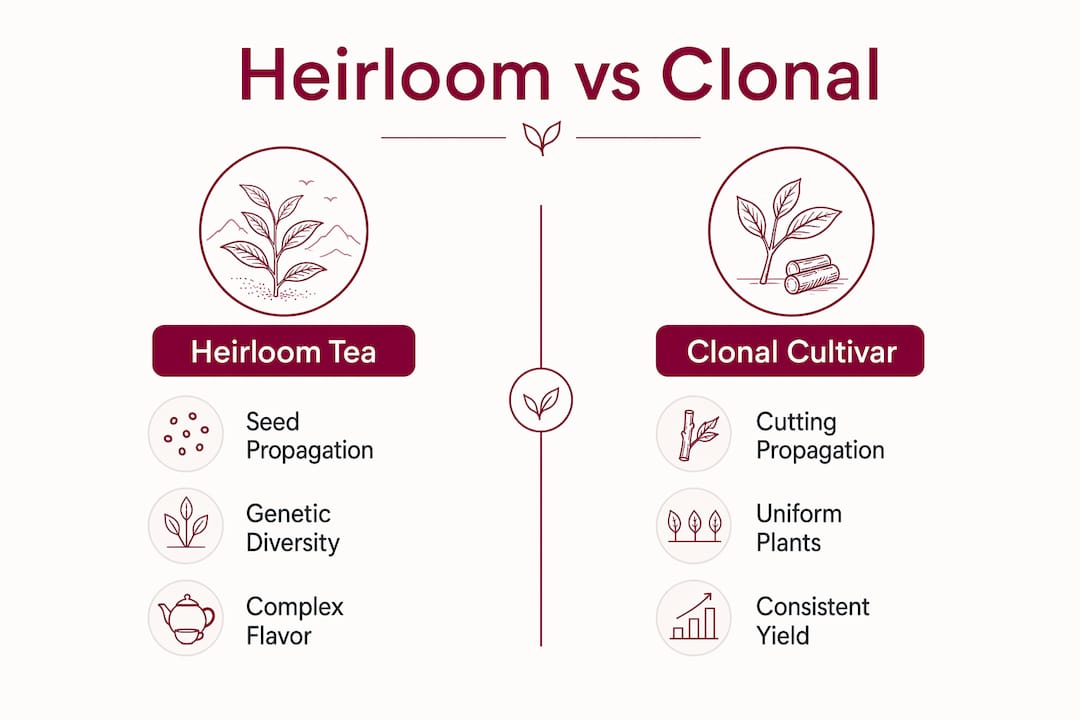
Heirloom tea is defined as tea produced from old, seed-propagated trees or bushes valued for genetic diversity and complex, layered flavor profiles. The contrast with clonal cultivars is biological and fundamental. Clonal teas are grown from cuttings, so every plant in a field shares identical DNA. Heirloom teas grow from seed, so every plant is a genetic individual, the way siblings share parents but not fingerprints.
That genetic individuality is the source of everything tea enthusiasts prize about heirlooms. Flavor compounds, root depth, leaf shape, and sprouting time all vary from bush to bush. The result is a cup that carries what growers call terroir: a sensory record of the specific soil, altitude, and microclimate where the plant grew. Named heirloom populations include Qun Ti Zhong from China’s Fujian and Yunnan provinces, Xiao Cai Cha from high-altitude Taiwanese gardens, and Japan’s Zairai teas, each representing centuries of seed-selection in a specific landscape.
How do heirloom tea varieties differ from modern clonal cultivars?
The core difference is propagation method. Heirloom teas reproduce sexually through seed. Modern cultivars like Longjing #43 reproduce asexually through cuttings, guaranteeing that every plant is a genetic copy of the original. Clonal propagation guarantees consistent flavor but sacrifices the genetic diversity and complexity that seed-grown populations produce.
The commercial consequences are significant. Longjing #43 sprouts 7–10 days earlier than traditional heirloom types, and early-harvest teas command up to 3 times higher prices in the Chinese market. That economic advantage drove widespread adoption of clonal varieties across major tea-producing regions. Heirloom gardens lost ground not because the tea was inferior, but because the harvest calendar was unpredictable.
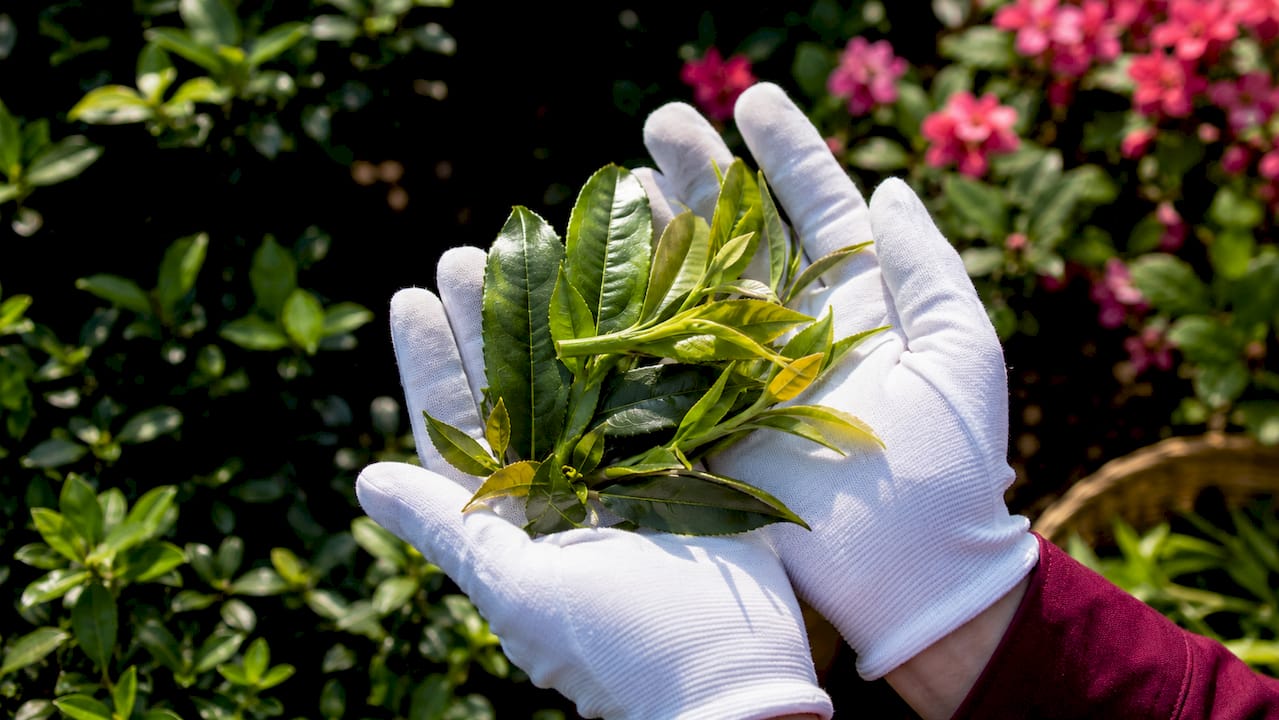
Visual identification separates the two clearly. Clonal teas like Longjing #43 have uniform, slim, spear-like buds. Heirloom bushes produce irregular, mixed-size buds with varied leaf morphologies across the same row. That visual “messiness” is actually a sign of genetic health.
| Characteristic | Heirloom tea | Modern clonal cultivar |
|---|---|---|
| Propagation method | Seed (sexual) | Cutting (asexual) |
| Genetic profile | Heterogeneous | Uniform |
| Bud appearance | Irregular, varied sizes | Uniform, slim, spear-like |
| Harvest timing | Uneven, later | Predictable, earlier |
| Flavor complexity | Multi-layered, terroir-driven | Consistent, less complex |
| Economic yield | Lower, variable | Higher, predictable |
Pro Tip: When buying loose-leaf tea labeled “heirloom” or “Qun Ti Zhong,” look for a mix of bud sizes and leaf shapes in the dry leaf. Uniform, identical leaves are a reliable sign of clonal origin, regardless of what the label says.
What are some notable heirloom tea types and their flavor profiles?
The best heirloom teas share one trait: flavor that changes across multiple steepings rather than delivering a single flat note. That depth comes from genetic diversity within the plant population and from the chemical compounds that seed-grown bushes accumulate over decades.
Notable heirloom varieties and their defining characteristics:
- Qun Ti Zhong (China): The foundational Chinese heirloom category. Produces floral, orchid-forward notes with a pronounced Hui Gan, the lingering sweet aftertaste that returns minutes after swallowing. Found across Fujian, Yunnan, and Guangdong provinces.
- Xiao Cai Cha (Taiwan): A small-leaf heirloom variety grown at high altitude. Delivers chestnut and wild honey notes with a clean, mineral finish. Prized by Taiwanese oolong producers for its natural sweetness.
- Zairai (Japan): Japanese seed-propagated varieties that preserve genetic diversity and historical authenticity absent in modern clonal cultivars. Specialty buyers prize Zairai for its earthy, savory depth and the subtle variation between individual plants in the same field.
- Ancient Yunnan heirloom trees: Some trees in Yunnan’s ancient gardens are estimated 200–500 years old. These trees exhibit elevated levels of theacrine, anthocyanins, and methyl salicylate. Those compounds produce the purple-tinged leaves and complex, slightly bitter-then-sweet flavor profile associated with aged-tree puer.
- Zhenghe heirloom white tea: Grown in Fujian’s Zhenghe county, this variety produces the large, downy buds used in traditional white peony (Bai Mu Dan) production. The flavor is delicate, hay-like, and faintly fruity.
Heirloom teas produce a deeper aftertaste and more complex terroir character due to deeper root systems compared to shallower-rooted clones. Deeper roots access a broader mineral profile in the soil, which translates directly into the cup. For enthusiasts exploring exotic beverage flavor profiles, heirloom teas offer a level of sensory range that no clonal variety can match.
What are the advantages and challenges of growing heirloom tea varieties?
Growing heirloom tea is a long-term commitment. The advantages are real, but so are the practical difficulties. Growers who choose heirloom cultivation accept a different set of trade-offs than those running clonal operations.
Advantages of heirloom cultivation:
- Genetic resilience. A genetically diverse population is less vulnerable to a single pest or disease. If one bush in a heirloom garden is susceptible to a pathogen, neighboring bushes with different genetics may resist it. Monoculture clonal fields carry the opposite risk.
- Flavor complexity. Every heirloom bush is genetically unique, contributing variation in flavor within a single harvest. That variation, when blended by a skilled producer, creates layered cups that single-cultivar clonal teas cannot produce.
- Authenticity and market positioning. Specialty tea buyers and herbalists increasingly seek seed-grown teas for their historical authenticity. The specialty tea movement’s interest in heirlooms is a deliberate embrace of genetic diversity lost in modern clonal cultivation.
- Deep root development. Seed-grown plants develop taproots that penetrate deeper into the soil than cutting-grown plants. Deeper roots mean better drought tolerance and access to a wider mineral profile.
Challenges growers face:
- Uneven sprouting. Heirloom bushes have significant genetic heterogeneity within a field, leading to irregular harvest times. Growers cannot pick an entire field in one pass, which increases labor costs.
- Lower and variable yields. Heirloom plants do not produce the consistent flush volume that clonal varieties deliver. Yield depends on the individual plant’s genetics, age, and microsite conditions.
- Later harvest timing. Heirloom teas typically sprout later than modern cultivars, missing the premium early-spring price window that clonal teas like Longjing #43 capture.
- Market competition. Clonal teas dominate commercial supply chains. Heirloom producers compete on quality and story, not volume or price efficiency.
Pro Tip: When identifying seed-grown heirloom bushes in a garden, look for variation in leaf color, size, and texture across adjacent plants. A row of bushes that all look identical is almost certainly clonal. Natural variation between neighboring plants is the clearest field indicator of seed origin.
How does local ecology shape heirloom tea flavor?
Terroir is not a marketing term for heirloom teas. It is a measurable reality. The soil composition, altitude, humidity, and companion plant species surrounding a tea garden directly influence the chemical compounds the plant produces and, by extension, the flavor in the cup.
Ancient tea gardens like Jinping Village retain centuries-old heirloom bushes growing in natural, rocky, bamboo-rich environments. The bamboo provides shade that slows leaf development, increasing amino acid concentration and producing the umami-adjacent sweetness that distinguishes these teas. Rocky, mineral-dense soil forces roots to work harder and deeper, pulling up trace minerals that show up as a clean, stony finish in the brewed cup.
Key ecological factors that define heirloom tea character:
- Altitude: High-altitude gardens experience cooler temperatures and greater diurnal temperature swings. Slower growth concentrates flavor compounds.
- Soil type: Rocky, well-drained soils with low nitrogen content stress the plant productively, increasing polyphenol and amino acid levels.
- Companion plants: Bamboo, wild orchids, and native shrubs in traditional gardens contribute to the aromatic environment the tea plant grows in.
- Canopy cover: Partial shade from forest canopy or bamboo reduces photosynthesis rate, increasing theanine and reducing bitterness.
Heirloom gardens represent living history, with tea bushes growing in traditional landscapes that directly affect flavor complexity. Understanding how fermentation and environment shape flavor applies equally to heirloom teas processed as white, green, or puer styles. The ecology is the first step in flavor creation; processing is the second.
Key Takeaways
Heirloom tea varieties are seed-grown, genetically diverse plants that produce flavor complexity, terroir depth, and ecological resilience that clonal cultivars cannot replicate.
| Point | Details |
|---|---|
| Seed propagation defines heirlooms | Every heirloom bush grows from seed, making it genetically unique within its population. |
| Flavor depth comes from genetic diversity | Genetic variation across plants produces layered, multi-compound flavor profiles absent in clonal teas. |
| Ecology shapes the cup directly | Altitude, rocky soil, and companion plants like bamboo concentrate flavor compounds in heirloom leaves. |
| Clonal teas win on economics | Modern cultivars like Longjing #43 sprout earlier and yield more, but sacrifice complexity and terroir. |
| Visual ID is reliable | Irregular bud sizes and mixed leaf morphologies across a row confirm seed-grown, heirloom origin. |
Why heirloom teas deserve more attention than they get
The tea world has spent decades optimizing for yield and consistency. That optimization produced reliable, affordable tea at scale. It also flattened the flavor spectrum considerably. When I taste a well-sourced Qun Ti Zhong or an old-tree Yunnan heirloom, the difference from a clonal equivalent is not subtle. It is the difference between a photograph and a painting of the same landscape.
What strikes me most is how much genetic diversity functions as a form of insurance. A field of genetically identical clonal plants is one bad season away from a catastrophic loss. A heirloom garden, with its population of genetically distinct individuals, distributes that risk across hundreds of unique plants. Growers who understand this are not just preserving flavor. They are preserving a biological safety net.
The growing interest in Asian-inspired specialty flavors is pulling more enthusiasts toward heirloom teas, and that is a genuinely good development. My advice: start with a Zairai green tea or a Zhenghe white tea before moving to aged-tree puer. The learning curve is gentler, and the flavor contrast with commercial clonal teas is immediately obvious. Once you taste the difference, you will not go back to treating all teas as interchangeable.
— Luna
Aboocha and the world of seed-grown teas
Aboocha’s approach to flavor starts where heirloom tea philosophy does: with ingredients that carry genuine character rather than manufactured consistency.

Aboocha crafts kombucha beverages using flavor profiles drawn from the same botanical traditions that make heirloom teas worth seeking out. Creations like Yuzu Osmanthus and Sour Plum reflect the kind of layered, terroir-aware flavor thinking that heirloom tea growers have practiced for centuries. For enthusiasts who want to explore the full range of what seed-grown and artisan ingredients can produce, Aboocha’s full range offers a starting point grounded in that same commitment to authentic, complex flavor. Specialty tea selections are also available through Adira Coffee for those building a broader heirloom tea collection.
FAQ
What are heirloom tea varieties in simple terms?
Heirloom tea varieties are seed-grown tea plants where every bush is genetically unique, producing complex, layered flavors that clonal cultivars cannot replicate. The Chinese term for this category is Qun Ti Zhong.
How do I identify an heirloom tea bush in a garden?
Look for irregular bud sizes, mixed leaf morphologies, and variation in leaf color across adjacent plants. Uniform, identical-looking bushes in a row are almost always clonal in origin.
What are the main heirloom tea benefits for health?
Ancient heirloom trees, some 200–500 years old, accumulate elevated levels of theacrine, anthocyanins, and polyphenols. These compounds are associated with antioxidant activity and the complex flavor profiles that make heirloom teas distinct from commercial varieties.
Why are heirloom teas harder to find than clonal teas?
Clonal varieties like Longjing #43 sprout earlier and yield more predictably, giving commercial producers a strong economic incentive to plant them. Heirloom gardens require more labor, produce lower yields, and miss the premium early-harvest price window.
Can I grow heirloom tea at home?
Seed-grown heirloom tea plants can be cultivated in containers or garden beds with well-drained, acidic soil and partial shade. The key challenge is sourcing verified heirloom seed stock, since most commercially available tea plants are clonal cuttings.