
Exotic beverage flavor profiles are defined by sensory notes that fall outside the familiar sweet and fruity spectrum, drawing on ingredients like yuzu, passion fruit, guava, and savory umami elements to create layered, memorable drinking experiences. These profiles are not just novelties. They represent a fundamental shift in how consumers think about what a drink can taste like. Yuzu is the fastest-growing citrus in North America in 2026, and savory profiles built on miso, sesame, and roasted scallions are moving from cocktail menus into everyday beverages. Aboocha has built its entire product line around this shift, crafting kombucha with flavors like Yuzu Osmanthus and Sour Plum that deliver genuine complexity in every sip.
What are exotic beverage flavor profiles, exactly?
Exotic beverage flavor profiles are taste architectures built from ingredients that carry strong regional, botanical, or fermentation-driven character. The industry term for this category is “novel flavor systems,” but most consumers simply recognize them as drinks that taste like nothing they have tried before. The defining quality is not just unfamiliarity. It is layered complexity, where a single sip delivers aroma, mid-palate development, and a finish that lingers.
Consumer demand for these profiles is driven by associations with warmth, bright colors, and perceived health benefits, not taste complexity alone. That insight matters because it explains why yuzu sells on wellness cues as much as flavor. Understanding what pulls people toward exotic drinks helps you choose ones you will actually enjoy, not just admire.
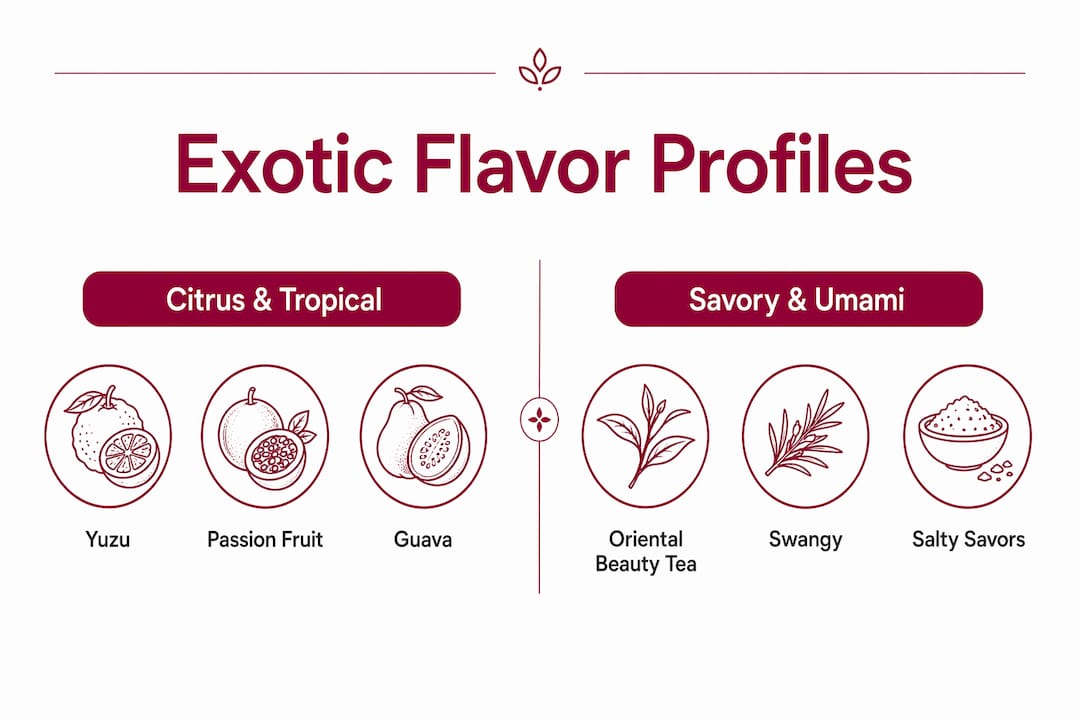
The most recognized exotic profiles today cluster into three groups. First, premium citrus and tropical fruits like yuzu, passion fruit, and guava. Second, floral and tea-based profiles like Oriental Beauty. Third, savory and umami-forward profiles built on fermented or roasted ingredients. Each group offers a completely different sensory experience, and each rewards a different kind of attention when you taste it.
What are the distinctive characteristics of popular exotic beverage flavors?
Each major exotic flavor category has a specific sensory signature. Knowing what to expect makes tasting far more rewarding.

Yuzu is a Japanese citrus fruit that delivers tart brightness, floral lift, and a faint pine-like bitterness in the finish. It does not taste like lemon or grapefruit, though it shares their acidity. Yuzu works exceptionally well in low-sugar functional beverages because its aromatic intensity compensates for reduced sweetness.
Passion fruit functions differently. Flavor chemists describe it as a flavor amplifier that masks off-notes while energizing surrounding flavors. When you taste passion fruit in a blend, you are often tasting the other ingredients more clearly because of it.
Guava splits into two distinct profiles worth knowing:
- Pink guava is sweeter, tropical, and sulfur-driven, with volatile thiols that create its signature exotic aroma. It reads as warm and ripe.
- White guava is tarter and greener, with a sharper, almost vegetal edge. It is less immediately approachable but more complex on repeat tasting.
Oriental Beauty tea is in a category of its own. Its honey aroma comes from leafhopper insect bites on the tea leaves, which trigger terpene compound production. No artificial process can replicate this. The result is a tea with natural honey, peach, and muscatel notes that feel almost impossible for a plant to produce.
Savory and umami profiles are the newest frontier. The 2026 beverage trend cycle has introduced swangy, swalty, and swavory blends that incorporate miso, sesame, pickled ramps, and roasted scallions. These are not gimmicks. They create genuinely layered drinks that pair with food the way wine does.
Pro Tip: When trying a savory beverage for the first time, pair it with something salty rather than sweet. The contrast sharpens your perception of the umami notes and makes the profile easier to identify.
How can you identify and appreciate exotic flavors when tasting?
Tasting exotic beverages well is a skill, and it follows a repeatable process. Most people rush straight to the palate and miss half the experience.
- Start with aroma. Hold the glass or bottle opening near your nose before drinking. Yuzu will announce itself with a floral, citrusy lift. Passion fruit hits with a sharp, tropical punch. Oriental Beauty tea releases a warm, honey-like sweetness even before you taste it.
- Take a small first sip and hold it. Let the liquid sit on your tongue for two to three seconds. This is when mid-palate flavors develop. Pink guava’s sulfurous tropical core becomes apparent here.
- Assess the finish. Swallow and pay attention to what lingers. Yuzu leaves a faint bitter note. Savory umami drinks leave a coating, savory warmth. Oriental Beauty tea finishes with a clean, floral sweetness.
- Note the texture. Fermented beverages like kombucha carry natural carbonation and acidity that affect how flavors land. A drink that seems too sharp at first often softens after the first few sips as your palate adjusts.
- Taste without food first. Eating before tasting exotic profiles can mask the more delicate notes, particularly the floral and honey characteristics of Oriental Beauty tea.
For Oriental Beauty tea specifically, brewing at 85–90°C protects its terpene compounds and prevents bitterness. Water that is too hot destroys the very chemistry that makes this tea worth drinking.
Pro Tip: Avoid adding sweetener to an exotic beverage on the first tasting. Over-sweetening is the most common mistake. It collapses the flavor architecture and turns a complex profile into a one-dimensional drink.
What are the best food pairings for exotic beverage flavors?
Pairing exotic beverages with food follows the same logic as wine pairing: match intensity, balance contrasting elements, and let each component make the other taste better. The tropical fruit beverage trend has pushed these pairings into mainstream culinary conversation, and the results are worth exploring.
Here are the most effective pairings by flavor profile:
- Yuzu beverages pair best with seafood, particularly raw preparations like sashimi, oysters, and ceviche. The citrus acidity cuts through fat and amplifies the clean, oceanic flavors.
- Passion fruit drinks work with tropical desserts, coconut-based dishes, and light cheeses. The amplifying quality of passion fruit makes surrounding flavors more vivid.
- Pink guava beverages pair well with grilled pork, spiced rice dishes, and anything with a caramelized crust. The sulfurous tropical note bridges savory and sweet.
- Oriental Beauty tea is ideal alongside light pastries, almond-based sweets, and mild white cheeses. Its honey and muscatel notes complement rather than compete.
- Savory umami drinks shine next to rich appetizers, aged cheeses, charcuterie, and anything with a salty, fatty profile.
| Flavor profile | Best food match | Why it works |
|---|---|---|
| Yuzu | Sashimi, oysters | Acidity cuts fat, lifts clean flavors |
| Passion fruit | Tropical desserts, coconut | Amplifies surrounding sweetness |
| Pink guava | Grilled pork, spiced rice | Sulfurous note bridges savory and sweet |
| Oriental Beauty tea | Light pastries, almond sweets | Honey notes complement without competing |
| Savory umami | Charcuterie, aged cheese | Umami on umami deepens both |
Curated pairing dinners and guided tastings are the most effective way to move from curiosity to habitual enjoyment of exotic beverages. Tasting in context, with food and explanation, builds the kind of sensory memory that makes you reach for these drinks again. Aboocha’s kombucha pairing guide offers a practical starting point for anyone building their first pairing experience at home.
What trends are shaping exotic beverage flavors in 2026?
The 2026 flavor trend cycle is the most complex in recent memory. Sweetness alone no longer satisfies the consumer looking for a genuinely interesting drink.
The dominant shift is toward multi-dimensional profiles. Beverage Daily’s 2026 trend report identifies savory and umami-driven profiles as the category’s fastest-moving segment. Drinks that combine spicy, sweet, salty, and savory notes in a single bottle are no longer experimental. They are becoming expected.
Seasonal and regional variation is also reshaping what counts as exotic. Prickly pear is the top-indexing exotic fruit on U.S. menus in summer 2026, often blended with dragon fruit to create what McCormick Flavor calls “approachable adventure.” That phrase captures the current consumer mindset precisely. People want the thrill of something new without feeling lost.
Fermentation is the technique driving the most interesting flavor development. Fermented beverages like kombucha develop complex layered flavors that no single ingredient can produce alone. The acidity, carbonation, and microbial activity create a flavor depth that processed drinks cannot replicate.
“New exotic beverage categories face adoption barriers due to consumers’ lack of knowledge and serving context. Educational tastings are the most effective tool to build loyalty.” — Oriental Beverages in India
Low-sugar formulation is the final major trend. Brands are using yuzu, passion fruit, and other high-intensity exotic ingredients specifically because their aromatic power compensates for reduced sugar. You get full flavor impact without the sugar load. Aboocha’s approach to low-sugar exotic drinks reflects exactly this principle.
Key Takeaways
Exotic beverage flavor profiles deliver the most value when you understand their sensory logic, taste them deliberately, and pair them with food that amplifies their character.
| Point | Details |
|---|---|
| Yuzu leads exotic citrus | Yuzu is the fastest-growing citrus in North America in 2026, prized for floral, tart complexity. |
| Guava has two distinct profiles | Pink guava is sulfur-driven and tropical; white guava is tart and green. Know which you are tasting. |
| Oriental Beauty tea is irreplaceable | Its honey aroma comes from leafhopper insect interaction and cannot be artificially replicated. |
| Savory profiles are mainstream in 2026 | Miso, sesame, and umami-driven drinks are now a recognized flavor category, not a novelty. |
| Pairing unlocks full flavor potential | Matching exotic beverages to complementary foods deepens the sensory experience and builds loyalty. |
Why I think most people are tasting exotic beverages wrong
Most people approach an unfamiliar drink the same way they approach a familiar one: they take a big sip, decide whether they like it, and move on. That approach works fine for a soda. It fails completely with exotic profiles.
The first time I tasted a yuzu kombucha, I almost dismissed it. The bitterness in the finish caught me off guard. I was expecting something closer to lemonade. What I got was something more interesting, a drink that rewarded a second sip more than the first. That experience changed how I taste everything.
The real obstacle to enjoying exotic beverages is not the flavors themselves. It is the expectation that a drink should be immediately, effortlessly pleasant. Complexity takes a moment to read. Oriental Beauty tea’s honey notes do not announce themselves loudly. They build. Savory umami drinks feel strange for about thirty seconds, then suddenly make complete sense.
My honest advice: give every exotic beverage at least three sips before forming an opinion. Taste it with food. Read about where the flavor comes from. Knowing that Oriental Beauty tea’s honey aroma is produced by insect interaction, not added flavoring, changes how you experience it. Storytelling and origin are not marketing extras. They are part of the flavor.
— Luna
Discover Aboocha’s exotic kombucha flavors
If you are ready to move beyond standard kombucha and explore genuinely complex flavor profiles, Aboocha is the place to start.
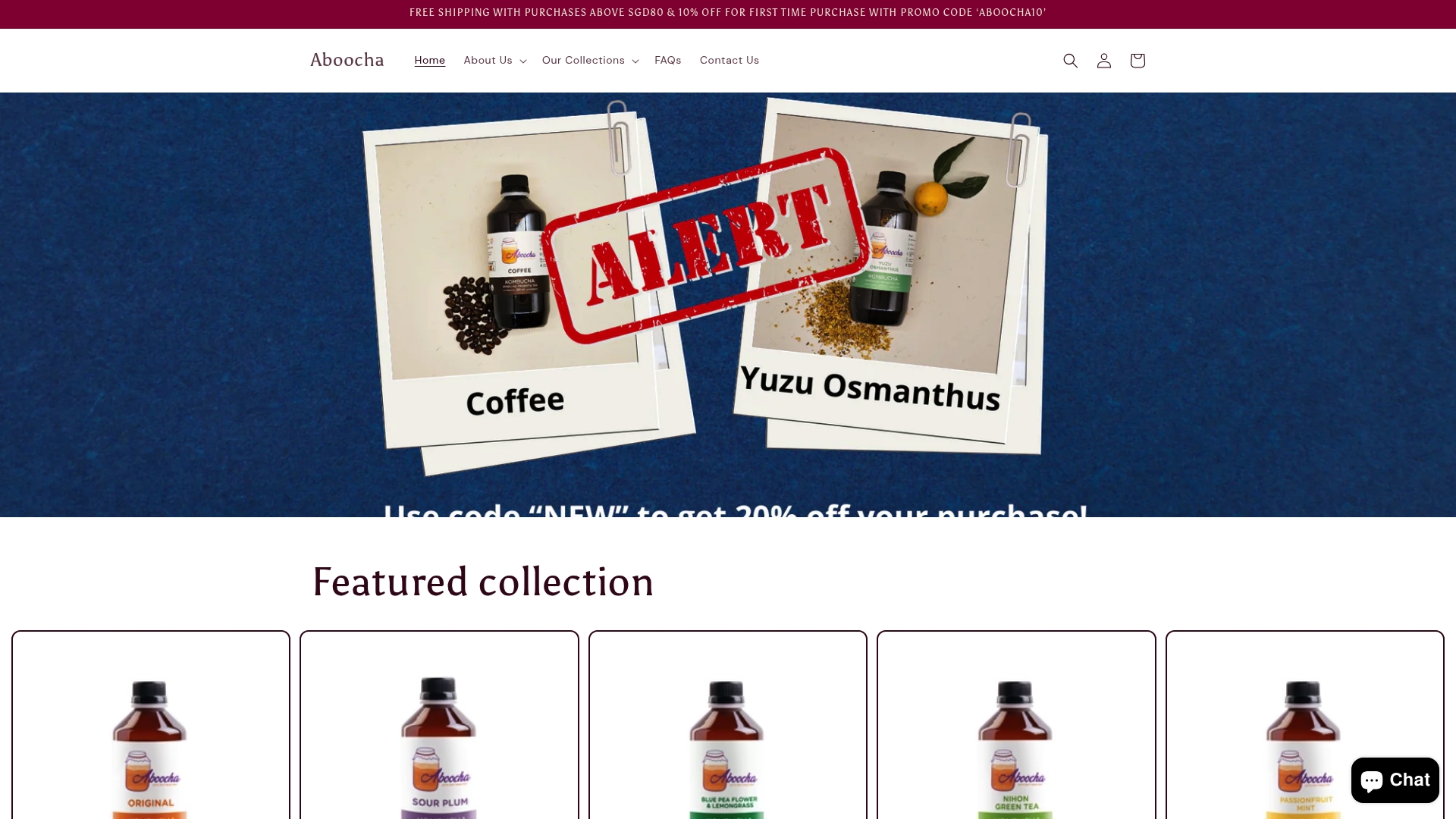
Aboocha crafts low-sugar kombucha built around the exotic profiles covered in this guide. Yuzu Osmanthus delivers the floral citrus complexity that makes yuzu one of 2026’s most sought-after ingredients. Sour Plum brings the kind of tart, layered character that rewards repeated tasting. Every bottle is formulated to keep sugar low without sacrificing the sensory depth that makes exotic beverages worth drinking. Visit Aboocha.com to explore the full range of unique drink flavor combinations and find a subscription plan that fits your routine.
FAQ
What makes a beverage flavor “exotic”?
A beverage flavor is considered exotic when it draws on ingredients or sensory profiles outside the common sweet-and-fruity spectrum, such as yuzu, guava, Oriental Beauty tea, or savory umami elements. The defining quality is layered complexity rather than simple, immediate sweetness.
Why is yuzu considered a premium exotic ingredient?
Yuzu delivers a unique combination of tart citrus, floral aroma, and faint bitterness that no common citrus fruit replicates. It is the fastest-growing citrus in North America in 2026 and performs exceptionally well in low-sugar formulations because its aromatic intensity compensates for reduced sweetness.
How should I brew Oriental Beauty tea to get the best flavor?
Brew Oriental Beauty tea at 85–90°C to protect its terpene compounds and preserve the natural honey and fruit aromas. Water that is too hot destroys the chemistry created by leafhopper insect interaction, which is the source of the tea’s unique character.
What is the difference between pink guava and white guava in beverages?
Pink guava is sweeter and tropical, driven by sulfurous volatile thiols that create its exotic aroma. White guava is tarter and greener, with a sharper, more complex profile. Pink guava is more immediately approachable in beverages; white guava rewards more experienced palates.
Are savory beverages a real trend or just a novelty?
Savory beverages are a confirmed 2026 trend. Profiles built on miso, sesame, pickled ramps, and roasted scallions are now recognized as a distinct flavor category in the industry, moving well beyond novelty into regular menu and product development cycles.