
Local kombucha is defined as a raw, unpasteurized fermented tea produced and distributed within a limited geographic region, while imported kombucha refers to commercially processed, typically pasteurized products distributed across national or international markets. The difference between local and imported kombucha is not just about geography. It shapes the probiotic content, flavor complexity, shelf life, and safety profile of every bottle you drink. Understanding these distinctions helps you decide which type fits your health goals and lifestyle.
What is local vs imported kombucha?
The core distinction comes down to one production decision: pasteurization. Local kombucha is typically raw and unpasteurized, requiring refrigeration and lasting about 60 days, while imported kombucha is often pasteurized and shelf-stable for 6 months to over a year. That single processing choice cascades into every other difference you notice between the two.
Local kombucha is brewed using a live SCOBY (symbiotic culture of bacteria and yeast), which continues fermenting after bottling. This ongoing fermentation is what gives raw kombucha its characteristic tartness, natural carbonation, and live probiotic cultures. Imported kombucha, by contrast, is produced at scale by brands that prioritize consistency and broad distribution. The fermentation is stopped through heat treatment or filtration before the product ships.
The industry terms that matter here are “raw kombucha” for the unpasteurized local variety and “pasteurized kombucha” or “shelf-stable kombucha” for the imported commercial type. Both are genuine kombucha. They are simply different expressions of the same base product, shaped by where and how they are made.
How local kombucha is produced and what makes it unique
Raw kombucha production follows traditional fermentation methods. A SCOBY is introduced to sweetened tea, and the culture converts sugars into organic acids, carbon dioxide, and trace alcohol over one to four weeks. You can read a detailed breakdown of this process in Aboocha’s guide on how kombucha is fermented. The result is a living beverage that keeps changing after it leaves the brewery.
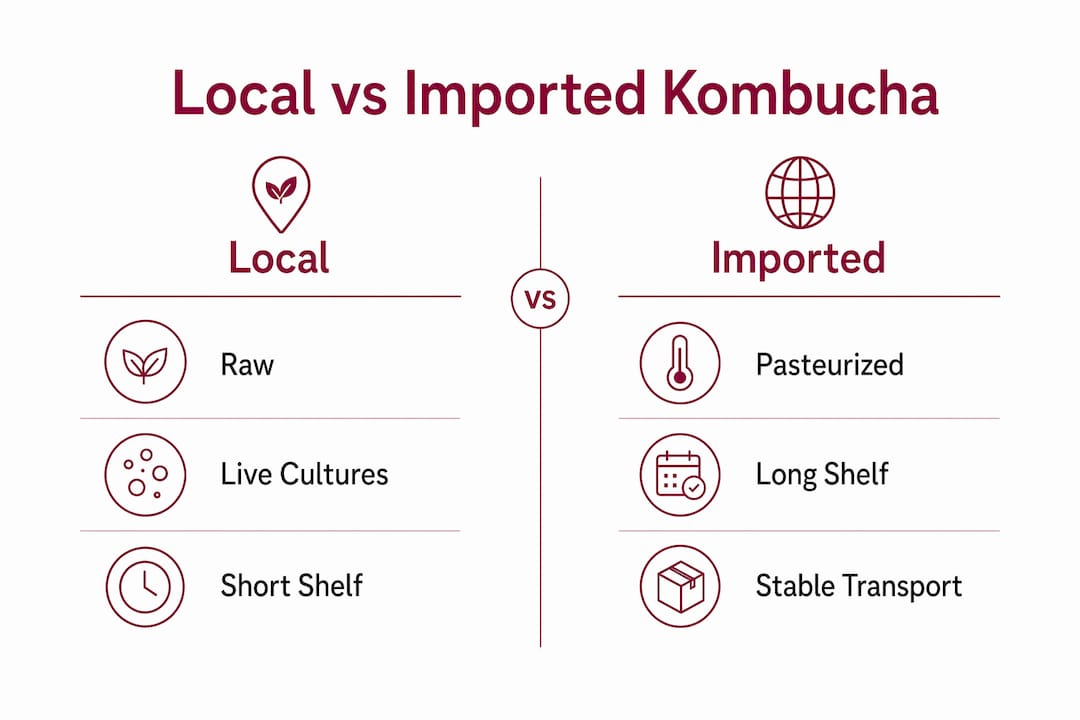
Because the cultures remain active, raw kombucha retains more live probiotics and complex flavor due to ongoing fermentation, but it requires cold chain distribution and carries a higher contamination risk if handled poorly. This means local brewers must refrigerate their product from the moment it is bottled through to the moment you open it.
Key characteristics of local raw kombucha include:
- Shelf life: Approximately 60 days when properly refrigerated
- Probiotic content: Higher, with live cultures still active in the bottle
- Flavor: Vibrant, tart, and evolving as fermentation continues
- Storage: Requires continuous refrigeration throughout the supply chain
- Risk factor: Potential for over-carbonation or contamination if cold chain breaks
Pro Tip: When buying local kombucha, check the bottle for visible culture strands or sediment. These are signs of live cultures and indicate the product has not been heat-treated.
The local kombucha market in cities like Portland, Brooklyn, and Singapore has grown significantly because consumers value the artisanal quality and probiotic density that raw production delivers. Small-batch brewers like those at farmers markets or specialty health stores typically produce kombucha that reflects local ingredients and seasonal flavors, making each batch genuinely distinct.
What makes imported kombucha different?
Pasteurization is a deliberate production choice that addresses fermentation stability and transport logistics rather than solely quality. It prevents “kombucha volcanoes,” which are bottle bursting events caused by excess fermentation pressure, and allows for expansive distribution across retail chains worldwide. Without pasteurization, shipping kombucha across continents would require refrigerated freight for every unit.
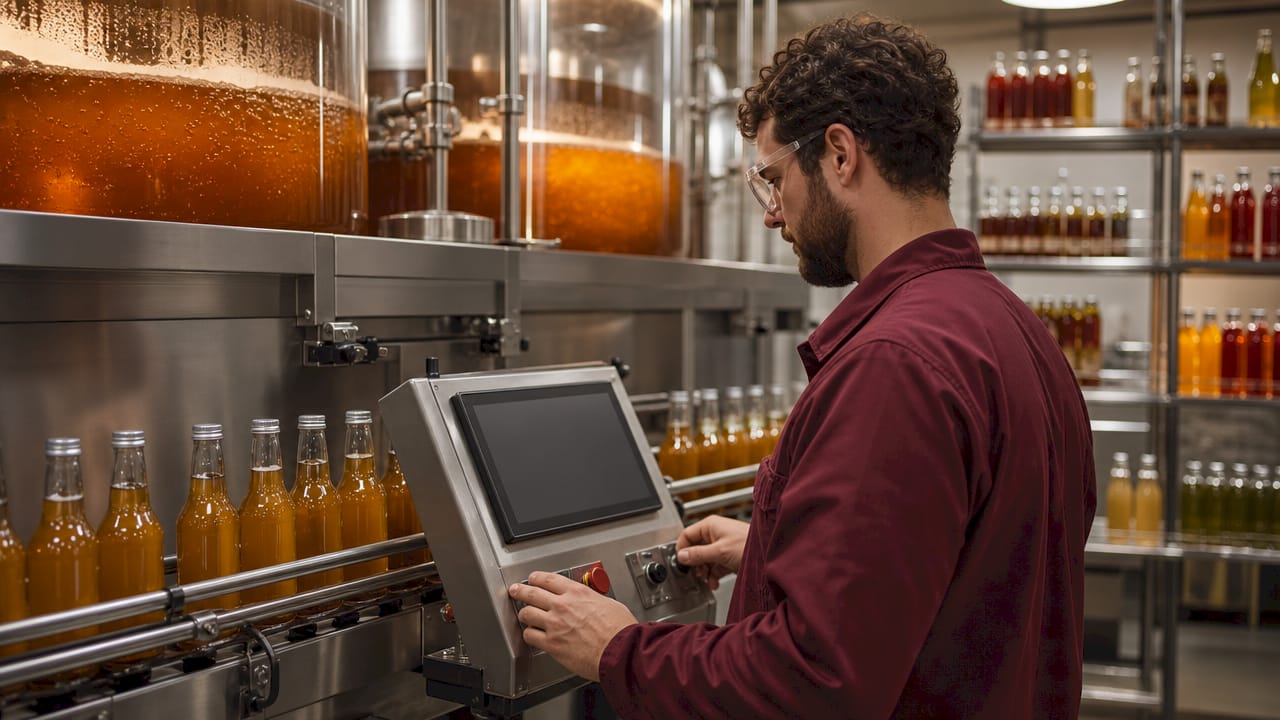
Imported kombucha offers longer shelf life and convenience through pasteurization, reducing live microbes and requiring no refrigeration before opening. This makes it practical for supermarkets, convenience stores, and online retailers that cannot guarantee cold storage throughout the supply chain.
| Feature | Local raw kombucha | Imported pasteurized kombucha |
|---|---|---|
| Shelf life | ~60 days refrigerated | 6 to 12+ months at room temperature |
| Probiotic content | High, live cultures active | Reduced due to heat treatment |
| Flavor profile | Complex, tart, evolving | Mild, consistent, uniform |
| Storage requirement | Refrigeration required | Room temperature until opened |
| Distribution reach | Local or regional | National or international |
Key advantages of imported kombucha include:
- Consistency: Every bottle tastes the same regardless of when you buy it
- Accessibility: Available in mainstream grocery stores and online
- Safety: Lower risk of contamination or over-fermentation
- Convenience: No cold chain required before purchase
Large-scale brands prioritize stability via pasteurization or filtration to make their products viable for global retail. This is a business and logistics decision as much as a quality one.
How do health benefits compare between local and imported kombucha?
Raw kombucha delivers more live probiotics and enzymes per serving because the fermentation cultures remain intact. These live microorganisms support gut health by contributing to microbial diversity in the digestive tract. Aboocha’s breakdown of fermented drinks and gut health explains why live cultures are central to the health case for kombucha.
Pasteurization ensures safety by eliminating harmful bacteria but reduces antioxidant and probiotic properties compared to raw kombucha. This is the core trade-off. You gain predictability and safety. You lose some of the microbial richness that makes raw kombucha valuable for gut health.
Experts recommend 8 to 16 ounces per day of kombucha for probiotic benefits, with gradual intake for new consumers. This guidance applies to both types, though raw kombucha delivers more active cultures per ounce at the same serving size.
Pro Tip: If you are new to kombucha, start with 4 ounces per day and increase gradually. This applies especially to raw varieties, where live cultures can cause digestive adjustment in the first week.
Health considerations worth knowing before you choose:
- Immunocompromised individuals and pregnant women should consult a doctor before consuming raw, unpasteurized kombucha
- Pasteurized kombucha is the safer choice for anyone with a compromised immune system
- Raw kombucha contains trace amounts of alcohol from fermentation, typically under 0.5%
- The organic acids in kombucha, including acetic and glucuronic acid, are present in both types but may be more active in raw versions. Learn more about organic acids in kombucha and why they matter for your health
For most healthy adults, raw local kombucha offers a stronger probiotic profile. For those prioritizing safety, convenience, or consistent dosing, pasteurized imported options are a practical alternative.
Flavor differences: why local and imported kombucha taste so different
Flavor is where the local vs imported kombucha debate becomes most personal. Local raw kombucha produces vibrant, evolving flavors because fermentation continues in the bottle. A batch bought in week one will taste noticeably different from the same batch bought in week six. That variability is a feature for enthusiasts and a drawback for consumers who want predictability.
Imported pasteurized kombucha delivers a milder, more uniform taste. The heat treatment stops fermentation at a fixed point, locking in a flavor profile that stays consistent from the first bottle to the last. Brands like GT’s Kombucha and Health-Ade, which distribute nationally across the United States, are known for this consistency.
Factors that shape flavor in each type:
- Fermentation stage at bottling: Raw kombucha is bottled while still active; pasteurized kombucha is fixed at a specific flavor point
- Cold chain integrity: Breaks in refrigeration accelerate fermentation in raw kombucha, producing stronger sourness
- Ingredient quality: Local brewers often use fresh, seasonal, or regional ingredients that create distinctive flavor notes
- Secondary fermentation: Many local brewers add fruit, herbs, or botanicals during a second fermentation stage, creating complex profiles impossible to replicate at industrial scale
Aboocha’s Sour Plum and Yuzu Osmanthus flavors are examples of what careful small-batch production makes possible. These profiles require precise fermentation control and fresh ingredients, neither of which scales easily to mass production.
Practical tips for buying, storing, and consuming kombucha safely
Choosing between local and imported kombucha starts with reading the label correctly. Common signs of raw kombucha include visible culture strands and labeling that states “live cultures,” “raw,” or “unpasteurized.” If the label says none of these things and the product sits on an unrefrigerated shelf, it is almost certainly pasteurized.
Follow these steps when evaluating any kombucha purchase:
- Check the storage location. Raw kombucha must be refrigerated in-store. If it is on a warm shelf, it is pasteurized.
- Read the label for “live cultures” or “raw.” These phrases confirm unpasteurized production.
- Look at the expiration date. A shelf life longer than three months at room temperature signals pasteurization.
- Inspect the bottle. Sediment or floating strands in raw kombucha are normal and indicate live cultures.
- Consider your health status. If you are pregnant, immunocompromised, or managing a health condition, choose pasteurized kombucha or consult a doctor first.
Pro Tip: Once opened, both raw and pasteurized kombucha should be refrigerated and consumed within 7 to 10 days. Raw kombucha continues fermenting after opening, so it will become more sour the longer it sits.
Where to buy local kombucha depends on your city. Farmers markets, independent health food stores, and specialty grocery chains like Whole Foods Market often carry local raw brands. For imported options, mainstream supermarkets and online retailers carry established pasteurized brands year-round.
Key takeaways
The most important distinction between local and imported kombucha is pasteurization: raw local kombucha preserves live cultures and complex flavor at the cost of shelf life, while pasteurized imported kombucha trades probiotic density for safety, consistency, and convenience.
| Point | Details |
|---|---|
| Processing defines the difference | Raw local kombucha is unpasteurized; imported kombucha is typically pasteurized or filtered. |
| Shelf life gap is significant | Raw kombucha lasts about 60 days refrigerated; pasteurized versions last 6 to 12+ months. |
| Probiotic content favors local | Live cultures remain active in raw kombucha, delivering higher probiotic density per serving. |
| Flavor complexity favors local | Ongoing fermentation creates evolving, complex taste profiles in raw kombucha. |
| Safety favors imported | Pasteurization eliminates harmful bacteria, making imported kombucha safer for vulnerable groups. |
Why I think most people are choosing kombucha for the wrong reasons
Luna here. After years of tasting kombucha from local brewers and major commercial brands, I have noticed a pattern: most people reach for imported kombucha because it is familiar and convenient, then assume they are getting the full health benefit. They are not wrong to drink it. But they are often surprised when I tell them that the probiotic content in a pasteurized bottle is a fraction of what a fresh raw brew delivers.
The choice between local craft and mass-market kombucha commonly aligns with flavor profile versus shelf stability. That framing is accurate but incomplete. The real question is what you are actually trying to get from the drink. If it is gut health support, raw local kombucha is the stronger tool. If it is a low-sugar, flavorful alternative to soda that you can grab anywhere, pasteurized imported kombucha does the job.
What I find genuinely underappreciated is the flavor dimension. Local brewers who control their fermentation environment produce taste profiles that commercial production simply cannot match. Aboocha’s approach, using lower sugar and botanicals like Yuzu Osmanthus, shows what is possible when a brewer prioritizes flavor and health together rather than treating them as competing goals. Supporting local brewers also keeps fermentation knowledge and ingredient diversity alive in your community. That matters beyond the bottle.
My honest advice: keep both in your life. Use raw local kombucha when you want maximum probiotic benefit and flavor. Reach for a pasteurized option when convenience is the priority. And always read the label before you assume what you are drinking.
— Luna
Discover fresh, flavor-forward kombucha from Aboocha
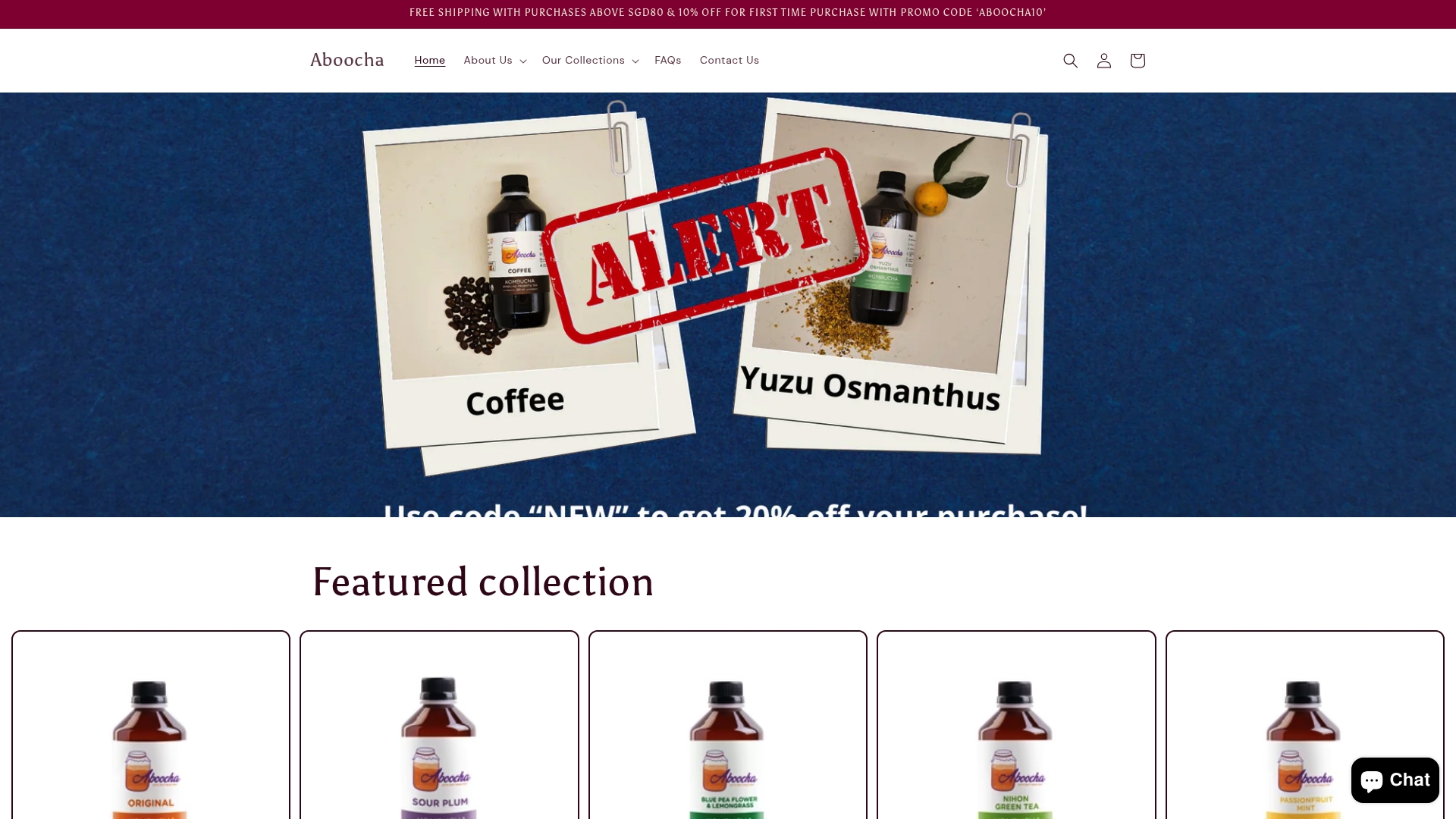
Aboocha crafts raw, lower-sugar kombucha with live cultures and flavor profiles you will not find on a supermarket shelf. From Sour Plum to Yuzu Osmanthus, every bottle is designed to support gut health without sacrificing taste. If you have been choosing between probiotic benefit and flavor, Aboocha removes that trade-off entirely. Explore the full range and find your flavor at Aboocha’s kombucha shop. Subscription plans are available for regular drinkers who want fresh raw kombucha delivered consistently, without the guesswork of hunting down local stock.
FAQ
What is the main difference between local and imported kombucha?
Local kombucha is typically raw and unpasteurized, containing live cultures and lasting about 60 days under refrigeration. Imported kombucha is usually pasteurized, shelf-stable for 6 to 12 months, and contains fewer active probiotics.
Is local kombucha better for gut health?
Raw local kombucha delivers more live probiotics per serving because fermentation cultures remain active after bottling. Pasteurized imported kombucha retains some health benefits but has reduced microbial content due to heat treatment.
How can I tell if kombucha is raw or pasteurized?
Look for labels stating “raw,” “unpasteurized,” or “live cultures,” and check whether the product is sold refrigerated. Visible sediment or culture strands in the bottle also indicate raw, unpasteurized kombucha.
How much kombucha should I drink per day?
Experts recommend 8 to 16 ounces daily for probiotic benefits, with new consumers starting at a lower amount and increasing gradually to allow the digestive system to adjust.
Is imported kombucha safe to drink?
Yes. Pasteurized imported kombucha is safe for most adults and is the recommended choice for pregnant women, immunocompromised individuals, or anyone advised to avoid unpasteurized foods. Raw kombucha carries a small contamination risk if the cold chain is broken.