
Postbiotics are defined as inanimate microbial metabolites and cellular components that deliver measurable health benefits to the host. The role of postbiotics in digestion goes beyond what probiotics alone can achieve. Where probiotics rely on live bacteria surviving stomach acid and colonizing the gut, postbiotics act immediately upon ingestion. The International Scientific Association for Probiotics and Prebiotics (ISAPP) formalized this definition in 2021, giving researchers and consumers a clear framework for understanding these compounds. A 2026 systematic review of 1,062 patients confirmed that postbiotics significantly reduce digestive symptom severity, making them one of the most evidence-backed tools in gut health today.
What are postbiotics and how do they function in the digestive system?
Postbiotics are the byproducts of bacterial fermentation inside the gut. When gut bacteria break down fiber and other substrates, they produce a range of bioactive compounds. These compounds include short-chain fatty acids (SCFAs) like butyrate, propionate, and acetate, along with enzymes, peptides, cell wall fragments, and polysaccharides.
Butyrate is the most studied of these compounds. It strengthens tight junctions in the gut lining, which reduces intestinal permeability. A leaky gut lining allows bacterial toxins to enter the bloodstream, triggering systemic inflammation linked to metabolic diseases and accelerated aging. Butyrate directly blocks that process.
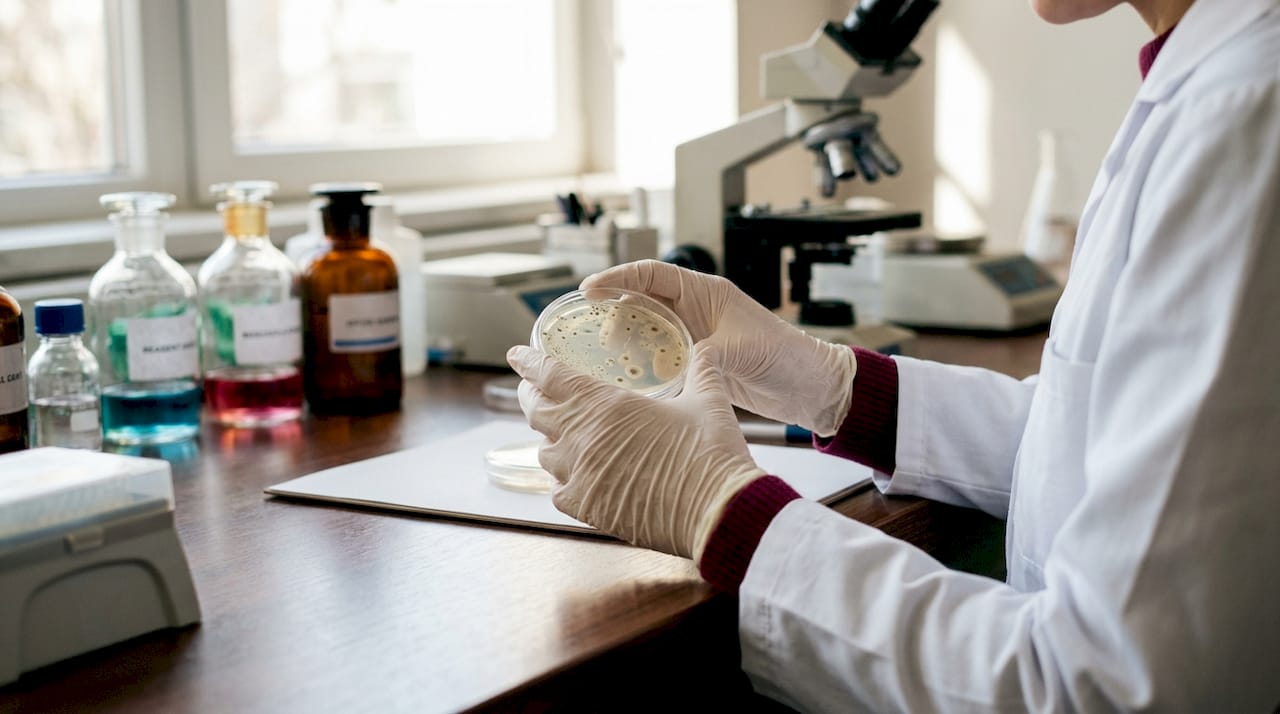
Postbiotics also interact with immune cells lining the gut wall. They modulate signaling pathways including GPCR and NF-κB, which control immune and inflammatory responses. This means postbiotics do not just feed gut bacteria. They actively communicate with your immune system to reduce inflammation and support epithelial regeneration.
The key functional difference between postbiotics and probiotics is timing. Probiotics need to survive digestion, reach the colon, and establish colonies before producing effects. Postbiotics act immediately because they contain no live organisms. There is no survival barrier to clear.
- Short-chain fatty acids (SCFAs): Butyrate, propionate, and acetate fuel colonocytes and reduce gut inflammation.
- Bioactive peptides: Derived from bacterial protein metabolism; they inhibit pathogens and modulate immune response.
- Cell wall components: Fragments like peptidoglycans and lipoteichoic acids signal immune tolerance in the gut.
- Enzymes: Produced during fermentation; they assist in breaking down complex food molecules.
- Polysaccharides: Support mucus layer integrity and protect the gut epithelium.
Pro Tip: If you experience bloating or irregular digestion after taking probiotic supplements, postbiotics may suit you better. They bypass the colonization step entirely, so gut disruption from introducing live bacteria is not a factor.
What scientific evidence supports the digestive benefits of postbiotics?
The clinical evidence for postbiotics and gut health has grown sharply in the past two years. A 2026 systematic review and meta-analysis covering 1,062 patients found that postbiotics significantly reduced IBS Symptom Severity Scale scores with a standardized mean difference of -1.36. Patients receiving postbiotics were 2.46 times more likely to experience abdominal pain relief than those on placebo. That is a clinically meaningful result, not a marginal signal.
“Postbiotics significantly reduced IBS Symptom Severity Scale scores and doubled the chance of abdominal pain reduction versus placebo, with a risk ratio of 2.46 for pain relief. These findings position postbiotics as a credible therapeutic option for functional digestive disorders.” — 2026 Systematic Review, PubMed
A separate 2026 randomized, double-blind, placebo-controlled clinical trial is currently testing 340 mg daily postbiotic supplementation over 12 weeks in adults aged 50–75. The trial uses capsules containing heat-inactivated Lactobacillus species and metabolite-rich fermentation medium. Its endpoints include digestive comfort, stress reduction, and sleep quality, which reflects growing recognition that gut health and systemic well-being are tightly linked.
A 2025 meta-analysis compared the three main gut health interventions across aging populations.
| Intervention | Primary mechanism | Effect on gut bacteria | Inflammatory modulation |
|---|---|---|---|
| Probiotics | Live bacterial colonization | Moderate increase in Bifidobacterium (SMD 0.40) | Variable, strain-dependent |
| Prebiotics | Feeds existing gut bacteria | Strong increase in Bifidobacterium (SMD 1.09) | Indirect, via microbial activity |
| Postbiotics | Direct metabolite action | No direct colonization effect | Predictable, via oxidative and metabolic pathways |
The meta-analysis found that postbiotics offer more predictable inflammatory and immune modulation in aging adults than either probiotics or prebiotics alone. Predictability matters in clinical settings because it allows for consistent dosing and reliable outcomes.
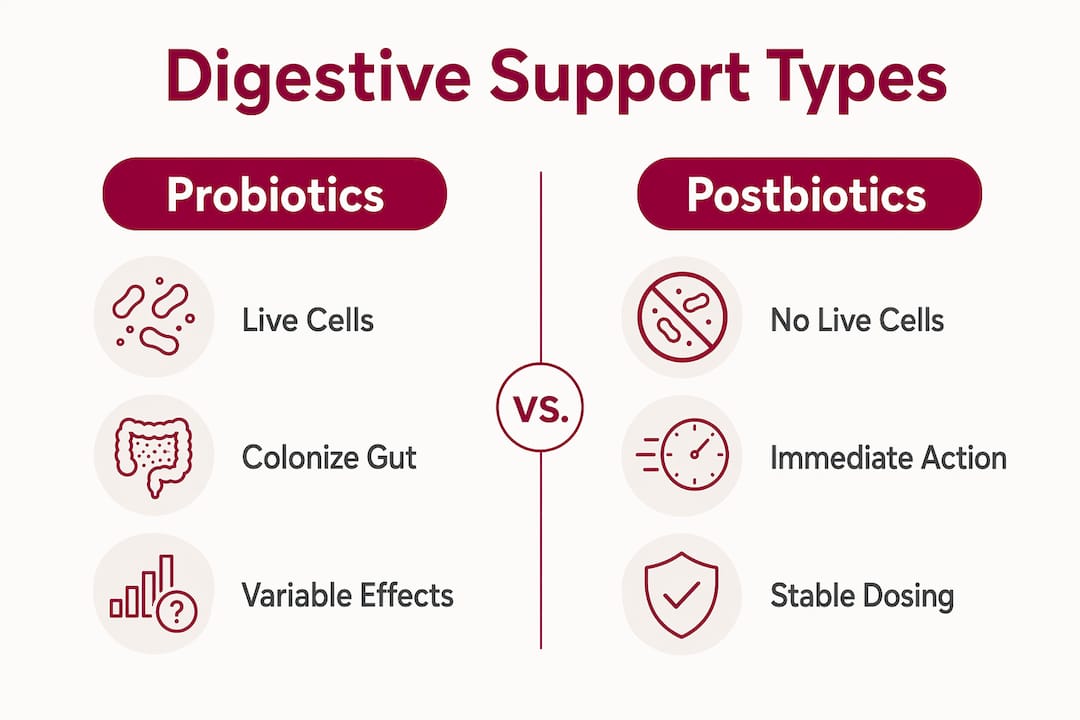
Safety data is equally strong. Postbiotics carry zero infection risk because they contain no viable microorganisms. This makes them suitable for immunocompromised individuals, infants, and the elderly, groups for whom live probiotic supplements can pose a small but real risk of opportunistic infection.
How do postbiotics compare with probiotics and prebiotics in supporting digestion?
Think of the three categories as a production chain. Prebiotics are the raw materials, fiber and polyphenols that gut bacteria consume. Probiotics are the workers, live bacteria that ferment those materials. Postbiotics are the finished products, the bioactive compounds that actually do the work inside your gut and immune system.
Each category has a distinct role, and each has practical trade-offs.
| Feature | Probiotics | Prebiotics | Postbiotics |
|---|---|---|---|
| Contains live organisms | Yes | No | No |
| Requires refrigeration | Often | No | No |
| Acts immediately | No | No | Yes |
| Infection risk | Low but present | None | None |
| Stability in storage | Variable | High | High |
| Suitable for elderly/immunocompromised | With caution | Yes | Yes |
Postbiotics remain stable without refrigeration and deliver consistent dosing across production and storage conditions. Live probiotics degrade during transit and storage, which means the dose on the label may not match what reaches your gut. Postbiotics do not have that problem.
Prebiotics are still the most powerful tool for increasing Bifidobacterium abundance in the gut. The 2025 meta-analysis showed prebiotics outperformed probiotics on that specific measure. But prebiotics work indirectly. They feed bacteria, which then produce postbiotics. Increasing your fiber intake is essentially a strategy for boosting your body’s own postbiotic output.
Key practical distinctions for people choosing between these options:
- Probiotics work best when you need to replenish specific bacterial strains, such as after antibiotic use.
- Prebiotics work best as a long-term dietary strategy to feed and diversify gut bacteria.
- Postbiotics work best when you need immediate, predictable gut support, or when live bacteria are not appropriate for your health status.
For most people, the strongest approach combines all three. Experts recommend multimodal therapeutic strategies that integrate postbiotics as a regulatory tool alongside probiotics and prebiotics, rather than using any single intervention alone.
Practical ways to increase postbiotic production naturally
Diet is the primary lever for increasing postbiotics. A fiber-rich diet with whole grains, vegetables, and legumes promotes SCFA-producing bacteria in the gut. Polyphenol-rich foods like berries, green tea, and dark chocolate are converted into bioactive postbiotics by gut bacteria. These dietary choices directly increase the raw material available for postbiotic production.
- Eat more fermented foods. Yogurt, kefir, kimchi, sauerkraut, miso, and kombucha deliver both live cultures and ready-made postbiotics. A Stanford Microbiome Study found that fermented food consumption increases microbial diversity and reduces inflammation markers more effectively than fiber alone. Fermented drinks like Aboocha’s kombucha provide this dual benefit in a low-sugar, flavor-forward format.
- Prioritize dietary fiber. Aim for a wide variety of plant-based fiber sources, not just one type. Diversity in fiber sources feeds a broader range of gut bacteria, which produces a more varied postbiotic output.
- Consider postbiotic supplements for targeted support. Emerging formulations use heat-inactivated Lactobacillus species at defined doses. Look for products with transparent ingredient lists and clinical backing. The supplement market is not uniformly regulated, so third-party testing certification matters.
- Exercise regularly. Physical activity increases gut motility and has been shown to shift gut microbiota composition toward greater SCFA production. Even moderate aerobic exercise three to four times per week produces measurable effects on gut metabolite profiles.
- Protect your sleep. Poor sleep disrupts the gut-brain axis and reduces microbial diversity. Consistent sleep of seven to nine hours per night supports the stable gut environment that postbiotic-producing bacteria need.
Pro Tip: When reading supplement labels, look for the term “heat-inactivated” or “tyndallized” bacteria. These are the technical markers of a genuine postbiotic formulation, as opposed to a standard probiotic product.
Experts are clear that postbiotics complement but do not replace fiber-rich diets. Supplements can fill gaps, but food-based strategies remain the foundation. Understanding how to improve gut health naturally through diet and lifestyle choices gives you the most durable results.
For a deeper look at how fermented beverages fit into this picture, the science behind fermented drinks and gut health explains the mechanisms in detail.
Key Takeaways
Postbiotics deliver direct, immediate digestive benefits through bioactive metabolites like butyrate that strengthen the gut lining, reduce inflammation, and modulate immune function without the risks associated with live bacteria.
| Point | Details |
|---|---|
| Postbiotics act immediately | Unlike probiotics, postbiotics require no colonization and begin working upon ingestion. |
| Butyrate is the key compound | Butyrate strengthens gut tight junctions and reduces intestinal permeability linked to systemic inflammation. |
| Strong clinical evidence | A 2026 meta-analysis showed postbiotics reduced IBS symptom severity with a standardized mean difference of -1.36. |
| Safer for vulnerable groups | Postbiotics carry zero infection risk, making them suitable for the elderly, infants, and immunocompromised individuals. |
| Diet drives natural production | Fiber-rich foods and fermented products like kombucha are the most reliable way to increase postbiotic output. |
Why I think postbiotics are the most underrated tool in gut health
Most gut health conversations still center on probiotics. Walk into any pharmacy and the probiotic shelf dwarfs everything else. That focus made sense a decade ago, when the field was new. The research has moved on, and the conversation has not caught up.
What strikes me most about the postbiotic evidence is the consistency. Probiotic research is notoriously strain-specific and hard to generalize. One Lactobacillus strain does something useful; a different strain does nothing. Postbiotic research does not have that problem to the same degree, because the active compounds are defined and measurable. Butyrate is butyrate. You can dose it, test it, and replicate the results.
The safety profile is the other underappreciated factor. Clinicians working with elderly or immunocompromised patients have always faced a real tension with live probiotic recommendations. Postbiotics remove that tension entirely. For aging populations especially, this is not a minor footnote. It is a meaningful clinical advantage.
The area I watch most closely is the intersection of postbiotics, sleep, and stress. The PostWelLB trial targeting adults aged 50–75 is testing exactly this combination. If those results hold, postbiotics will move from a niche supplement category into mainstream clinical practice faster than most people expect.
The honest caveat is that the field still needs more large-scale, long-term trials. The 2026 IBS meta-analysis is compelling, but 1,062 patients across multiple short-term studies is not the same as a decade of longitudinal data. Approach postbiotics with informed optimism, not uncritical enthusiasm. Combine them with a fiber-rich diet, regular movement, and quality sleep. That combination is where the real results live.
For anyone curious about how probiotics and gut health research compares, the science is worth reading alongside the postbiotic literature. Understanding both gives you a clearer picture of what each intervention actually does.
— Luna
Aboocha and the gut health connection
Gut health is not a single supplement away. It is built through consistent choices, and what you drink every day is one of those choices.
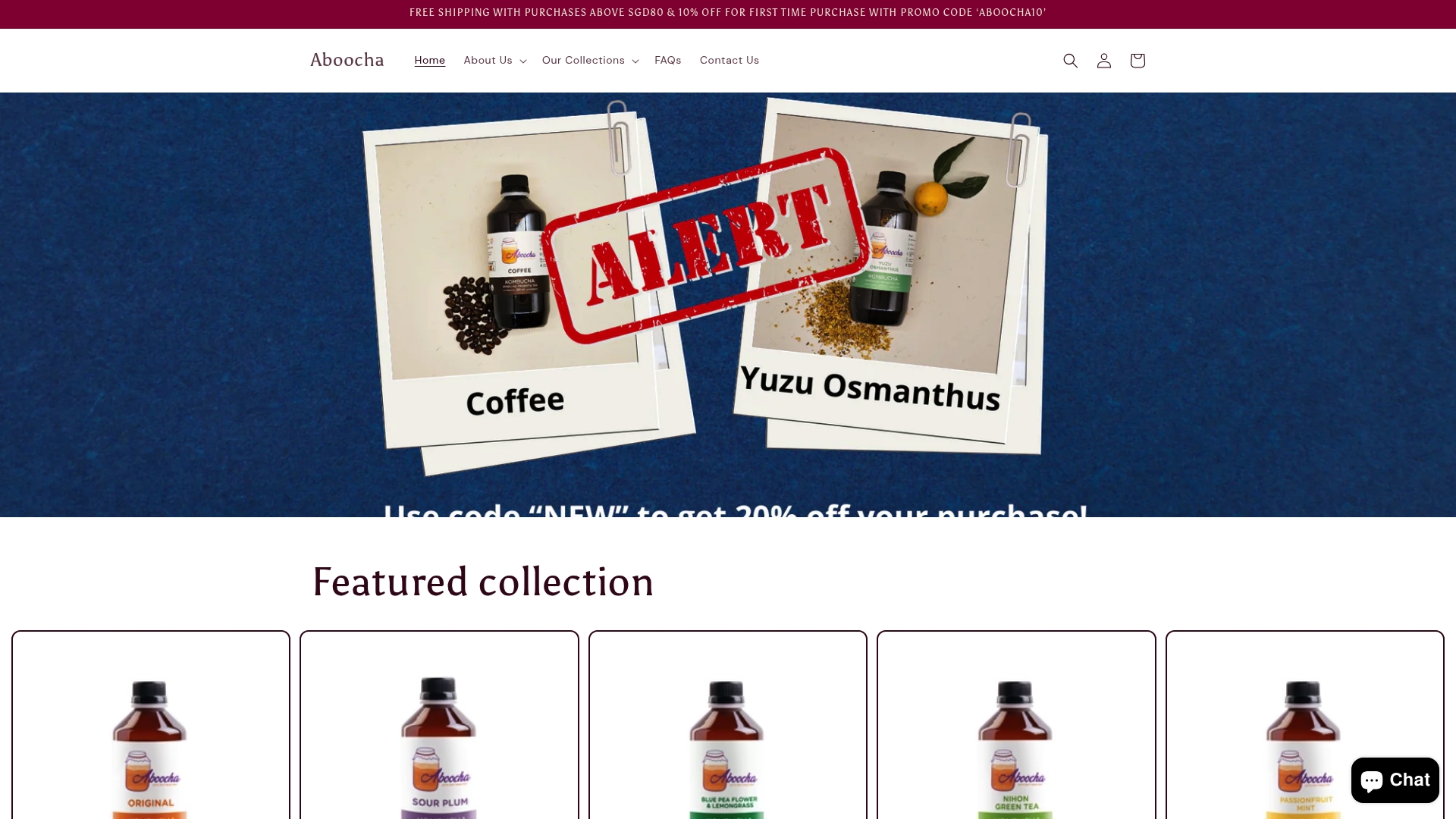
Aboocha crafts kombucha beverages that deliver both live cultures and postbiotics in a low-sugar, flavor-forward format. Varieties like Sour Plum and Yuzu Osmanthus are not just interesting to drink. They provide the fermented food benefit that research consistently links to greater microbial diversity and reduced gut inflammation. Aboocha’s subscription plans make it easy to keep fermented drinks as a daily habit rather than an occasional purchase. If you want to support your digestion through what you actually enjoy drinking, explore Aboocha’s range and find the flavor that fits your routine.
FAQ
What are postbiotics, exactly?
Postbiotics are inanimate microbial metabolites and cellular components produced during bacterial fermentation. They include compounds like short-chain fatty acids, enzymes, and peptides that deliver measurable health benefits without containing live organisms.
How do postbiotics aid digestion differently than probiotics?
Postbiotics act immediately upon ingestion because they require no bacterial colonization. Probiotics must survive stomach acid and establish in the gut before producing effects, which makes their impact slower and less predictable.
Are postbiotics safe for everyone?
Postbiotics carry zero infection risk because they contain no viable microorganisms. This makes them suitable for vulnerable groups including the elderly, infants, and immunocompromised individuals who may face risks with live probiotic supplements.
What foods naturally increase postbiotic production?
Fermented foods like kombucha, kefir, kimchi, and yogurt deliver ready-made postbiotics. A fiber-rich diet with whole grains, legumes, and polyphenol-rich vegetables also promotes postbiotic production by feeding SCFA-producing gut bacteria.
Can postbiotic supplements replace a healthy diet?
Postbiotic supplements support gut health but do not replace dietary fiber, which remains the primary driver of natural postbiotic production. Experts recommend supplements as a complement to, not a substitute for, a fiber-rich, varied diet.