
Flavor layering is the practice of adding ingredients and heat in a deliberate order, so each stage of cooking contributes a distinct flavor that survives into the final dish. Instead of dumping everything in a pot and seasoning once at the end, you sweat onions until they turn sweet, add garlic a few minutes later so it doesn’t scorch, sear your protein hard enough to build a crust, deglaze the pan to lift that browned residue back into the sauce, and finish with acid or fresh herbs right before serving.
Each move stacks on the last one instead of erasing it.
That sequencing is what separates a dish that tastes like “tomato sauce” from one that tastes like sweet onion, garlic, seared beef, red wine, and basil all at once, each identifiable but working together. Seasoning only at the end gives you salt on the surface of a flat-tasting dish. Layering gives you salt woven through every component, which is why the same recipe can taste like a restaurant dish or a dorm-room dinner depending entirely on when you did what.
- Sweat aromatics low and slow before adding anything else
- Add stronger aromatics (garlic, ginger, chilies) later so they don’t burn
- Sear proteins for real browning, not just cooked-through gray
- Deglaze the pan to recover fond into your sauce
- Finish with acid, herbs, or a fat for contrast right before serving
Key Takeaways
Flavor layering works because it matches ingredient timing to how your palate actually perceives taste in phases, using salt, fat, acid, and heat as the primary tools for building depth.
| Point | Details |
|---|---|
| Season in stages | Salt vegetables, proteins, and sauces individually as you cook, not just at the end. |
| Respect the four levers | Use salt to amplify, fat to carry aroma, acid to lift, and heat to build browned complexity. |
| Taste at every checkpoint | Check aroma, body, and finish after each major stage, and fix issues with small, precise additions. |
| Match technique to compound type | Bloom spices in oil for fat-soluble aromatics; simmer in liquid for water-soluble ones. |
| Adapt sequence to cuisine and speed | Fast cooking needs pre-mixed finishes; slow cooking allows ongoing tasting and adjustment. |
Table of Contents
- Why Flavor Layering Works: Timing, the Four Building Blocks, and Pairing Logic
- How to Build Layers: A Stage-by-Stage Sequence You Can Reuse
- Core Techniques That Build Specific Layers
- Fixing a Flat or Unbalanced Dish Mid-Cook
- How Layering Looks Across Different Cuisines
- What Layered Flavor Thinking Looks Like Beyond the Stovetop
- How Aboocha Applies the Same Layering Logic to Kombucha
- Why Most Advice on Flavor Layering Misses the Point
- Sources
- FAQ
Why Flavor Layering Works: Timing, the Four Building Blocks, and Pairing Logic
Your palate doesn’t experience a bite of food all at once. Volatile aromatic compounds hit your nose first, before you even swallow. Then comes the mid-palate, the body and texture you feel as you chew. Last is the finish, whatever lingers after you swallow. Cooks who understand this phased perception deliberately place ingredients so something interesting happens at each of those moments, instead of front-loading every flavor into one indistinct blast.
That’s the actual mechanism behind flavor layering. It’s not a plating trick or a garnish habit. It’s an attempt to control what your senses register in sequence, the same way a song builds through a verse, a bridge, and a chorus rather than playing every note simultaneously.
Four tools do almost all the work: salt, fat, acid, and heat. Cooks generally credit these as the primary levers for building depth, and each does something the others can’t.
- Salt doesn’t just make food taste “salty.” It penetrates ingredients over time and amplifies whatever flavors are already there, which is why salting a steak an hour before cooking works differently than salting it at the table.
- Fat carries aroma compounds that are otherwise inaccessible. Many spice flavors are fat-soluble, meaning they bloom in oil far more readily than they dissolve in water. Fat also rounds out sharp edges and coats the tongue, slowing how quickly other flavors fade.
- Acid lifts a dish out of heaviness. A squeeze of lime or a splash of vinegar cuts through fat and salt, resets your palate, and keeps a rich dish from tasting one-note.
- Heat drives the Maillard reaction, the browning that turns raw onion or a plain steak into something with hundreds of new flavor compounds that didn’t exist before you turned on the burner.
Pairing strategy matters just as much as timing. Research on flavor networks found that some cuisines lean on ingredient pairs that share flavor compounds, essentially doubling down on similarity, while others pair contrasting elements that don’t overlap chemically at all. A 2011 flavor-network study found North American cuisines tend to combine ingredients that share many flavor compounds, while East Asian cuisines more often avoid those compound-sharing pairs and lean into contrast instead. Neither approach is more correct. Knowing which one you’re aiming for tells you whether to add an ingredient that echoes what’s already in the pot or one that pushes against it.
Sensory synergy is the wildcard here: some flavor combinations only emerge through the cooking process itself, not when the raw ingredients sit side by side on a cutting board. That’s a big part of why layering beats dumping. You’re not just combining ingredients, you’re letting heat and time create something that wasn’t in any single component to begin with.
How to Build Layers: A Stage-by-Stage Sequence You Can Reuse
This sequence works for soups, sautés, roasts, and braises with only minor adjustments. Treat it as a template, not a rigid recipe.
- Season components early. Salt vegetables as you chop them, salt meat before it hits the pan, season your sauce base before you add liquid. Salting components individually, rather than the finished dish, distributes flavor throughout instead of leaving it sitting on the surface, and it prevents the classic mistake of over-salting at the very end to compensate for a bland base.
- Build your aromatic base. Heat fat first, then add the slow aromatics, usually onions, carrots, and celery, and let them sweat until they soften and turn translucent or lightly golden. This can take 8 to 12 minutes and it’s not a step to rush.
- Add secondary aromatics late. Garlic, ginger, and chilies burn fast and turn bitter if they hit hot oil too early. Add them in the last minute or two of the aromatic stage so they stay fragrant instead of scorched.
- Brown in batches. If you’re searing meat, don’t crowd the pan. A crowded pan steams instead of browns, and you lose the fond, the sticky, flavor-packed residue stuck to the pan bottom that becomes the backbone of your sauce.
- Deglaze and reduce. Add wine, stock, or even water to the hot pan and scrape up that fond. Let the liquid reduce by a third or half to concentrate flavor before adding more ingredients.
- Finish with acid, herbs, or texture. Fresh herbs, a spoonful of yogurt, a squeeze of citrus, or a scattering of toasted nuts belongs at the very end, added off heat or in the last minute, so their brightness or crunch survives.
Pro Tip: Taste before and after every major addition, not just at the end. If you can’t tell what a step changed, you’ll never learn to predict what the next one will do.
Tasting checkpoints matter more than any single ingredient choice, and learning how to create detailed tasting notes can guide you through each stage effectively, as explained in how to create coffee flavor tasting notes like a pro. Taste right after your aromatics soften (should smell sweet, not raw or bitter), again after deglazing (should taste concentrated, not thin or burnt), and once more after your finishing touch (should have brightness and aroma, not just heat and salt). If something’s off at any checkpoint, professional cooks tend to make small adjustments right there rather than waiting and hoping the next step fixes it, and that habit alone is arguably the biggest difference between a home cook’s dish and a professional’s.
Core Techniques That Build Specific Layers
Four techniques do most of the heavy lifting once you understand what each one is actually adding to the dish.
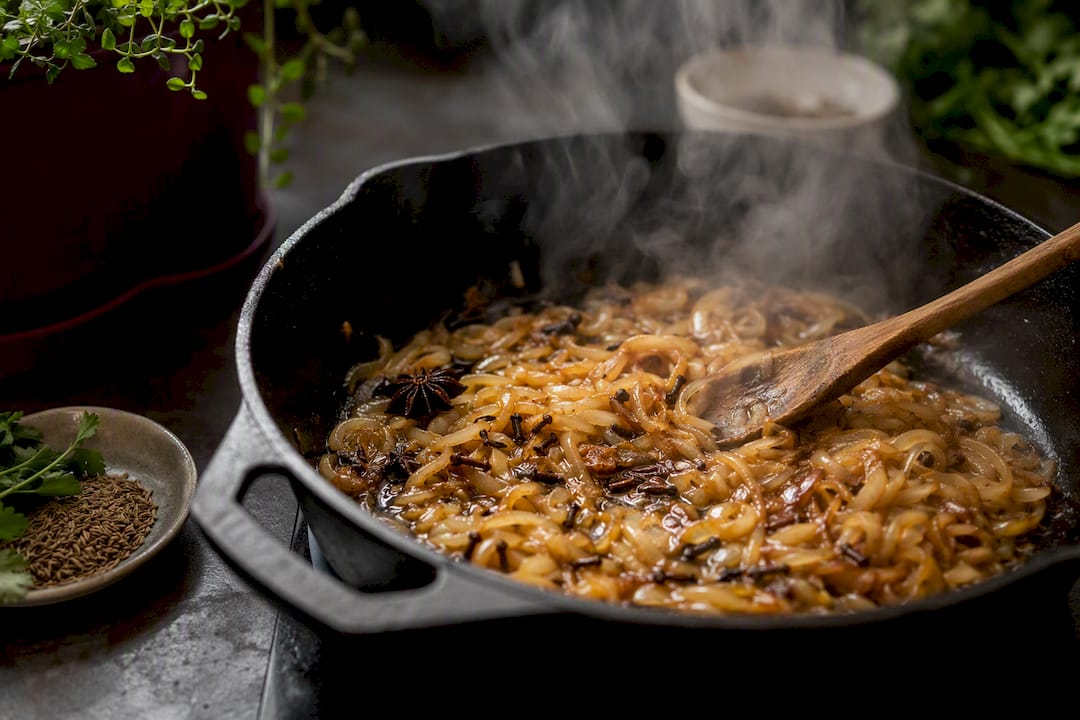
Blooming spices in fat versus simmering in liquid access different chemical compounds entirely. Blooming whole spices like cumin seed, mustard seed, or star anise in hot oil releases their fat-soluble aromatic oils almost instantly, which is why a North Indian tadka takes seconds, not minutes. Chinese five-spice, by contrast, often gets simmered in braising liquid over a longer stretch, extracting water-soluble compounds slowly and infusing the entire liquid rather than just coating the surface of the food. If a spice blend tastes flat in a braise, try blooming a portion of it in oil first, then adding the rest to the simmering liquid to capture both dimensions.
Searing and pan sauces turn a simple protein into a two-part dish. Sear a chicken breast or pork chop hard in a hot pan, remove it, deglaze with a splash of wine or stock, reduce by half, then swirl in a knob of cold butter and chopped herbs off the heat. That’s a complete pan sauce built in under five minutes, and it only works because you didn’t skip the browning step.
- Wine deglazing adds acidity and richness, especially good with red meat and mushroom-based sauces
- Vinegar deglazing adds sharper brightness, useful when a dish needs a quick lift without extra liquid volume
- Stock deglazing adds body and savoriness without competing acidity, a safer default for delicate proteins like fish or chicken
Finishing elements are the layer most home cooks skip entirely. A handful of chopped cilantro, a squeeze of yuzu or lime, toasted sesame seeds, or crushed peanuts added right at the end gives a dish textural and aromatic contrast that cooking alone can’t produce. Aboocha’s approach to pairing bright citrus flavors with savory bases follows the same logic: the citrus note has to arrive last to register as a finish rather than getting cooked away.
Fixing a Flat or Unbalanced Dish Mid-Cook
Most rescue jobs come down to identifying which of the four building blocks is missing, not adding more of everything at once.
Taste for three things at each stage: aroma when you lift the lid, body and richness in the middle of the bite, and what lingers after you swallow. A dish that smells good but tastes hollow usually needs salt or acid. One that tastes harsh or one-dimensional usually needs fat to round it out, or a small hit of sweetness to balance excess acidity or bitterness.
- Dish tastes dull or muted: add a pinch of salt first, then a small splash of acid like lemon juice or vinegar if salt alone doesn’t fix it
- Dish tastes harsh or overly sharp: a teaspoon of butter, olive oil, or a touch of honey can round out the edges
- Dish has a flat finish with nothing lingering: fresh herbs or a final squeeze of citrus, added off heat, usually solves it
- Dish tastes muddy or one-note: a contrasting element, something crunchy, something bright, something bitter, can break up the monotony
Pro Tip: Fix problems in the smallest possible dose. A quarter teaspoon of salt or a few drops of vinegar can flip a dish from flat to balanced; dumping in a tablespoon “to be safe” usually creates a new problem instead of solving the old one.
How Layering Looks Across Different Cuisines
The same four building blocks show up everywhere, but the order and emphasis shift depending on the tradition.
North Indian cooking typically starts with whole spices bloomed in hot oil or ghee, then builds an onion base cooked until deeply caramelized, adds ground spices next so they toast briefly without burning, follows with liquid (tomato, stock, or water), and finishes with a dollop of cream, a squeeze of lime, or fresh cilantro.
Chinese stir-fry often front-loads aromatics as an infused oil or a quick flash in a screaming-hot wok, cooks proteins and vegetables in rapid succession over intense heat, and finishes with a pre-mixed sauce added in the final seconds so it glazes rather than stews.
Mediterranean cooking leans on long, slow sweats of onion and garlic in olive oil, builds body with wine or tomato added gradually, and finishes with fresh herbs, a final drizzle of good olive oil, or a squeeze of lemon at the table.
- Fast cooking (stir-fry, sautés): pre-mix finishing sauces, since you won’t have time to adjust mid-cook
- Slow cooking (braises, stews): taste and adjust at multiple points, since flavors concentrate and shift over hours
What Layered Flavor Thinking Looks Like Beyond the Stovetop
The same logic drives how complex beverages get built. A base ferments first, then secondary flavors get introduced, and finishing aromatics get layered in last, mirroring the sear-deglaze-finish structure that works in a sauté pan. Fermentation itself adds a layer of complexity that raw ingredients alone can’t produce, which is part of why fermented foods and drinks often taste deeper than their unfermented counterparts.
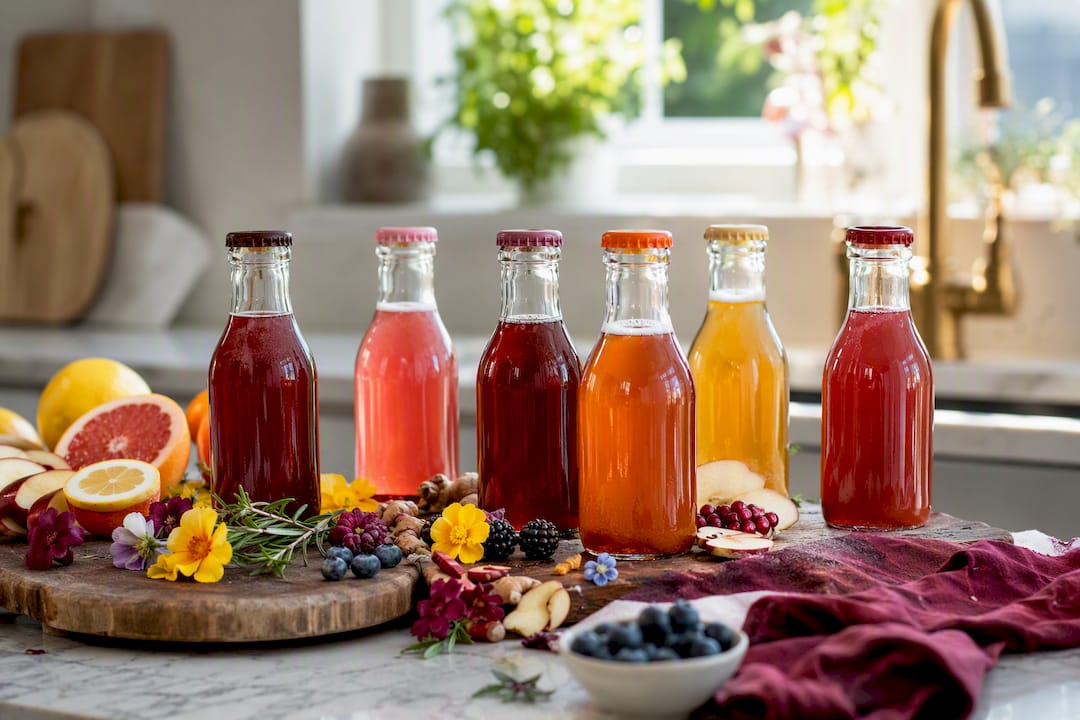
Aboocha builds its kombucha with that same layered structure: a fermented tea base, then flavors like Sour Plum or Yuzu Osmanthus added to create distinct profiles without leaning on high sugar content to carry the taste. That’s a formulation choice, not just a marketing detail. Cooks can borrow from it directly.
- A splash of a tangy fermented kombucha can work as a finishing acid in a vinaigrette or pan sauce, the same role a squeeze of citrus plays
- Layered beverage profiles are a useful reference point for how a finishing note should taste distinct without overpowering the base
How Aboocha Applies the Same Layering Logic to Kombucha
If you want to taste layered flavor thinking rather than just read about it, Aboocha’s bundles let you sample several profiles side by side, including Sour Plum’s tart-forward finish and Yuzu Osmanthus’s floral-citrus layering. For a specific example of contrast pairing done well, the Aboocha x Deefruit collaboration set pairs fruit-forward brightness against a fermented base in a way that echoes the acid-and-body balance this article covers. Home cooks looking to steal a finishing trick for their own sauces and dressings can start there.
Why Most Advice on Flavor Layering Misses the Point
Most guides treat flavor layering like a checklist: sweat, sear, deglaze, finish, done. The actual skill is tasting, not sequencing. Anyone can memorize an order of operations. Far fewer people stop and taste after the onions soften, or after the deglazing liquid reduces, and actually adjust based on what they notice.
The four building blocks get treated as separate tools in most recipe write-ups, when really they’re a single feedback loop. Add salt, taste, decide if you need acid. Add acid, taste, decide if you need fat. That loop, repeated four or five times through a single dish, matters more than getting any individual step “correct” on the first try.
The beverage comparison is more useful than it looks. A fermented base gets built in stages precisely because nobody trusts a single addition to carry the whole flavor. Home cooks would do well to borrow that skepticism. If a sauce tastes flat, don’t reach for more of everything. Isolate which single lever is missing, and fix that one thing first.
Sources
- What is “layering flavors”? What does it accomplish and how do I do it? — Cooking Stack Exchange
- Flavor network and the principles of food pairing — Scientific Reports (2011)
- Flavor Layering: Pro Step-by-Step Cooking Guide
- Building Flavor Layers: Aromatics to Spices (Interactive) | KotiChef
FAQ
What two flavors go well together in cooking?
Pairs that share flavor compounds, like tomato and basil, tend to taste harmonious, while contrasting pairs, like sweet mango and spicy chili, create balance through tension rather than overlap. Both strategies work, and flavor-pairing research shows different cuisines favor one approach over the other.
Which spices should not be mixed together?
There’s no universal “never combine” list, since spice compatibility depends heavily on the dish and cuisine, but pairing multiple dominant, high-intensity spices, like heavy doses of clove, cinnamon, and star anise all at once, can easily overpower a dish rather than build depth.
What are the four pillars of flavor?
Salt, fat, acid, and heat are widely recognized as the four core building blocks cooks use to layer flavor, with salt amplifying, fat carrying aroma, acid providing lift, and heat driving browning.
What are the 7 flavor profiles?
Sweet, salty, sour, bitter, umami, and spicy (heat) cover the core taste categories, with some frameworks adding a sixth or seventh like astringency or fattiness depending on the culinary tradition being referenced.
How is flavor layering different from just seasoning at the end?
Seasoning only at the end leaves salt sitting on the surface of an otherwise bland dish, while layering distributes seasoning and other flavor elements throughout each cooking stage, so every component contributes rather than just the final garnish.