
Timing depends on your goal: for digestion, drink kombucha with or after meals; for an energy lift, have it in the morning or early afternoon; skip it within a few hours of bedtime if you’re sensitive to acid or caffeine. Keep servings around 4 to 8 ounces, start smaller if you’re new to it, and check with a doctor first if you’re pregnant, immunocompromised, or feeding kombucha to a young child.
TL;DR:
- Drinking kombucha with meals can improve digestion and reduce bloating, especially when consuming lower-sugar varieties to avoid excess sugar intake.
- Starting with 2 to 4 ounces and gradually increasing to 4 to 8 ounces helps improve tolerance without risking stomach discomfort or acidity issues.
- Limit evening consumption if prone to reflux or caffeine sensitivity, and avoid drinking kombucha within 4 to 6 hours of bedtime to prevent sleep disruption.
- For most healthy adults, daily intake of 4 to 8 ounces is safe, but higher-risk groups should consult a doctor before regular use.
- Always check labels for caffeine and sugar content and pair kombucha with food during the day to support comfort and overall health.
Table of Contents
- Kombucha in the Morning: When It Helps and When It Doesn’t
- Drinking Kombucha With or After Meals for Digestion
- Kombucha as an Afternoon Pick-Me-Up
- Kombucha at Night: Should You Avoid It Before Bed?
- How Much Kombucha to Drink: Serving Size and Frequency
- Who Should Avoid or Limit Kombucha: Safety and Red Flags
- Aboocha’s Approach: Practical Starter Tips for New Drinkers
- Does Drinking Kombucha Affect Your Hydration?
- Best Times to Drink Kombucha for Detoxification
- Author Perspective: Realistic Expectations and Next Steps
- Try a Lower-Sugar Kombucha Built for Everyday Drinking
- Sources
- FAQ
Kombucha in the Morning: When It Helps and When It Doesn’t
A morning bottle works well if you want something with a little fizz and a mild lift instead of your second cup of coffee. Kombucha naturally contains small amounts of caffeine from the tea it’s brewed with, plus polyphenols, and swapping it for a sugary soda or energy drink cuts a meaningful amount of added sugar from your morning routine.
The catch is the acidity. Drinking kombucha on a completely empty stomach can trigger heartburn or mild nausea in people prone to reflux, so it pays to ease in.
- Start with a small pour (2 to 4 ounces) before scaling up
- Pair it with breakfast rather than drinking it solo
- Check the label for caffeine content if you’re sensitive to stimulants
- Choose a lower-sugar bottle if you’re also watching blood sugar
Pro Tip: If mornings make your stomach uneasy, eat a few bites of a protein or fiber-rich breakfast first, then sip your kombucha alongside it instead of chugging it first thing.
Drinking Kombucha With or After Meals for Digestion
Pairing kombucha with food is often the most comfortable way to drink it, and there’s a practical reason for that. The organic acids and carbonation in kombucha may support digestion and can slow how quickly sugars from a meal hit your bloodstream, which is one reason people report less of a post-meal energy dip.
Food also buffers kombucha’s acidity, so bloating, reflux, and that slightly queasy feeling some people get on an empty stomach tend to show up less often with a meal in the mix.
- Sip 4 to 6 ounces alongside lunch or dinner rather than the whole bottle at once
- Pick a lower-sugar variety to avoid stacking extra sugar onto your meal
- Give it a few minutes before deciding you need a refill. Carbonation fills you up fast
A systematic review of eight clinical trials found modest but real improvements in constipation-related symptoms and small shifts in gut microbiota among kombucha drinkers, though the trials used doses ranging from about 200 to 473 milliliters and weren’t consistent enough to set one universal dose.
Kombucha as an Afternoon Pick-Me-Up
The 2 to 3 PM slump is exactly when a lot of people reach for a second coffee or a can of something sugary, and kombucha is a reasonable swap. Its caffeine content is low enough to avoid the jittery spike of an energy drink, but the acidity and light carbonation give you something to notice.
Read the label before you commit. Not every bottle is created equal.
- Some brands brew with green or black tea, which raises the caffeine slightly. Others use herbal bases with none
- Stop drinking kombucha for energy purposes past mid-afternoon if you notice it affects your sleep
- A lower-sugar bottle avoids the blood-sugar dip that follows a sweeter drink an hour later
If you’re generally sensitive to acidic beverages, a low-acid coffee is worth keeping in rotation for days when kombucha feels like too much.
Kombucha at Night: Should You Avoid It Before Bed?
For most people, kombucha late at night is the one timing choice worth reconsidering. The acidity that’s mild with food can feel sharper on a near-empty evening stomach, and even a small amount of caffeine can interfere with falling asleep if you’re sensitive to it.
That doesn’t mean it’s off-limits for everyone. Pasteurized or lower-caffeine bottles tend to sit more gently, and plenty of people drink kombucha with dinner and sleep just fine. Individual tolerance varies more here than with any other timing question in this article.
- If you’re prone to reflux, avoid kombucha within 4 to 6 hours of bedtime
- Pair an evening bottle with food rather than drinking it alone
- Notice how you personally respond. Some people feel zero effect at night
How Much Kombucha to Drink: Serving Size and Frequency
Most healthy adults do well with roughly 4 to 8 ounces (120 to 240 ml) a day, and that range exists for a reason: kombucha’s acidity and trace alcohol content can add up if you’re drinking large amounts, and more isn’t automatically better for gut health.
- Start small. Try 2 to 4 ounces (60 to 120 ml) for your first week and track how your digestion responds
- Increase gradually to the 4 to 8 ounce range if you tolerate it well
- Read the bottle, not just the front label. Many bottles hold more than one serving, so check sugar and caffeine per serving, not per container
- Space it out rather than drinking multiple bottles back to back
Clinical trials testing kombucha’s effects have used doses anywhere from 200 to 473 milliliters, which is part of why researchers stop short of naming one ideal daily amount. That range tells you tolerability matters more than hitting an exact number.
Who Should Avoid or Limit Kombucha: Safety and Red Flags
Kombucha isn’t right for every stage of life or every health situation. Pregnant and breastfeeding people, young children, and anyone who is immunocompromised should talk to a doctor before adding it to a routine, largely because unpasteurized kombucha contains live cultures and trace alcohol that carry more risk for those groups.
Watch for warning signs, too, especially with symptoms that don’t fade after a few tries.
- Severe bloating, reflux, or persistent nausea after drinking it means stop and get it checked
- Off smells like nail polish remover, cloudy color changes, or visible mold mean the bottle should be discarded, not finished
- Homemade kombucha carries extra risk from inconsistent brewing conditions and non-food-safe containers
Pro Tip: If a health condition puts you in a higher-risk category, treat kombucha the way you’d treat any new fermented food: ask your doctor first, not after symptoms show up.
Aboocha’s Approach: Practical Starter Tips for New Drinkers
A sensible starter routine looks like this: 2 to 4 ounces in the late morning or with lunch, paired with something you’re already eating, for the first several days. From there, most people can comfortably work up toward the 4 to 8 ounce range if their gut tolerates it well.
Aboocha’s lower-sugar approach was built around exactly this kind of gradual, portion-aware drinking. Flavors like Sour Plum and Yuzu Osmanthus give you something worth savoring in a smaller pour rather than a bottle designed to be chugged, which naturally supports the start-small approach that works best for new drinkers.
- Pair a lower-sugar bottle with breakfast or lunch rather than drinking it as a standalone snack
- Track how your digestion responds over the first two weeks before increasing your portion
- Rotate flavors to find the acidity level and carbonation strength you personally tolerate best
A subscription that arrives on a regular schedule makes it easier to stick with a measured, consistent amount instead of overdoing it because a bottle is sitting in the fridge.
Does Drinking Kombucha Affect Your Hydration?
Kombucha is mostly water, which means it contributes to your daily fluid intake the same way tea or a flavored sparkling water would. It isn’t a dehydrating drink in the way that alcohol or a large coffee can be for some people, since its caffeine content is typically much lower than a cup of brewed coffee.
That said, kombucha shouldn’t replace plain water as your primary hydration source. The carbonation and acidity can make it feel more filling than it actually is, which sometimes leads people to drink less water overall on days they’re relying heavily on kombucha. It’s a flavorful addition to your fluid intake, not a substitute for it.
There’s also the sugar and organic acid content to think about. A higher-sugar bottle consumed in large quantities throughout the day adds calories you might not be tracking, and very acidic bottles can be harder on your stomach if you’re using them as your main way to stay hydrated during exercise or hot weather. For those situations, water first, kombucha as a flavorful extra, is the more reliable approach.
If you’re active or sweating heavily, treat kombucha as a supplement to your hydration routine rather than the backbone of it. A small bottle after a workout can be a satisfying way to rehydrate with some flavor, but pair it with plain water rather than relying on kombucha alone to replace what you’ve lost.

Best Times to Drink Kombucha for Detoxification
The word “detox” gets used loosely in kombucha marketing, and it’s worth being precise about what the drink actually does. Your liver and kidneys handle detoxification on their own, and no beverage, including kombucha, replaces that biological process. What kombucha can plausibly support is a different piece of the puzzle: gut microbiota diversity, which has downstream effects on digestion and, in some observational research, on cardiometabolic markers.
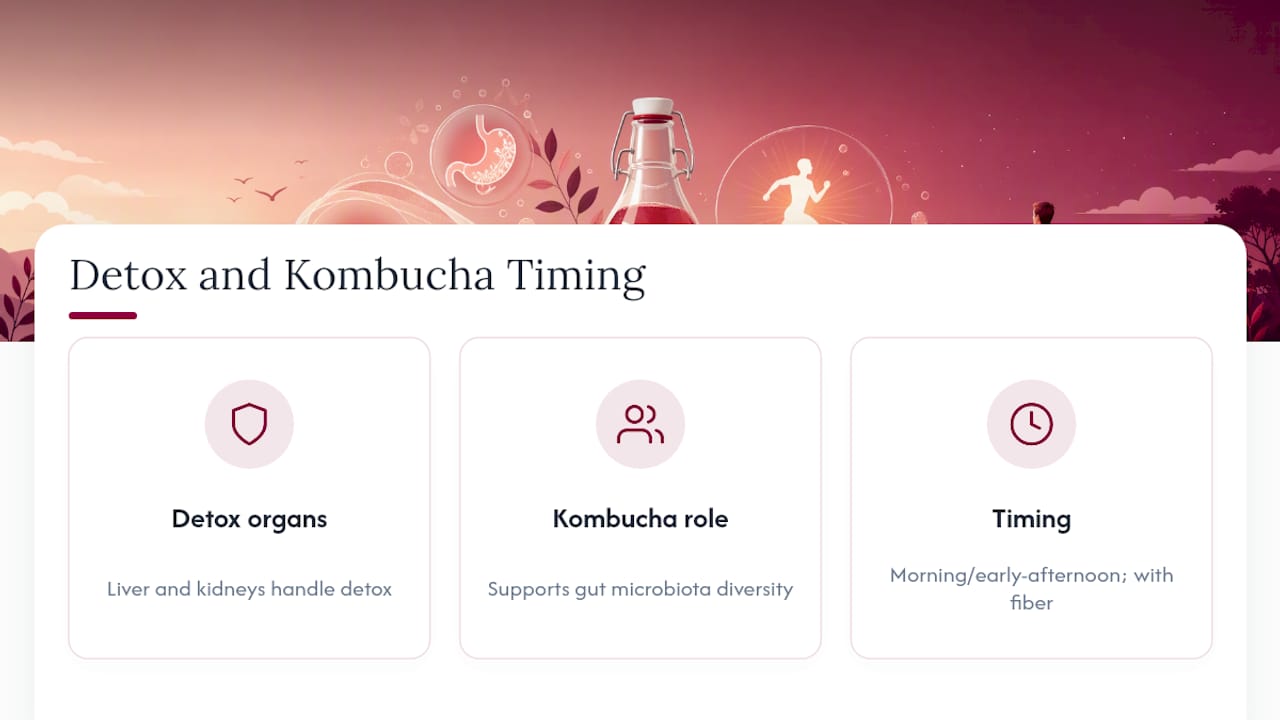
If you’re drinking kombucha with an eye toward supporting your gut as part of an overall detox-minded routine, morning or early afternoon on an empty-ish stomach (with a small snack nearby) tends to work well, since that’s when many people are most attentive to how their digestion responds through the rest of the day. Pairing it with a fiber-rich breakfast rather than drinking it in isolation gives your gut more raw material to work with.
An observational study of fermented-food intake found that greater microbial diversity from fermented foods was linked to modest improvements in blood pressure and blood sugar markers, but the effect size was small and tied to variety across multiple fermented foods, not one drink consumed at a specific hour. That’s the honest takeaway: timing kombucha around your goals is reasonable, but no single window turns it into a cleanse.
Author Perspective: Realistic Expectations and Next Steps
Kombucha earns its place in a varied diet, but it isn’t a fix for a gut that needs bigger changes. The research on its clinical benefits is real but modest, and it varies person to person more than marketing tends to admit.
My honest advice: treat timing as a personal experiment. Try a small pour with lunch for two weeks, track how you feel, then adjust. If you fall into a higher-risk group, a quick conversation with a doctor before you start beats guessing after symptoms appear.
— Luna
Try a Lower-Sugar Kombucha Built for Everyday Drinking
Most kombucha on the shelf is built around volume and sugar, not the kind of small, consistent pour that actually fits a digestion-first routine. Aboocha takes the opposite approach: lower sugar content across flavors like Sour Plum and Yuzu Osmanthus, made for sipping in portions that match what your gut can actually handle.
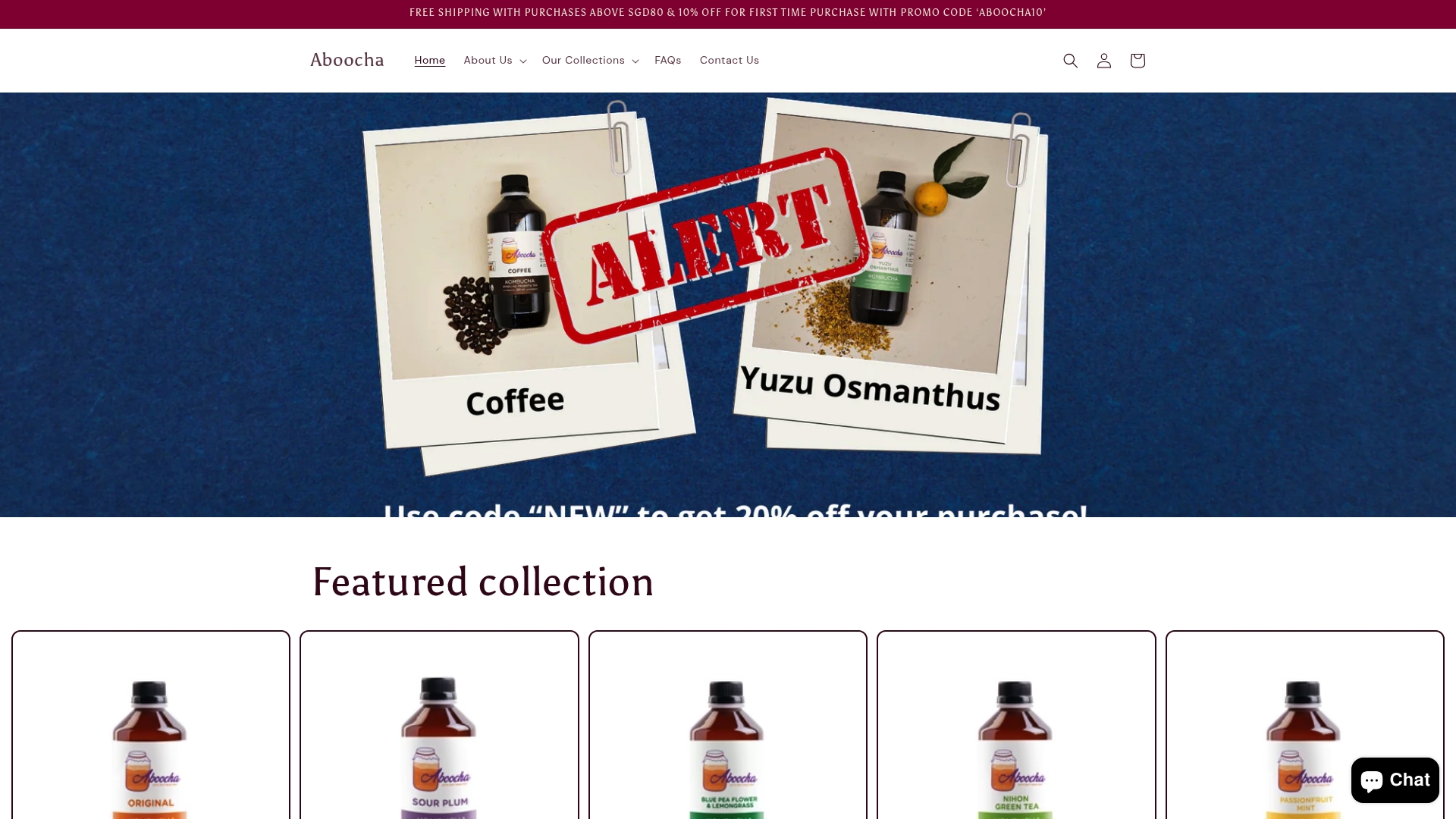
If you’ve read this far, you already know that consistency matters more than any single “best” hour. A subscription plan makes that consistency easy. Bottles arrive on a schedule, so you’re reaching for a measured pour instead of guessing at portion size from a large bottle in the fridge. If you’re new to kombucha, start with a beginner’s tasting guide to find a flavor and strength that fits your tolerance, then set up a subscription to keep a lower-sugar option on hand for whichever time of day works for you.
Sources
- Kombucha: What are kombucha’s health benefits and how much can you safely drink? — Cleveland Clinic
- Dietary intake of live microorganisms, fermented foods and microbial richness — PubMed (Swiss Kidney Stone Cohort) DOI:10.1007/s00394-026-03895-y
- Benefits of Kombucha Consumption: A Systematic Review of Clinical Trials Focused on Microbiota and Metabolic Health — MDPI
FAQ
Does Kombucha Flatten the Stomach?
Kombucha doesn’t reduce belly fat or “flatten” the stomach in any direct way. Any change some people notice is more likely tied to reduced bloating when it replaces a sugary drink, not a fat-loss effect.
When Should You Not Drink Kombucha?
Avoid it on a completely empty stomach if you’re prone to reflux, skip it within a few hours of bedtime if caffeine bothers your sleep, and avoid it altogether without medical guidance if you’re pregnant, immunocompromised, or giving it to a young child.
How Often Should I Drink Kombucha for Gut Health?
Daily consumption within the 4 to 8 ounce range is reasonable for most healthy adults, though the clinical evidence for gut benefits comes from trials using varying doses over several weeks, not a single serving.
Is It Safe to Drink Kombucha Every Day?
For most healthy adults, yes, within the recommended 4 to 8 ounce daily range, starting smaller if you’re new to it. People in higher-risk groups should check with a doctor before making it a daily habit.
Is Kombucha Good in the Morning?
Kombucha can work well in the morning as a lower-sugar alternative to coffee or soda, especially paired with breakfast rather than on a completely empty stomach.