
Low-sugar, ready-to-drink kombucha can modestly support bowel regularity and gut-microbiome diversity when consumed consistently as part of a varied, fiber-rich diet. That claim is backed by a COST PIMENTO meta-analysis, covering 25 studies and 4,328 participants, which found statistically significant improvements in bowel frequency, stool consistency, and transit time from fermented-food consumption. A 2025 systematic review of kombucha clinical trials adds that some trials recorded improvements in GI symptoms and modest microbiota shifts, though product variability limits how far you can generalize. Aboocha’s lower-sugar formulations sit squarely in this evidence window, delivering organic acids and polyphenols without the sugar load that can undercut the metabolic case.
The practical upshot:
- Start with a small daily serving (120 mL / 4 oz) of a low-sugar kombucha.
- Track bowel regularity and GI comfort for at least 4 weeks before drawing conclusions.
- Choose a product with clearly labeled sugar per 100 mL, alcohol percentage, and live-culture status.
- Pair it with a fiber-rich diet; kombucha alone is not a gut-health strategy.
Pro Tip: The benefits of low-sugar drinks for teens and adults alike depend on consistency, not quantity. A small daily serving beats an occasional large one every time.
Key Takeaways
Low-sugar kombucha can modestly support bowel regularity and gut-microbiome diversity in healthy adults when consumed consistently as part of a fiber-rich diet for at least 4 weeks.
| Point | Details |
|---|---|
| Evidence is real but modest | A meta-analysis of 25 studies found improved bowel frequency and stool consistency from fermented foods. |
| Sugar per 100 mL is the key label number | Aim for approximately 4 g or less per 100 mL; commercial products range from 0 to 19 g per serving. |
| Consistency beats quantity | A daily 120–240 mL serving for 4+ weeks is more likely to show gut benefit than sporadic larger doses. |
| Some people need clinical clearance | Pregnant, immunocompromised, or medicated individuals should check with a clinician before starting. |
| Aboocha for daily use | Aboocha’s lower-sugar RTD kombucha delivers the fermentation matrix the evidence supports, with clear ABV and sugar labeling. |
This article is general information, not a substitute for advice from a qualified doctor. Consult a qualified healthcare professional about your own circumstances before acting on anything here.
Table of Contents
- What the clinical evidence actually says about kombucha
- Why lower sugar changes the equation for daily use
- How to read a kombucha label if you’re shopping in Switzerland
- How to try low-sugar kombucha safely
- The evidence gaps you should know about
- An honest perspective on low-sugar kombucha
- Aboocha low-sugar kombucha: a practical next step
- Sources
- FAQ
What the clinical evidence actually says about kombucha
The strongest evidence base sits one level up from kombucha itself. The COST PIMENTO / EFSA-context meta-analysis of 25 studies found a beneficial increase in bowel movement frequency, alongside improvements in stool consistency, GI symptoms, and transit time. Evidence certainty varied across outcomes, but the direction was consistent.
Zoom into kombucha specifically, and the picture is promising but thinner. The 2025 systematic review covered eight clinical trials running 10 days to 10 weeks. Several found improvements in stool consistency and incomplete-evacuation symptoms. Microbiota shifts appeared in some trials, including increases in Bifidobacterium and short-chain fatty acid (SCFA) producers, but heterogeneity between products and protocols makes pooled conclusions difficult.
A controlled clinical study in healthy adults showed modest, individualized microbiome enrichment, including Weizmannia and SCFA producers, after a four-week kombucha intervention, with little change in broad biochemical markers. A small fiber-enriched kombucha trial (59 completers) found near-significant triglyceride reductions and increased Bifidobacterium abundance, suggesting synbiotic potential worth investigating in larger studies.
The mechanisms behind these signals are reasonably well understood. Fermentation over 10–14 days generates acetic acid, gluconic acid, and polyphenol metabolites alongside a mixed microbial community. These compounds can alter gut pH, support motility, and shift the microbial environment in ways that favor beneficial species. Kombucha’s bioactivity is a combined effect of organic acids, polyphenols, and live microbes, not a single probiotic strain.
| Evidence type | Finding | Certainty |
|---|---|---|
| Meta-analysis (25 studies, 4,328 adults) | Improved bowel frequency, stool consistency, transit time | Variable; statistically significant |
| Systematic review (8 kombucha trials) | GI symptom improvements; modest microbiota shifts | Low-to-moderate; heterogeneous |
| Controlled clinical study (4 weeks) | Individualized microbiome shifts; no major biochemical change | Preliminary |
| Small fiber-kombucha RCT (59 completers) | Near-significant triglyceride reduction; increased Bifidobacterium | Preliminary; needs replication |
Why lower sugar changes the equation for daily use
Sugar in kombucha serves a dual purpose: it feeds the SCOBY during fermentation and contributes to the finished product’s flavor. What remains after fermentation is called residual sugar. High residual sugar raises calorie load, can promote dental erosion from the combined acid-sugar environment, and gives gut bacteria more fermentable substrate, which sometimes means more bloating for sensitive adults.

Lower residual sugar changes that trade-off in three ways. First, the metabolic profile improves: fewer calories and less glycemic load per serving. Second, tolerability tends to be better for people prone to gas or bloating. Third, the fermentation byproducts, organic acids, and polyphenols that drive the functional signals remain intact regardless of how much sugar is left over.
Practical sugar thresholds matter here. Label surveys show commercial kombuchas vary widely in sugar per serving, a spread wide enough to make label-checking non-negotiable. A reasonable low-sugar target is approximately 4 g or less per typical serving. To convert: if a label shows 3 g per 100 mL and your bottle is 330 mL, that is roughly 10 g per bottle, so pour a 120 mL serving and you are at about 3.6 g.
One formulation variable worth knowing: pasteurization removes live microbes but preserves the low-sugar profile and reduces contamination risk. Some producers re-seed probiotics after pasteurization. Raw, unpasteurized kombucha retains live cultures but requires strict cold-chain handling. Neither is categorically better; the right choice depends on your storage situation and sensitivity to live cultures.
Pro Tip: Check why lower sugar in kombucha matters before buying. The difference between 3 g and 12 g per serving is not a rounding error.
How to read a kombucha label if you’re shopping in Switzerland
Swiss retailers stock a growing range of RTD kombuchas, and label literacy is the fastest way to separate genuinely low-sugar options from products that just look healthy. Here is what to check:
- Sugar (g per 100 mL): The most useful number. Aim for low residual sugar per 100 mL. Per-serving figures can mislead if serving sizes vary.
- Alcohol % (ABV): Most commercial kombuchas sit below 0.5% ABV, but raw or bottle-conditioned products can drift higher. Check the label; this matters if you avoid alcohol for health or personal reasons.
- “Contains live cultures” or “raw”: Signals an unpasteurized product. Requires refrigeration throughout the cold chain.
- Storage instructions: “Keep refrigerated” on a raw product is non-negotiable. A warm-stored raw kombucha has an unpredictable microbial profile.
- Process certifications: ISO 22000 or IFS Food certification on a producer’s label indicates documented process controls, a useful trust signal when you cannot verify fermentation conditions yourself.
Pro Tip: When comparing two products in a Swiss supermarket, divide the total sugar by the bottle volume in milliliters and multiply by 100. That gives you a clean per-100 mL figure regardless of how the label presents serving size.
How to try low-sugar kombucha safely
Start with 120 mL (4 oz) daily for the first week, then move to 240 mL (8 oz) if you tolerate it well. Track bowel frequency, stool consistency, and any GI discomfort in a simple notes app. Four weeks is the minimum trial period to see a meaningful signal; two weeks is too short to distinguish a real effect from novelty.
A note on realistic expectations: Kombucha is a functional dietary addition with preliminary evidence, not a therapeutic. Most people who benefit notice modest improvements in regularity and comfort, not dramatic changes. If you see no change after 6–8 weeks of consistent use, the product may simply not suit your microbiome.
Some people should check with a clinician before starting:
- Pregnant individuals (raw kombucha carries a small contamination risk and trace alcohol).
- Immunocompromised people (live cultures are not universally safe in this group).
- Anyone on medications that interact with acidity or alcohol, including certain antibiotics and metronidazole.
- People with alcohol-avoidance needs, given residual ABV even in low-alcohol products.
For raw products, keep them refrigerated at all times. Leaving a raw kombucha unrefrigerated for extended periods allows microbial overgrowth and can shift the product’s safety profile.
The evidence gaps you should know about
The current literature has real limits, and understanding them helps you evaluate on-pack claims more critically.
- Heterogeneity: Kombucha recipes differ in SCOBY strain, fermentation time (typically 10–14 days but variable), added ingredients, and CFU counts. Most trials do not report these details consistently, making cross-study comparisons unreliable.
- Small, short trials: Many RCTs involve low tens of participants and run 2–10 weeks. Effects that appear in these studies may not hold in larger, longer populations.
- Inter-individual variability: The controlled clinical study found individualized microbiome responses, not uniform ones. Your baseline microbiome composition strongly influences what you get from kombucha.
- What better trials need: Standardized CFU counts, sugar and residual sugar per serving, ABV, full fermentation matrix disclosure, and follow-up of at least 8 weeks. Without these, comparing one product’s trial to another’s is close to meaningless.
An honest perspective on low-sugar kombucha
The conversation around kombucha tends to split into two camps: overclaiming enthusiasts and flat-out skeptics. Both miss the more useful middle ground.
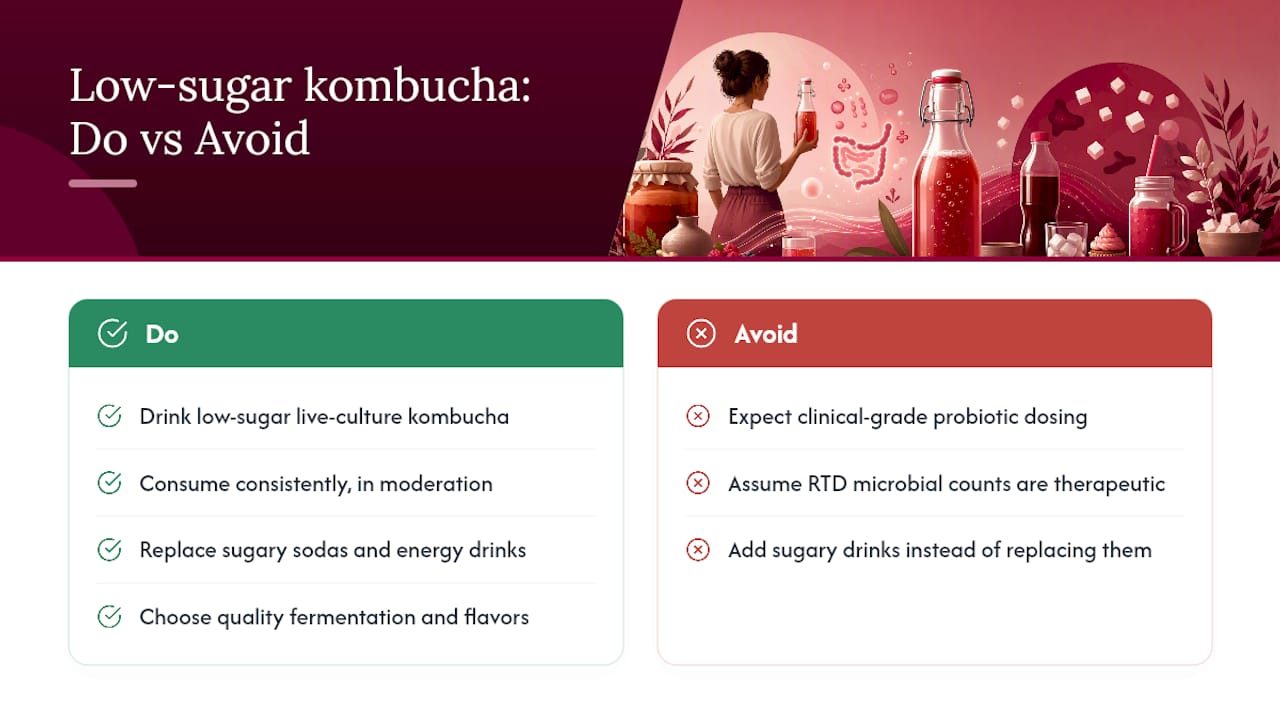
The evidence is real but modest. Consistent, moderate intake of a low-sugar, live-culture kombucha can produce small, perceptible improvements in gut comfort and regularity for many adults. That is worth something, especially when the alternative is a sugary soda or an energy drink with no functional upside. The advantages of low-sugar beverages compound over time precisely because you are replacing something worse, not just adding something good.
What the evidence does not support is treating kombucha as a probiotic supplement with clinical-grade dosing. The microbial counts in RTD kombucha are variable and often lower than therapeutic probiotic products. The benefit comes from the whole fermentation matrix, organic acids, polyphenols, and live microbes together, not from any single component.
Aboocha’s approach, lower sugar, distinct flavor profiles like Sour Plum and Yuzu Osmanthus, and a focus on quality fermentation, reflects what the evidence actually supports: a daily, enjoyable, low-sugar fermented drink that fits into a balanced diet without adding a sugar problem while solving a gut one.
Aboocha low-sugar kombucha: a practical next step
Aboocha delivers what the evidence points toward: lower-sugar, flavor-forward RTD kombucha built for daily gut-health use, not occasional novelty. The sugar load stays low, the fermentation matrix stays intact, and the flavor range (Sour Plum, Yuzu Osmanthus, and more) makes consistent daily use something you actually look forward to.
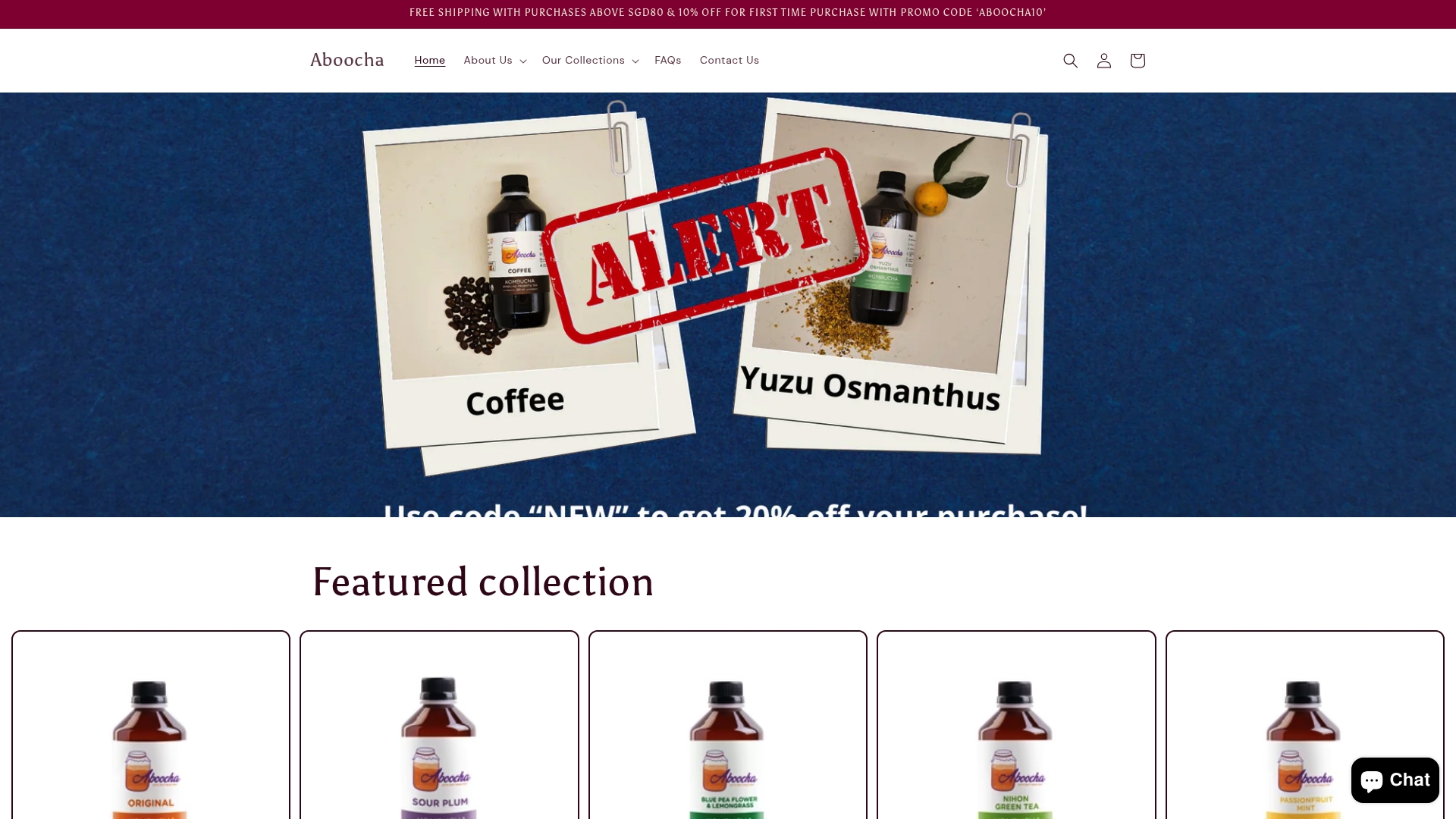
Individual bottles, curated flavor sets, and subscription plans are available at Aboocha, with cold-chain delivery details listed at checkout. Before ordering, check the product page for ABV and sugar per serving; Aboocha lists both. A subscription is the most practical route if you are running a 4–8 week gut-health trial and want consistent supply without reordering manually.
Sources
- Impact of fermented foods consumption on gastrointestinal wellbeing in healthy adults: a systematic review and meta-analysis (COST PIMENTO / EFSA context)
- Benefits of Kombucha Consumption: A Systematic Review of Clinical Trials Focused on Microbiota and Metabolic Health
- Modulating the human gut microbiome and health markers through kombucha consumption: a controlled clinical study
- Clinical trial: fiber-enriched kombucha tea effects on biochemical parameters and gut microbiota
FAQ
How much low-sugar kombucha should an adult drink daily?
Start with 120 mL (4 oz) and work up to 240 mL (8 oz) once you confirm good tolerance. Consistent daily intake over 4+ weeks is what the clinical evidence supports.
What sugar level counts as “low sugar” on a kombucha label?
Aim for approximately 4 g or less per 100 mL. Commercial kombuchas vary from 0 to 19 g per serving, so always check the per-100 mL figure rather than the per-serving number.
Can kombucha replace a probiotic supplement for gut health?
No. RTD kombucha delivers a fermentation matrix of organic acids, polyphenols, and live microbes, but CFU counts are variable and typically lower than therapeutic probiotic products. It is a functional dietary addition, not a clinical probiotic.
Who should avoid kombucha or check with a doctor first?
Pregnant individuals, immunocompromised people, those on medications that interact with acidity or alcohol, and anyone avoiding alcohol should consult a clinician before starting, given residual ABV and live-culture content.
Does Aboocha list sugar and alcohol content on its products?
Yes. Aboocha lists both sugar per serving and ABV on its product pages, which is the minimum label transparency you should expect from any low-sugar RTD kombucha you consider.