
Most kombucha needs refrigeration, but the answer splits by type. Raw, unpasteurized kombucha keeps fermenting once it leaves the brewery, so it belongs in the fridge, even unopened. Pasteurized, shelf-stable kombucha is a different product entirely and can typically sit at room temperature until opened. Once you crack a bottle, refrigerate it and drink it within a few days to a week, ideally storing it at typical refrigerator temperatures around 2°C to 7°C.
TL;DR:
- Pasteurized kombucha can be stored at room temperature until opened, while raw, unpasteurized versions require refrigeration from the start.
- Once opened, all kombucha should be refrigerated and consumed within a few days to maintain flavor and safety.
- Leaving raw kombucha out for over 24 hours increases the risk of over-carbonation, excessive acidity, and potential safety hazards.
- Freezing kombucha damages the living cultures, causes flavor dulling, and risks bottle cracking, so it is not recommended.
- When in doubt, checking the label for pasteurization status and refrigerating if unclear offers the safest and most flavor-preserving approach.
Table of Contents
- Pasteurized vs. Raw Kombucha: Why the Rules Differ
- What Refrigeration Actually Does to Kombucha
- How Long Can Kombucha Sit Out, and How Should You Store It?
- What Happens When Kombucha Gets Too Warm or Frozen?
- What Aboocha’s Cold-Chain Practices Say About Storage
- A Practical Way to Decide, Bottle by Bottle
- Get Chilled, Lower-Sugar Kombucha Delivered Ready to Drink
- Sources
- FAQ
Pasteurized vs. Raw Kombucha: Why the Rules Differ
The single biggest factor in whether your bottle needs a fridge is whether it’s pasteurized. Pasteurized kombucha has been heat-treated to kill off the living yeast and bacteria culture, which stops fermentation cold. That makes it shelf-stable, closer in behavior to a bottled iced tea than a living probiotic drink. Raw, unpasteurized kombucha still contains an active culture, so it keeps producing carbon dioxide and mild acid even after bottling. Authoritative hobbyist and manufacturer guidance consistently draws this same line: pasteurized bottles can sit on a shelf unopened, while raw versions need cold storage from the moment they’re packaged.
Canned kombucha muddies the picture a little. Some cans are pasteurized and genuinely shelf-stable; others are raw and just packaged differently, so the can itself tells you nothing. “Hard kombucha,” the higher-alcohol category some brands sell, often carries its own storage note because continued fermentation at room temperature pushes alcohol content up faster than a standard bottle.
Here’s what to actually check on the label before you decide where to put a bottle:
- Look for the word “pasteurized” or “raw/unpasteurized” printed near the ingredients.
- Check for an explicit instruction like “keep refrigerated” or “no refrigeration needed.”
- Note the best-by date. Raw kombucha dates are usually tighter than pasteurized ones.
- Scan for an alcohol statement (something like “contains less than 0.5% ABV”), which signals the brand is actively managing fermentation and expects the product to stay cold.
When in doubt and the label says nothing, treat it as raw and refrigerate. That default costs you nothing and protects flavor either way.
What Refrigeration Actually Does to Kombucha
Cold slows the yeast and bacteria culture down. It doesn’t stop fermentation, but it drags the pace way down, which is exactly the point. Colorado State University Extension recommends cooling finished kombucha after fermentation because refrigeration slows that microbial activity and helps hold the flavor where the brewer intended it. Warm temperatures do the opposite: the culture stays active, sugars keep converting, and the drink gets more sour and more carbonated with every passing day.
That carbonation shift is more than a texture issue. As fermentation continues, CO2 builds pressure inside a sealed bottle, and acidity climbs along with it. Food-safety guidance from the Kendall Reagan Nutrition Center specifically warns that unrefrigerated kombucha can keep fermenting and turn overly acidic, well past what most people find drinkable.
Alcohol content moves too, though less dramatically. Kombucha naturally contains trace alcohol as a byproduct of fermentation, and laboratory testing in Basel-Stadt found that unpasteurized samples can see both alcohol and acidity rise after bottling if they’re left to keep fermenting in warm conditions. Some samples in that testing crept past the thresholds brands use to market a drink as nonalcoholic. Cold storage is what keeps those numbers where the label says they’ll be.
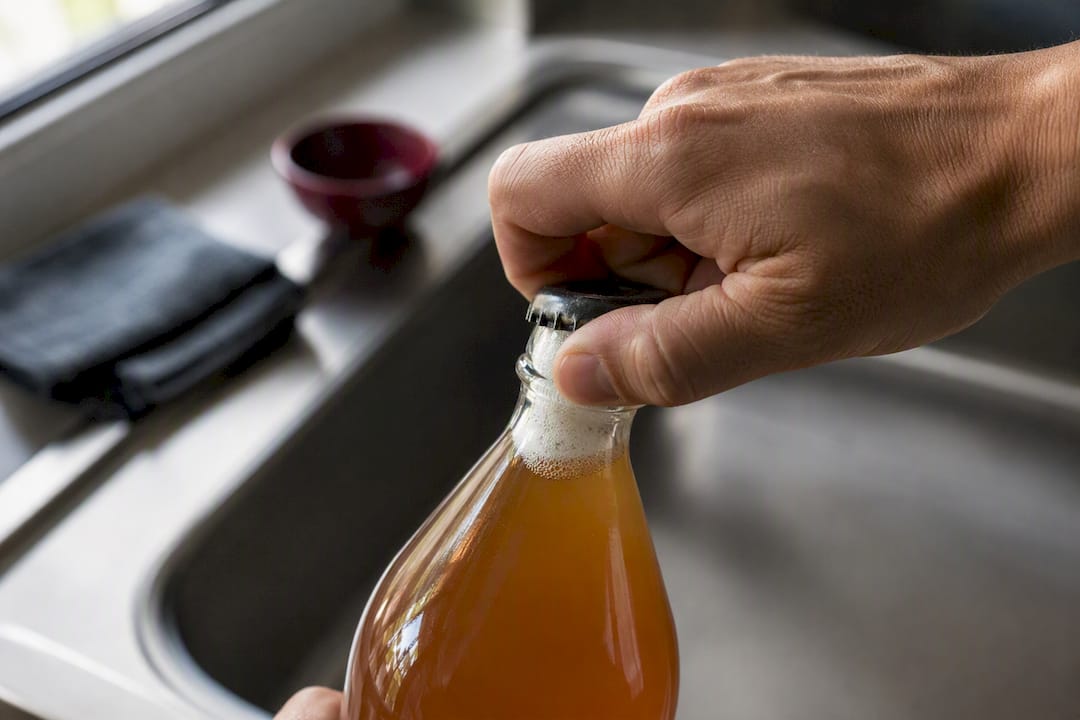
Pro Tip: Before opening a raw kombucha bottle that’s been warm for a while, crack the cap slowly over a sink and pause at the first hiss. If pressure keeps building instead of releasing, give it another few seconds before opening fully. It’s a small habit that saves you from a sticky counter.
How Long Can Kombucha Sit Out, and How Should You Store It?
A typical refrigerator running between 35°F and 40°F (about 2°C to 4°C) is the sweet spot for kombucha, and it’s the same range most storage guides recommend for optimal quality. Aboocha ships its bottles cold and recommends keeping them refrigerated straight through delivery to preserve both flavor and the lower sugar profile the brand builds its flavor lineup around.
Here’s how to handle the common scenarios:
- Unopened, pasteurized bottle: Fine at room temperature until the best-by date; refrigerate once opened.
- Unopened, raw bottle: Refrigerate immediately. Most raw kombucha holds well for an extended period when chilled, with shelf life varying by brand.
- Opened bottle, any type: Reseal tightly and refrigerate. Drink within a short period after opening for best carbonation and taste. Standard post-opening resealing habits for other fermented and carbonated drinks apply just as well here.
- Left out for about 24 hours: Usually fine. Chill it back down, check the smell and fizz level before drinking.
- Left out for several days: Treat with more caution. Check for the spoilage signs below before drinking, and when unsure, don’t risk it.
For transport, a simple insulated bag with an ice pack handles a few hours without issue, whether you’re carrying bottles home from a store or hosting outdoors. During a short power outage, keep the fridge door shut as much as possible and plan to drink your kombucha sooner rather than later once power returns; a few hours in a well-insulated fridge rarely causes problems, but a day or more warrants a smell and taste check before you pour a glass.
What Happens When Kombucha Gets Too Warm or Frozen?
Left warm long enough, a sealed raw kombucha bottle can turn into a small pressure vessel. Continued fermentation keeps generating CO2 with nowhere to go, and an overpressurized bottle is a real hazard, not just a flavor problem. That’s the practical reason regulatory hygiene rules stress keeping the cold chain intact for microbially active foods: it’s a safety control, not just a quality preference.
Freezing causes its own set of problems. The cold doesn’t hurt anything at first, but freezing can damage the living culture, flatten carbonation, dull flavor, and expand liquid enough to crack the bottle. It’s best avoided entirely, even for short-term storage.
Know the difference between normal fermentation and actual spoilage:
- Extra fizz or a sharper tang after a few warm days is normal fermentation, not spoilage.
- Visible mold (fuzzy spots, usually on the surface) means toss it, no exceptions.
- A rotten, sulfurous, or off smell that isn’t the usual tangy vinegar note is a red flag.
- A leaking cap or a lid so swollen it won’t sit flat signals dangerous pressure buildup.
- An unusual thick film, different from the normal stringy culture bits raw kombucha can have, is worth discarding over.
What Aboocha’s Cold-Chain Practices Say About Storage
Aboocha builds its entire process around keeping bottles cold from brewing through delivery, which is also why the brand can keep sugar content lower than most conventional kombucha without sacrificing the tang and character in flavors like Sour Plum and Yuzu Osmanthus. Its cold-chain shipping approach exists specifically to protect flavor stability and the live culture that supports gut health, rather than relying on pasteurization to make the product easier to ship.
Industry advice from fermentation science and cold-chain handling experts often emphasizes that many storage complaints stem from leaving a bottle out on a counter “just for a bit” longer than intended. Standard recommendations include keeping bottles chilled immediately upon receipt, storing them at fridge temperature, and finishing an opened bottle within about a week for optimal fizz and flavor.
A Practical Way to Decide, Bottle by Bottle
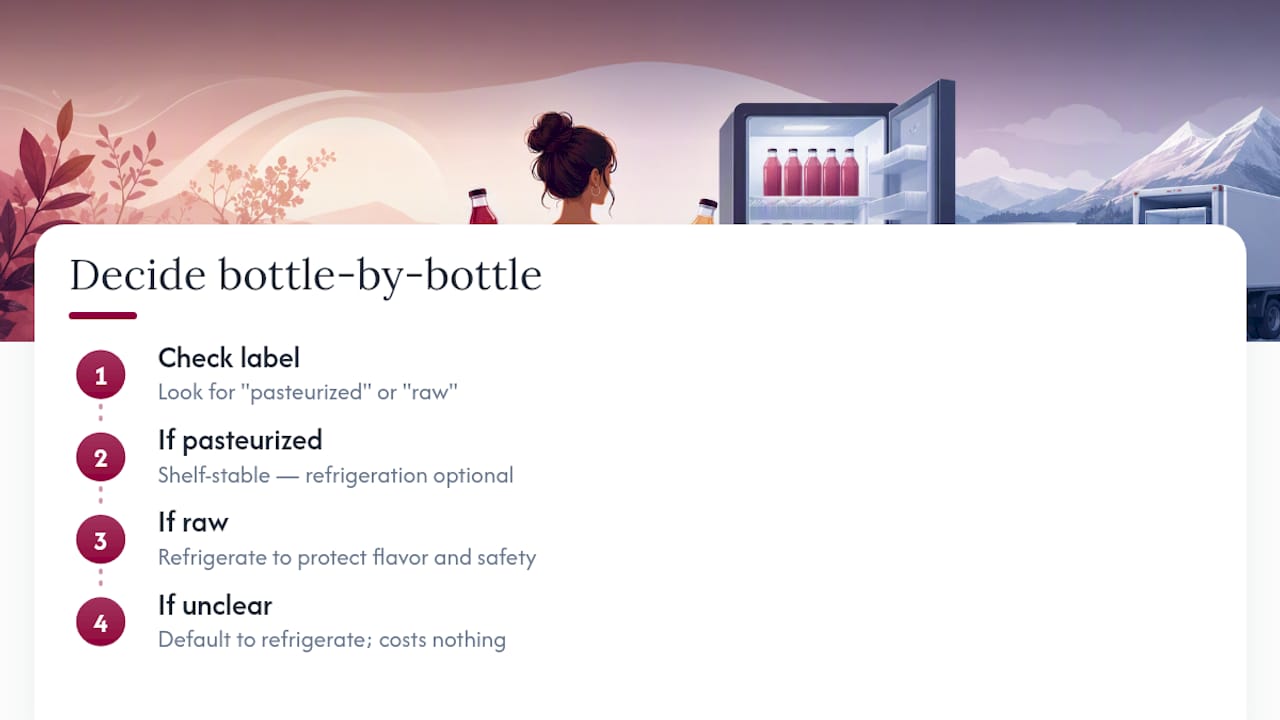
Most people don’t need a lecture on fermentation microbiology. They need a decision they can make in five seconds while standing in front of an open fridge. That decision is simpler than the marketing around kombucha suggests: check the label for “pasteurized” or “raw,” and let that one word decide everything else.
Where conventional advice falls short is treating all kombucha as one product with one storage rule. It isn’t. A shelf-stable pasteurized bottle and a raw craft bottle can sit next to each other in a grocery aisle and need completely different handling. Reading the label matters more than remembering a general rule.
If there’s one thing worth prioritizing, it’s this: when a label gives you no clear information, default to refrigeration. It costs you nothing, and it protects both flavor and safety. The brands that ship cold, like Aboocha does, aren’t being cautious for no reason. They’re protecting a living product that rewards attention and punishes neglect.
— Luna
Get Chilled, Lower-Sugar Kombucha Delivered Ready to Drink
Some kombucha brands are designed with cold-chain shipping, so orders ship cold, arrive ready for the fridge, and retain flavor and gut-health benefits commonly sought in unique flavor offerings.
Aboocha’s lineup runs from single ready-to-drink bottles to curated flavor sets and a recurring subscription for anyone who wants kombucha on hand without reordering every week. If you’d rather sample a range of flavors at once, the bundles collection is the easiest starting point, and it ships with the same cold-chain handling described above. Browse the current bundles and pick a set that matches how you actually drink kombucha, whether that’s daily or just on the days you need it most.
Sources
- Understanding and making kombucha — Colorado State University (FoodSmart Colorado)
- The Do’s and Don’ts of Kombucha — Kendall Reagan Nutrition Center
- Korrekt deklarierter Alkoholgehalt bei Kombucha — Kanton Basel-Stadt
- Verordnung des EDI über die Hygiene beim Umgang mit Lebensmitteln — regulatory excerpt
FAQ
What Happens if You Don’t Refrigerate Kombucha?
Raw kombucha left unrefrigerated keeps fermenting, which raises acidity, builds carbonation pressure, and can push alcohol content higher over time. Pasteurized, shelf-stable kombucha is largely unaffected since its culture has already been deactivated.
How Long Can You Keep Kombucha Unrefrigerated?
A few hours at room temperature, such as during a short commute or an outdoor gathering, generally causes no issues. Beyond about 24 hours, check the smell and fizz level before drinking, and treat several days unrefrigerated with real caution.
Will Kombucha Make You Sick if Not Refrigerated?
Straight spoilage from a few unrefrigerated hours is unlikely, but continued fermentation can raise acidity and alcohol beyond what’s typical, and a severely over-pressurized bottle is a genuine safety hazard when opened. Learn more about what to watch for when drinking kombucha if you’re unsure about a bottle’s condition.
Can You Drink Kombucha That’s Been Left Out Overnight?
In most cases, yes, once you’ve checked it for spoilage signs like mold, an off smell, or a dangerously swollen cap. Expect it to taste more tart and feel fizzier than a chilled bottle, since fermentation kept running while it sat out.