
Choose kombucha by checking three things in order: total sugar per serving, whether it’s raw/unpasteurized or pasteurized, and how transparent the producer is about fermentation time and storage. Some producers lean on the first two rules, and Luna, who writes our tasting and fermentation guides, applies the third every time she reviews a new batch. One flag before you shop: pregnant women, immunocompromised people, and children should skip kombucha or check with a doctor first.
TL;DR:
- Most kombucha contains 3 to 15 grams of sugar per serving, with lower-sugar options typically being less fruited and longer fermented.
- Raw kombucha retains live cultures and requires refrigeration, while pasteurized versions are shelf-stable with fewer microbes.
- Longer fermentation times reduce residual sugar and increase acidity, making product transparency a key indicator of quality.
- Brands that disclose fermentation duration, use glass packaging, and specify storage conditions are more trustworthy.
- Consumers should prioritize checking Total Sugars, fermentation transparency, and pasteurization status over flavor claims or brand reputation.
Table of Contents
- How to Choose Kombucha Using the Label Alone
- How Much Sugar Is Normal in Kombucha?
- Should You Buy Raw or Pasteurized Kombucha?
- What Production Details Actually Signal Quality
- How to Pick Kombucha Flavors and Carbonation Levels
- Who Should Be Careful With Kombucha, and How Much Is Safe?
- A Buy-and-Taste Checklist for the Shelf or the Checkout Page
- Publisher Notes From Luna and Aboocha
- Does Brand Reputation Actually Tell You Anything?
- What Should You Expect to Pay for Good Kombucha?
- Where Should You Buy Kombucha?
- What the Research Actually Supports (And What Gets Overhyped)
- Why Aboocha Fits This Kind of Kombucha Shopping
- Sources
- FAQ
How to Choose Kombucha Using the Label Alone
The nutrition label tells you almost everything you need before you even taste the bottle. Total Sugars reflects the finished product after fermentation has eaten through some of the original sweetener. Added Sugars, if listed separately, only shows what went in before fermentation, not what survived it. Always compare Total Sugars per serving, since a bottle can list a low “Added Sugars” number while still landing high on Total Sugars.
Terms like “raw” or “unpasteurized” mean the drink still carries live cultures and needs refrigeration. “Pasteurized” means heat-treated for shelf stability, with fewer live microbes surviving. Fermentation time and packaging matter too: longer ferments and glass bottling tend to signal a producer that treats the process carefully rather than rushing bottles to shelf.
Quick red flags to scan for:
- No serving size listed, or serving size buried in fine print
- Total Sugars above 10 grams with no fermentation time disclosed
- Plastic bottling with no cold-chain mention
- Vague “natural flavors” with no fermentation or ABV details
Quick fact: Fermentation reduces sugar but doesn’t erase it, which is exactly why reading Total Sugars beats trusting Added Sugars alone.
How Much Sugar Is Normal in Kombucha?
Commercial kombucha typically runs 3 to 15 grams of sugar per serving, and that spread comes almost entirely from fermentation time and flavoring method. A longer primary ferment, often paired with a plainer flavor profile, tends to land near the low end. Heavily fruited varieties, where juice gets added late in the process, often sit closer to the high end because that sugar never had time to ferment out.
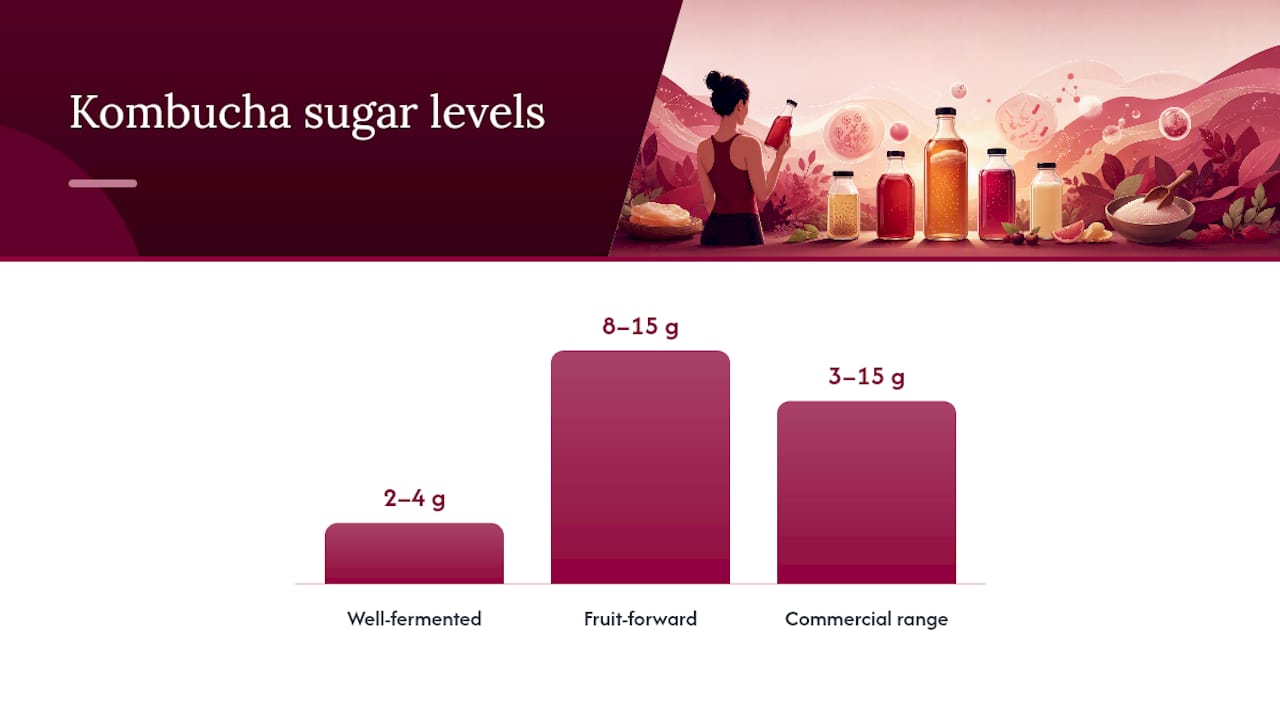
Quick fact: Well-fermented, less-fruited kombucha often lands around 2 to 4 grams of sugar per serving, while fruit-forward varieties can run 8 to 15 grams.
If you’re watching sugar intake, a few tactics help:
- Pick original or lightly flavored varieties over dessert-style blends
- Pour a half serving over ice instead of drinking a full bottle
- Look for bottles that specifically advertise lower sugar per serving
- Rotate a zero-sugar sparkling option on days you want fewer calories overall
Aboocha’s lower-sugar formulation exists precisely because most shoppers don’t realize how much sugar a “healthy” bottle can carry.
Should You Buy Raw or Pasteurized Kombucha?
Raw or unpasteurized kombucha keeps its live bacterial and yeast cultures intact, which is the whole appeal for people chasing gut health benefits. It needs refrigeration and has a shorter shelf life than its pasteurized counterpart. Pasteurized kombucha gets heat-treated, killing off most live cultures in exchange for longer shelf stability and a gentler risk profile.
Who should lean pasteurized? Anyone extra cautious about live microbial content, including people managing immune conditions, should default to pasteurized or skip kombucha entirely and ask a doctor first.
- Raw: more live cultures, needs cold storage, shorter shelf life
- Pasteurized: fewer live cultures, shelf-stable, lower microbial risk
- CFU counts on labels sound impressive but rarely match clinical probiotic doses, so treat kombucha as a supplement to a healthy diet, not a substitute for one
What Production Details Actually Signal Quality
Fermentation time is the single most useful production detail a label can give you. Longer fermentation generally means lower residual sugar and higher acidity, and brands that publish that duration are usually the ones paying closer attention to consistency.
Glass packaging and clear cold-chain instructions matter almost as much. Glass doesn’t leach flavor the way some plastics can over time, and a brand that specifies refrigeration temperatures is telling you it takes its cold chain seriously. Mentions of HACCP-style quality control or clear storage instructions on the label are good signs the producer follows structured food-safety protocols rather than winging it.
- Published fermentation time (days or weeks)
- Glass bottling over plastic
- Refrigeration instructions clearly stated
- Any reference to HACCP, GMP, or third-party safety audits
Pro Tip: If a label won’t tell you fermentation time or storage conditions, that silence is itself useful information. Brands confident in their process tend to say so.
How to Pick Kombucha Flavors and Carbonation Levels
Flavoring method changes both taste and what survives in the bottle. Juice added after fermentation boosts sweetness fast but dilutes live culture concentration. Botanicals and fruit added during a second fermentation, by contrast, let the culture keep working, which usually means less added sugar and more natural carbonation.
- Check the flavoring method. Second-fermentation flavoring (fruit or herbs fermenting alongside the culture) tends to produce drier, more balanced results than juice blended in afterward.
- Match tea base to flavor preference. Green tea bases lean brighter and more floral; black tea bases lean deeper and more tannic, pairing well with darker fruits like plum.
- Judge carbonation by fizz intensity. A sharp, tight fizz usually points to a longer second ferment; a flat or barely-there fizz often means juice was added post-fermentation with little extra carbonation time.
Our flavor development notes walk through how blends like Sour Plum get their tartness without relying on added sugar to carry the taste.
Who Should Be Careful With Kombucha, and How Much Is Safe?
Kombucha isn’t for everyone. Pregnant or breastfeeding women, people with significant immune suppression, and children should generally avoid it, since live cultures and trace alcohol carry risks that outweigh the benefits for those groups. Anyone managing diabetes or taking specific medications should check with a doctor before adding it to a routine.
For everyone else, moderation is the rule. Starting around 4 ounces a day is a reasonable entry point, especially for first-timers whose gut hasn’t adjusted to fermented foods yet. Kombucha also contains trace alcohol from fermentation, usually under 0.5%, and a small amount of naturally occurring caffeine from the tea base.
- Skip it if pregnant, breastfeeding, or immunocompromised
- Start with 4 ounces if you’re new to fermented drinks
- Check with a doctor if managing diabetes or taking medication
- Note trace alcohol and caffeine content if either is a personal concern
Quick fact: Home-brewed kombucha carries a real risk of contamination or over-fermentation, which is one more reason commercially produced, hygienically controlled bottles are the safer default for most drinkers.
A Buy-and-Taste Checklist for the Shelf or the Checkout Page
Standing in front of a cooler full of similar-looking bottles gets confusing fast. Run through this order:
- Check the serving size listed on the label.
- Read Total Sugars, not just Added Sugars.
- Confirm whether it’s raw/unpasteurized or pasteurized.
- Note the ABV, usually under 0.5% for commercial kombucha.
- Look for disclosed fermentation time.
- Check packaging material, glass versus plastic.
- Confirm refrigeration or shelf-stable storage instructions.
- Identify the flavoring method, juice-added versus second-fermentation botanicals.
Pro Tip: If you’re shopping for probiotics first, prioritize raw and fermentation time. If you’re shopping for sugar control first, prioritize Total Sugars and flavoring method. If you’re shopping cautiously for safety, prioritize pasteurization status and ABV.
Publisher Notes From Luna and Aboocha
Luna writes Aboocha’s tasting notes and fermentation primers, which is why this guide leans on label literacy over marketing language. Aboocha builds around that same principle: lower sugar as a baseline, with flavors like Sour Plum and Yuzu Osmanthus designed to taste bold without leaning on added sweeteners to do the work.
Does Brand Reputation Actually Tell You Anything?
Reputation matters less than what a brand is willing to publish. A flashy label or a big following on social media says nothing about fermentation time, sourcing, or how the bottle was handled between the brewery and the shelf. What actually separates a trustworthy kombucha brand from a marketing exercise is whether it discloses its process.
Look for brands that name their tea source, describe their fermentation vessel, and state whether they follow structured food-safety protocols. Reviewing food quality standards more broadly makes clear that transparency about sourcing and handling is one of the most reliable predictors of a product living up to its claims, across categories, not just kombucha.
Sourcing practices deserve the same scrutiny as sugar content. Where does the tea come from? Is the culture maintained in-house or sourced from a supplier with documented quality controls? A brand that answers those questions on its website or packaging is telling you something real. One that only talks about “gut health” in vague terms without ever mentioning tea origin, fermentation vessel, or storage conditions is leaning on vibes rather than evidence.
Reputation built on customer reviews can still be useful, but weigh it against the harder signals: published fermentation time, clear ingredient sourcing, and visible quality-control language. A brand that’s willing to be specific about its process usually has less to hide.
What Should You Expect to Pay for Good Kombucha?
Kombucha prices vary widely depending on batch size, fermentation time, and flavoring complexity, and price alone is a poor stand-in for quality. A cheap bottle padded with juice concentrate and minimal fermentation time can cost less than a carefully brewed, longer-fermented option, but that lower price often reflects a shortcut, not a bargain.
Value comes down to what you’re actually getting per bottle. A longer second fermentation with botanical flavoring costs more to produce than dumping juice into a base kombucha right before bottling, and that cost usually shows up in the price. If a bottle is unusually cheap and also boasts high sugar content with vague sourcing details, that combination is worth noticing.
Subscription or bundle pricing tends to offer better per-bottle value than one-off purchases, since regular drinkers benefit from buying in volume rather than restocking single bottles trip after trip. If you’re trying several flavors to find favorites, a mixed bundle usually costs less per bottle than buying each flavor separately and gives you a wider taste comparison in one order.
The honest framing: pay for fermentation time, sourcing transparency, and flavor complexity, not for packaging design or marketing copy. A bottle that costs a little more but discloses its process is usually the better long-term value, especially if you’re drinking kombucha regularly rather than as an occasional novelty.
Where Should You Buy Kombucha?
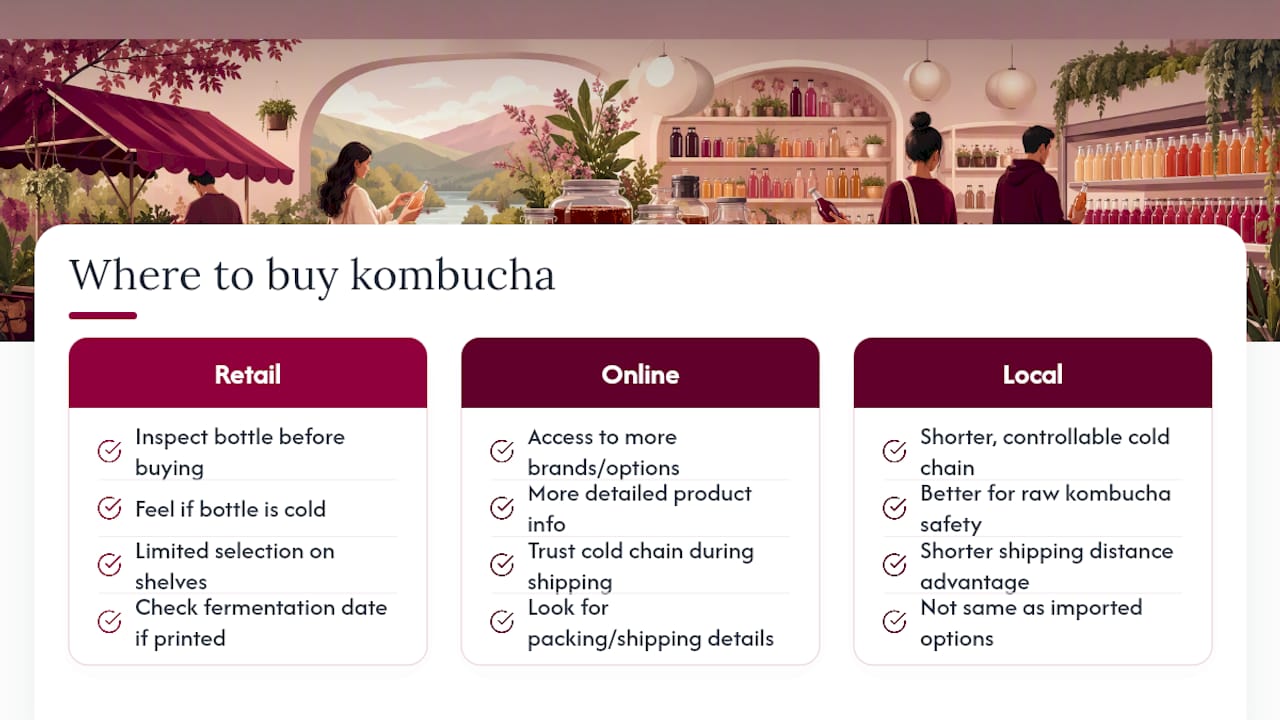
Retail shelves let you inspect a bottle before buying: check the label, feel whether it’s cold to the touch, and confirm the fermentation date if it’s printed. The tradeoff is limited selection. Most grocery coolers stock only a handful of brands and flavors, and turnover on niche or lower-sugar options can be slow.
Buying online solves the selection problem and usually gives you access to more detailed product information than a shelf tag ever could, including fermentation time, full ingredient lists, and sourcing details on the brand’s own site. The tradeoff is that you’re trusting the cold chain during shipping, so look for sellers who specify how bottles are packed and shipped, especially for raw, unpasteurized varieties that need consistent refrigeration.
For local versus imported options, local production generally means a shorter, more controllable cold chain between brewery and delivery. That matters more for raw kombucha than pasteurized, since live cultures are more sensitive to temperature swings during transit. If you’re ordering raw kombucha online, a shorter shipping distance is a genuine safety advantage, not just a convenience one.
Whichever route you choose, the same label rules apply. A retail shelf and a product page should both give you serving size, Total Sugars, pasteurization status, and some indication of fermentation time. If either one leaves those details out, that’s reason enough to look elsewhere.
What the Research Actually Supports (And What Gets Overhyped)
Most kombucha content online treats every bottle as interchangeable, as if “kombucha” were a single product rather than a category spanning wildly different sugar loads, fermentation practices, and microbial content. That’s the gap this guide tries to close. The research is clear that fermentation time and sugar content vary enormously by brand, which means the generic advice to “just drink kombucha for gut health” misses the point entirely.
The bigger blind spot is probiotic hype. Kombucha delivers meaningfully fewer live cultures than dedicated probiotic foods, and CFU counts on a label rarely tell you anything comparable to a clinical dose. Treating kombucha as a functional, flavorful addition to a healthy diet, rather than a medical intervention, is the more honest framing.
If you take one thing from this guide, prioritize Total Sugars and fermentation transparency before flavor. Taste preferences are personal and easy to adjust later. Sugar load and production transparency are the two variables that actually affect your health and your trust in the brand.
— Luna
Why Aboocha Fits This Kind of Kombucha Shopping
If everything above points you toward lower sugar, clear fermentation practices, and flavor that doesn’t rely on juice concentrate to taste interesting, some brands focus on exactly that combination. Certain flavors skip the dessert-style sweetness common in mass-market bottles, aiming instead for balance between tartness and fermentation.
Regular low-sugar drinkers get the most value from a subscription, which keeps a rotating supply on hand without repeat ordering. Flavor explorers, meanwhile, are better served by a mixed set, letting you compare tasting notes across profiles in one order instead of committing to a single flavor blind. The Aboocha x Deefruit collaboration set is built for exactly that kind of side-by-side tasting.
If you’d rather start broad, the bundle collection is the easiest entry point: a practical way to try several lower-sugar, flavor-forward options before deciding what earns a spot in your regular rotation. Pick a bundle, check the flavors that match your taste notes from this guide, and place the order.
Sources
- Kombucha: perceptions and future prospects
- What happens to your blood sugar when you drink kombucha?
- Kombucha: Is it good for you?
FAQ
How Do You Pick a Good Kombucha?
Check Total Sugars per serving, confirm whether it’s raw or pasteurized, and look for a producer that discloses fermentation time and storage conditions. Those three checks tell you more than any flavor claim on the front label.
Which Type of Kombucha Is Best?
There’s no single “best” type since it depends on your priority: raw, longer-fermented varieties suit people chasing live cultures, while pasteurized options suit anyone prioritizing shelf stability or a gentler safety margin. Lower-sugar, less-fruited kombucha tends to be the better default for daily drinking.
What Is the Best Kombucha for Beginners?
Start with a milder, less acidic flavor at a small serving size, around 4 ounces, to see how your gut adjusts before working up to a full bottle. Aboocha’s beginner’s drinking guide walks through pacing that first taste.
Which Is the Healthiest Kombucha to Drink?
The healthiest option for most people is a low-sugar, well-fermented kombucha from a brand that discloses its fermentation time and follows structured safety practices. Skip it entirely if you’re pregnant, immunocompromised, or giving it to a child, and check with a doctor if you’re managing diabetes or medication interactions.