
Tannins create astringency — that dry, puckering sensation you feel after a sip of strong black tea or a tannin-forward kombucha — by binding salivary proteins and reducing the mouth’s natural lubrication. That same protein-binding mechanism also signals polyphenol density, which means the pucker you notice in a well-crafted kombucha often correlates with genuine antioxidant activity. Tannins can also bind the digestive enzyme alpha-amylase, potentially slowing carbohydrate digestion. For health-conscious drinkers in Switzerland, that trade-off between sensory sharpness and functional benefit is worth understanding before you reach for a bottle.
What tannins do at a glance:
- Create a dry, puckering mouthfeel (astringency) by reducing saliva lubricity
- Amplify perceived bitterness through bitter taste receptor activation
- Signal higher polyphenol density — often a marker of antioxidant activity
- Can slow carbohydrate digestion by binding alpha-amylase
Quick takeaway: a puckering finish usually means more polyphenols. Balance it with dilution, sweetness, or ageing rather than switching to a lower-tannin brew and losing the benefit.
Table of Contents
- How tannins create that dry, puckering sensation
- Which chemical factors change how tannins taste in your glass
- How tannins evolve during fermentation and ageing
- Practical ways to control and taste tannins in kombucha
- Health benefits and the taste trade-off
- How Aboocha approaches tannin balance for Swiss drinkers
- How Swiss water quality shapes tannin perception in local kombucha
- Key Takeaways
- Tannins as structure, not just sensation
- Aboocha brings tannin-balanced kombucha to Switzerland
- FAQ
How tannins create that dry, puckering sensation
Tannins are polyphenolic compounds found in tea leaves, fruit skins, seeds, and wood. They are not a single molecule but a family of structures, ranging from small monomers to large polymerized chains.
The sensory mechanism is tactile, not purely chemical. When tannins contact saliva, they bind salivary proteins, forming aggregates that strip away the lubricating film coating the mouth’s surfaces. The result is friction — a drying, roughening, puckering sensation called astringency. It is not a taste in the strict sense; it is a feeling.
“Astringency and bitterness are hand-in-hand taste properties, and the perception of one could affect the perception of the other — the association is a persistent source of confusion between the two.” Tannins in Food: Insights into the Molecular Perception of Astringency and Bitter Taste, PMC
Bitterness adds a second layer. Several tannin compounds activate TAS2R bitter taste receptors, so what drinkers describe as “bitterness” in kombucha is often a blend of true bitter receptor activation and the tactile dryness of astringency arriving simultaneously. Separating the two is difficult even for trained tasters.
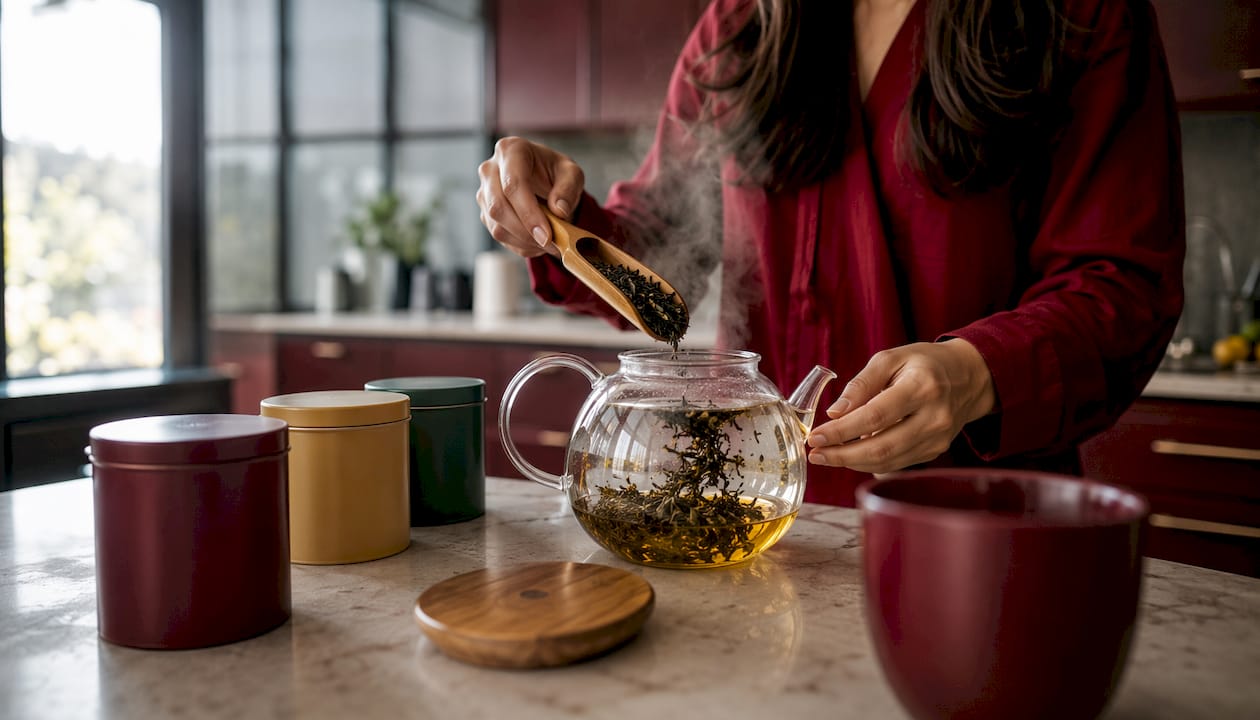
Which chemical factors change how tannins taste in your glass
Sensory impact depends heavily on tannin concentration and molecular structure. Higher concentrations predictably increase both astringency intensity and duration. Structure matters just as much: smaller, less polymerized tannins tend to taste more bitter, while larger, polymerized tannins produce a velvety or grainy dryness rather than sharp bitterness.
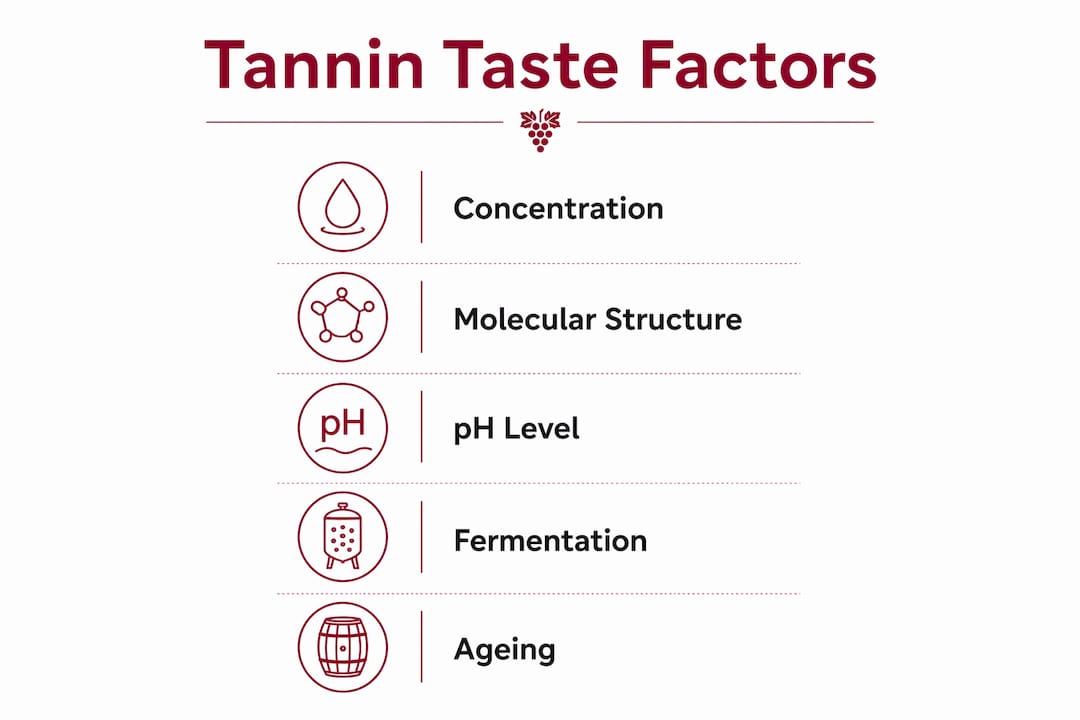
| Chemical factor | Sensory effect | What you can do |
|---|---|---|
| Higher tannin concentration | Stronger, longer astringency and bitterness | Shorten steep time or dilute finished kombucha |
| Small/low-polymerization tannins | Sharper bitterness | Choose oolong or green tea over black |
| Large/polymerized tannins | Grainy or velvety dryness | Age the batch; polymerization smooths texture |
| Lower pH (more acidic) | Intensified puckering | Dilute or pair with fat-rich food |
| Residual sugars and polysaccharides | Reduced perceived astringency | Leave a touch of residual sweetness |
pH deserves special attention for kombucha drinkers. Lower pH intensifies astringency because tannin-protein and tannin-epithelial interactions are stronger in acidic environments. Kombucha is inherently acidic, so its tannins hit harder than the same concentration would in a neutral drink. Residual sugars and yeast-derived polysaccharides (mannoproteins) work in the opposite direction — they interfere with tannin-protein binding and soften the bite.
Pro Tip: Add a small amount of fruit juice or honey at bottling to raise residual sweetness slightly. Even a modest increase in dissolved sugars can noticeably round off sharp tannin edges without masking the polyphenol character.
How tannins evolve during fermentation and ageing
Tannins are reactive. During active fermentation, they bind yeast-derived proteins and can precipitate out early — a behavior sometimes called sacrificial tannin activity. Adding tannin-rich ingredients at the start of fermentation can protect more delicate fruit-derived tannins that matter for long-term flavor structure.
How tannin perception typically shifts across fermentation phases:
- Primary fermentation (days 1–7): Tannins are most reactive. Early additions bind yeast proteins and drop out with gross lees, reducing harsh astringency in the finished product.
- Bulk ageing (weeks 2–8): Tannin chains begin polymerizing. Astringency softens as larger aggregates precipitate. This is where harsh young ferments start becoming smoother.
- Bottle conditioning: Carbonation and continued slow polymerization integrate remaining tannins. The finish becomes cleaner and more structured.
Ingredient timing matters significantly. Adding tannin-rich fruit or tea late in the process preserves more tannin in the finished bottle — useful if you want functional density. Adding them early sacrifices some tannin for structural smoothness. Neither approach is wrong; it depends on what you are optimizing for.
Practical ways to control and taste tannins in kombucha
For makers
- Tea selection: Green tea is lower in tannins than black; oolong sits in between. Black tea gives the boldest astringency and the highest polyphenol load.
- Steep time and temperature: Steeping black tea for 5 minutes at 90°C extracts significantly more tannin than a 3-minute steep. Cut steep time first before changing tea type.
- Fruit additions: Add tannin-rich fruits (plum, grape, pomegranate) late in secondary fermentation to preserve their tannin contribution.
- Water profile: Soft water (low mineral content) tends to extract tannins more aggressively than hard water. Swiss alpine water is often soft — account for this in steep time.
- Fining: Gelatin or casein-based fining agents can selectively remove high-molecular-weight tannins and reduce harsh astringency without stripping all polyphenols.
Pro Tip: Run bench trials before committing to a full batch. Fill four small jars with the same base kombucha, add different tannin sources or steep times, measure pH with a basic pH strip, then taste side-by-side. The difference between a 3-minute and 6-minute steep is dramatic at this scale.
Tasting checklist for consumers
- Look: Deep amber or reddish color often signals higher tannin extraction from tea or fruit.
- Nose: Earthy, woody, or dried-fruit aromas suggest tannin-forward ingredients.
- Initial taste: Note sweetness and acidity first — they set the baseline.
- Mid-palate: Where astringency appears. A drying sensation across the cheeks and gums is the tannin signal.
- Finish: Does the dryness linger? Long finish = higher polymerized tannin content.
At-home fixes: dilute with still water (1:4 ratio), chill the bottle (cold reduces astringency perception), or pair with food — fat and protein in a meal bind tannins before they reach your salivary proteins.
Health benefits and the taste trade-off
Tannins contribute meaningfully to the antioxidant activity of kombucha. Their polyphenol structure is associated with cardioprotective effects and a reduced risk of chronic diseases including cardiovascular disease and diabetes. The sensory intensity you notice — the pucker, the dryness — often tracks directly with polyphenol density.
The glucose regulation angle is particularly relevant for health-focused drinkers. Tannins can slow carbohydrate digestion by binding alpha-amylase, and kombucha’s low pH may compound this effect. Some human trials have reported reductions in postprandial glucose, though the evidence is still developing.
The antinutrient side exists too. Tannins can reduce absorption of some nutrients and bind digestive enzymes. Drinking tannin-forward kombucha with a meal, rather than on an empty stomach, helps manage this — food provides competing binding sites and reduces the antinutrient effect on mineral absorption.
Practical balance: accept some astringency as a functional signal, not a flaw. If the pucker is too sharp, dilute rather than switching to a lower-tannin product entirely.
How Aboocha approaches tannin balance for Swiss drinkers
Aboocha builds its recipes around the idea that tannins are structural and functional, not just a sensory problem to eliminate. Flavors like Sour Plum and Yuzu Osmanthus use tannin-forward ingredients deliberately — plum skins and osmanthus flowers both contribute polyphenol density alongside their aromatic profiles.
The brand’s lower-sugar positioning matters here. With less residual sweetness to mask astringency, Aboocha relies on careful tea selection, controlled steep times, and secondary fermentation timing to keep tannin expression balanced rather than harsh. Bench trials and age testing are part of the process, not an afterthought.
Swiss water profiles, which tend toward softness in alpine regions, extract tannins more readily than harder water. Aboocha’s recipes account for this, adjusting steep parameters to avoid over-extraction while preserving the functional tannin load that health-conscious drinkers are looking for. Subscription options make it straightforward for Swiss customers to track how flavor evolves across batches and seasons.
How Swiss water quality shapes tannin perception in local kombucha
Switzerland’s water varies by region, but alpine sources are typically soft, with low mineral content. Soft water is a more efficient solvent for tannins — it extracts polyphenols from tea leaves faster and more completely than hard, mineral-rich water. The practical result is that a 5-minute steep in Swiss alpine water can yield noticeably more tannin than the same steep in harder water from a limestone region.
This matters for local vs. imported kombucha comparisons. A kombucha brewed in a hard-water region and then imported may taste perceptibly softer than a locally brewed equivalent using the same tea, even at identical steep times. Swiss home brewers should treat steep time as their primary tannin control variable, starting shorter than standard recipes suggest and adjusting upward based on tasting.
Mineral content also interacts with pH. Soft water buffers acidity less effectively, which can allow kombucha to drop to a lower final pH. Since lower pH amplifies astringency perception, Swiss-brewed kombucha can taste sharper than its tannin concentration alone would predict.
Key Takeaways
Tannins create astringency by binding salivary proteins, and in kombucha that puckering sensation is often a reliable signal of higher polyphenol density worth preserving.
| Point | Details |
|---|---|
| Astringency mechanism | Tannins bind salivary proteins, reducing lubrication and creating a dry, puckering mouthfeel. |
| pH amplifies tannin bite | Kombucha’s acidity intensifies perceived astringency; dilution or food pairing reduces it. |
| Ageing smooths tannins | Polymerization over weeks converts sharp astringency into integrated, velvety structure. |
| Health trade-off | Tannins may slow carbohydrate digestion and reduce some nutrient absorption; drink with meals to manage this. |
| Aboocha’s approach | Aboocha uses tannin-forward ingredients like Sour Plum and Yuzu Osmanthus with controlled steep times to balance polyphenol density against lower sugar content. |
Tannins as structure, not just sensation
Most kombucha drinkers treat astringency as a problem to fix. The more useful frame is to treat it as information. A dry, puckering finish tells you the brew is polyphenol-dense — and that density is often exactly what makes fermented tea worth drinking for health reasons. The craft question is not how to eliminate tannins but how to integrate them so the drink is approachable without being stripped of function.
Aboocha’s position on this is deliberate: lower sugar means tannins carry more of the flavor structure, which demands precision in tea selection and steep control rather than masking with sweetness. That precision is harder to achieve but produces a more honest drink. For Swiss drinkers working with soft alpine water, the same logic applies at home — start with shorter steeps, taste critically, and let ageing do the smoothing work before you decide a batch is too sharp.
Aboocha brings tannin-balanced kombucha to Switzerland
Getting tannin balance right takes time, testing, and a clear sense of what you are optimizing for. Aboocha has done that work: lower sugar, tannin-forward flavors like Sour Plum and Yuzu Osmanthus, and recipes calibrated for Swiss water profiles and health-conscious palates.
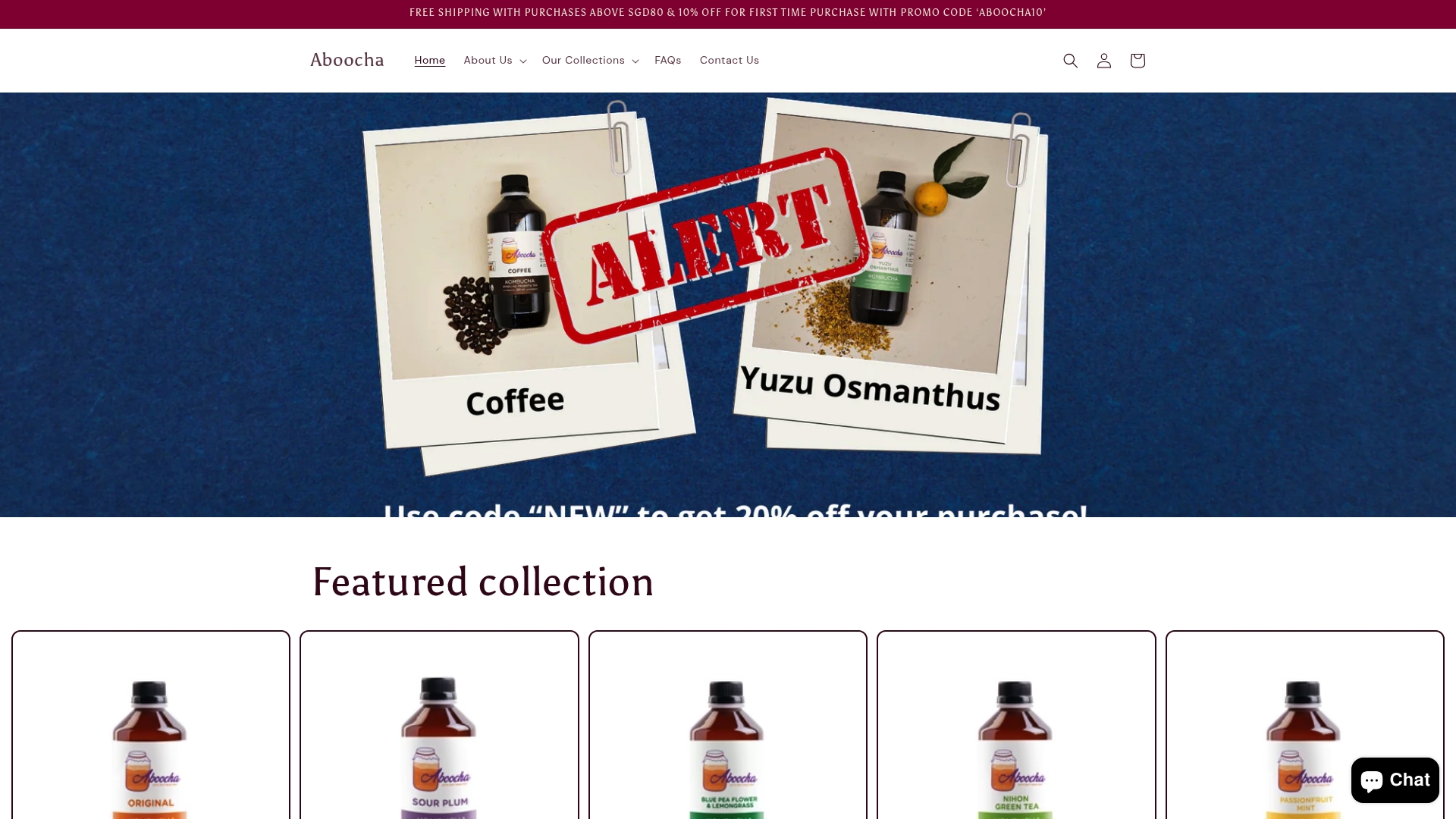
Single bottles and subscription plans are available for Swiss customers, so you can taste how tannin expression shifts across different flavor profiles and fermentation ages without committing to a full case upfront. If you want ready-made kombucha that treats astringency as a feature rather than a flaw, explore Aboocha’s range and find the flavor that fits your palate.
FAQ
What does astringency actually feel like in kombucha?
Astringency is a dry, puckering sensation felt across the cheeks, gums, and tongue — caused by tannins binding salivary proteins and reducing the mouth’s natural lubrication. It is a tactile feeling, not a taste.
Does more astringency mean more health benefits?
Generally, yes. Astringency intensity in kombucha often correlates with higher polyphenol density, which is associated with antioxidant activity and potential effects on glucose regulation. Accepting some pucker usually means keeping more of the functional compounds.
How do I reduce harsh tannins without losing polyphenols?
Shorten your steep time, age the batch longer to allow polymerization, or dilute with still water at serving. Pairing with a fat-rich meal also reduces perceived astringency because dietary lipids compete with salivary proteins for tannin binding.
Why does Swiss water make kombucha taste sharper?
Alpine water in Switzerland is typically soft and low in minerals, which extracts tannins from tea more efficiently and buffers acidity less effectively. The result is a lower final pH and stronger perceived astringency compared to the same recipe brewed with harder water.
How does Aboocha manage tannins in its kombucha?
Aboocha uses controlled steep times, tannin-forward ingredients like plum and osmanthus, and secondary fermentation timing to balance polyphenol density against lower sugar content, producing kombucha that is structured but approachable for Swiss consumers.