
Aged ferments develop a fundamentally different flavor profile because extended aging triggers active biochemical transformations that continue long after primary fermentation ends. These are not passive changes. Ester hydrolysis, oxidation, proteolysis, and the Maillard reaction all keep reshaping flavor compounds over months and years. Kombucha aged beyond its initial fermentation cycle, Baijiu stored for decades, and miso left to mature for years each demonstrate how fermentation flavor evolution produces taste profiles that no young ferment can replicate. Understanding why aged ferments taste different gives you a real advantage as a fermentation enthusiast.
Why aged ferments taste different: the chemistry driving flavor change
The core reason aged ferments taste different is that enzymatic and chemical reactions do not stop when microbial activity slows. Proteases continue breaking down proteins into free amino acids. Lipases split fats into fatty acids. These liberated molecules then react with alcohols and acids to form entirely new aroma compounds. Microbial enzymes unlock flavor precursors, but the true complexity of aged flavor comes from the slow chemical transformations that follow.
Four major reaction types drive flavor changes in aged ferments:
- Ester hydrolysis and reformation. Sharp, fruity esters from early fermentation break down over time. New, more complex esters then form slowly through equilibrium reactions. The result is a rounder, more layered aroma that young ferments simply do not have.
- Maillard browning. This reaction between amino acids and reducing sugars proceeds slowly at ambient temperatures. In aged miso and soy sauce, Maillard browning deepens color and adds roasted, caramelized notes over months to years.
- Proteolysis and lipolysis. Residual enzymes free amino acids and fatty acids from proteins and fats. Free amino acids increase savory umami depth. Fatty acid derivatives contribute to the rich, full mouthfeel characteristic of well-aged ferments.
- Controlled oxidation. Oxygen exposure at low levels creates rancio notes, the nutty, mushroom-like quality found in aged spirits and long-fermented vinegars. Excess oxygen, however, tips the balance toward rancidity.
These four reactions do not work in isolation. They interact, amplify, and sometimes counteract each other. That interplay is exactly what makes the flavor of aged kombucha or a 10-year miso so much harder to describe than a fresh product.
Pro Tip: Keep aging vessels away from direct light and temperature swings. Consistent cool temperatures slow unwanted side reactions and let ester reformation and Maillard chemistry proceed at their natural pace.
How do flavor compound concentrations shift during aging?
Research on Baijiu, Shanxi vinegar, and fermented vegetables shows that flavor compound concentrations shift dramatically over time. These shifts are not random. They follow predictable chemical logic.
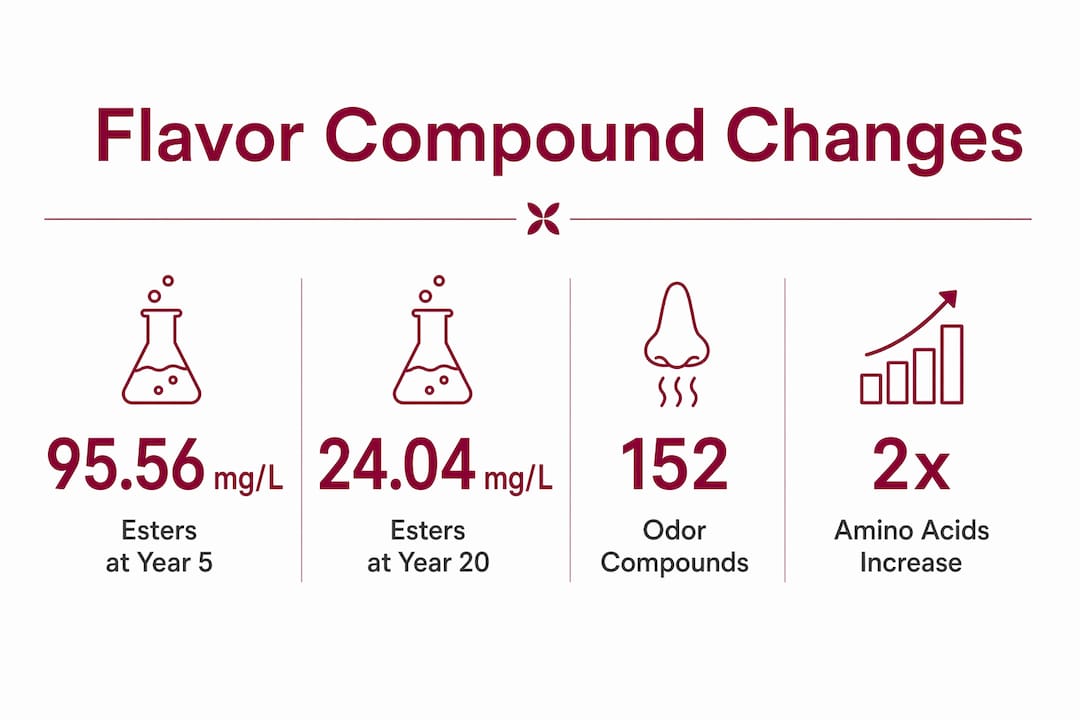
In Baijiu, ester concentration drops from 95.56 mg/L at year 5 to 24.04 mg/L at year 20. That steep decline reflects ongoing ester hydrolysis. Acids simultaneously peak at 97.29 mg/L at year 5 before declining. The flavor implication is clear: young Baijiu is fruity and sharp, while aged Baijiu is softer, more acidic, and structurally complex.
In Shanxi vinegar, machine learning identified 152 odor-active compounds, with methional, acetoin, and benzyl acetate emerging as key markers of aged flavor. Methional contributes a cooked potato note. Acetoin adds a buttery quality. Benzyl acetate brings floral character. No single compound defines aged vinegar flavor. The combination does.
Fermented vegetables tell a similar story. Free amino acid concentrations in fermented cucumbers run roughly twice as high as in acidified cucumbers. That difference translates directly into greater umami depth and a more satisfying, savory finish.
| Ferment | Key compound shift | Flavor result |
|---|---|---|
| Baijiu (5 to 20 years) | Esters drop sharply, acids peak then decline | Fruity sharpness gives way to soft, complex depth |
| Shanxi vinegar | 152 odor-active compounds; methional, acetoin, benzyl acetate dominate | Buttery, floral, cooked notes replace sharp acidity |
| Fermented cucumbers | Free amino acids roughly double vs. acidified versions | Stronger umami, richer mouthfeel |
| Kombucha (extended aging) | Acids increase, residual sugars drop, polyphenols polymerize | Drier, more complex, less sweet profile |
The table above shows one consistent pattern: aging shifts ferments away from simple, sharp primary notes toward layered, softer, and more nuanced profiles.
Why does aging create flavor complexity beyond initial fermentation?
Aging creates flavor complexity because it introduces a second phase of biochemical activity that primary fermentation cannot replicate. Secondary enzymatic activity continues transforming lipids and proteins after microbial fermentation slows. Endogenous enzymes, the ones already present in the fermentation matrix, keep working. They produce layered aromas that no starter culture or fermentation additive can shortcut.
One of the most striking examples is polyphenol polymerization. In aged Baijiu, oxidative polymerization of phenolics increases molecular complexity, producing a measurable “redshift” in fluorescence spectroscopy. That redshift is a direct indicator of richer, deeper flavor. Polyphenols link together into larger molecules that interact differently with taste receptors. The result is a longer finish and a more persistent aftertaste.
Ester dynamics add another layer. Early fermentation produces straightforward fruity esters quickly. Aging replaces them through a dynamic equilibrium: old esters hydrolyze, and new complex esters form slowly in their place. Wine collectors call this the “bottle bouquet.” Kombucha enthusiasts notice it as a shift from bright, tangy notes toward something earthier and more rounded. The same chemistry applies across fermented beverages.
“Fermentation is not simply preservation but a tool for biotransformation that unlocks latent flavor potential through microbial and enzymatic action coupled with aging chemistry.” — Fermentation in Flavor Formulation
Microbes play a catalytic role rather than a direct flavor-building role during aging. They unlock precursors. The chemistry then takes over. Miso aged for three years does not taste different from one-year miso because more bacteria worked on it. It tastes different because slow oxidation, ester reformation, and Maillard reactions had more time to complete their work.
Pro Tip: Taste your ferment at regular intervals and write down what you notice. Tracking flavor changes over weeks or months teaches you more about aging chemistry than any textbook.
How do practical factors influence taste differences in aged ferments?
Temperature is the single most controllable variable in aging. Slow ambient temperature aging favors the delicate chemical sequences that produce complexity. Forcing maturation with heat disrupts those sequences and produces scorched or undesirable off-flavors instead of true aged character. A miso aged at room temperature for two years will outperform one rushed at elevated heat in two months.
Oxygen exposure requires careful management. Low-level oxygen contact supports the formation of rancio notes and polyphenol polymerization. Too much oxygen accelerates rancidity. The difference between a beautifully aged fermented beverage and a spoiled one often comes down to how well oxygen was controlled throughout the aging period.
Substrate composition and microbial strain selection shape the raw material available for aging chemistry. A kombucha brewed with high-polyphenol tea gives polyphenol polymerization more to work with. A miso made from a high-protein soybean variety gives proteolysis more substrate. The starting ingredients set the ceiling for what aging can achieve.
Best practices for managing aging conditions at home:
- Control temperature. Age ferments between 55°F and 70°F for most beverages. Avoid locations near ovens, heating vents, or direct sunlight.
- Limit oxygen exposure. Use airlocks or sealed vessels. Open only for tasting or topping off.
- Monitor pH. A stable or slowly declining pH signals healthy acid development. A sudden spike may indicate contamination.
- Watch for crystal formation. Crystals like tyrosine or calcium lactate signal advanced chemical maturation. They are a quality indicator, not a defect.
- Taste regularly. Off-flavors like acetone, sulfur, or rancid fat indicate a problem. Complex, layered bitterness, acidity, and umami indicate progress.
Short-aged kombucha (7–14 days) is bright, effervescent, and tangy. Extended-aged kombucha (30 days or more) develops a drier, more vinegar-forward profile with greater polyphenol depth. Neither is wrong. They are different products shaped by the same chemistry operating at different timescales. Understanding that distinction helps you decide what you are actually trying to make. For a deeper look at the fermentation process itself, the kombucha homebrewer’s guide from Aboocha covers the foundational steps in detail.
Key takeaways
Aged ferments taste different because ongoing enzymatic and chemical reactions, not just microbial activity, continuously reshape flavor compounds over time.
| Point | Details |
|---|---|
| Aging is an active process | Ester hydrolysis, Maillard reactions, and oxidation continue reshaping flavor long after fermentation slows. |
| Compound concentrations shift predictably | Esters decline and acids rise over time, moving flavor from sharp and fruity to soft and complex. |
| Temperature control is critical | Slow ambient aging produces complexity; heat-accelerated aging produces off-flavors. |
| Microbes catalyze, chemistry delivers | Microbes unlock flavor precursors, but slow chemical transformations create the layered aged profile. |
| Crystal formation signals maturity | Tyrosine or calcium lactate crystals are visible markers of advanced chemical maturation and quality. |
Aging is an art form with a chemistry textbook underneath
Most fermentation enthusiasts focus heavily on the primary fermentation phase. They obsess over starter cultures, pH, and carbonation. The aging phase gets treated as an afterthought, a waiting period. That is a mistake.
What I have found, after years of tasting and studying fermented beverages, is that the aging phase is where the real character forms. A young kombucha tells you about the tea and the SCOBY. An aged kombucha tells you about the brewer’s patience and environmental control. Those are very different stories.
The biggest misconception I encounter is that microbes are responsible for aged flavor. They are not, at least not directly. Microbes set the stage. The chemistry writes the script. Once you internalize that distinction, you stop trying to add more starter culture to deepen flavor and start paying attention to temperature, oxygen, and time instead.
Tasting and documenting changes during aging is the most underrated practice in home fermentation. A simple notebook with weekly tasting notes will teach you more about flavor evolution than any single article. You will start to recognize the moment when sharp acidity softens, when a new floral note appears, when the finish lengthens. That is the chemistry working. And once you can taste it, you can start to control it.
— Luna
Aboocha’s approach to flavor-forward fermented kombucha
Aboocha builds its kombucha around the same principles this article describes: natural fermentation processes, careful aging, and flavor depth that comes from chemistry, not additives.
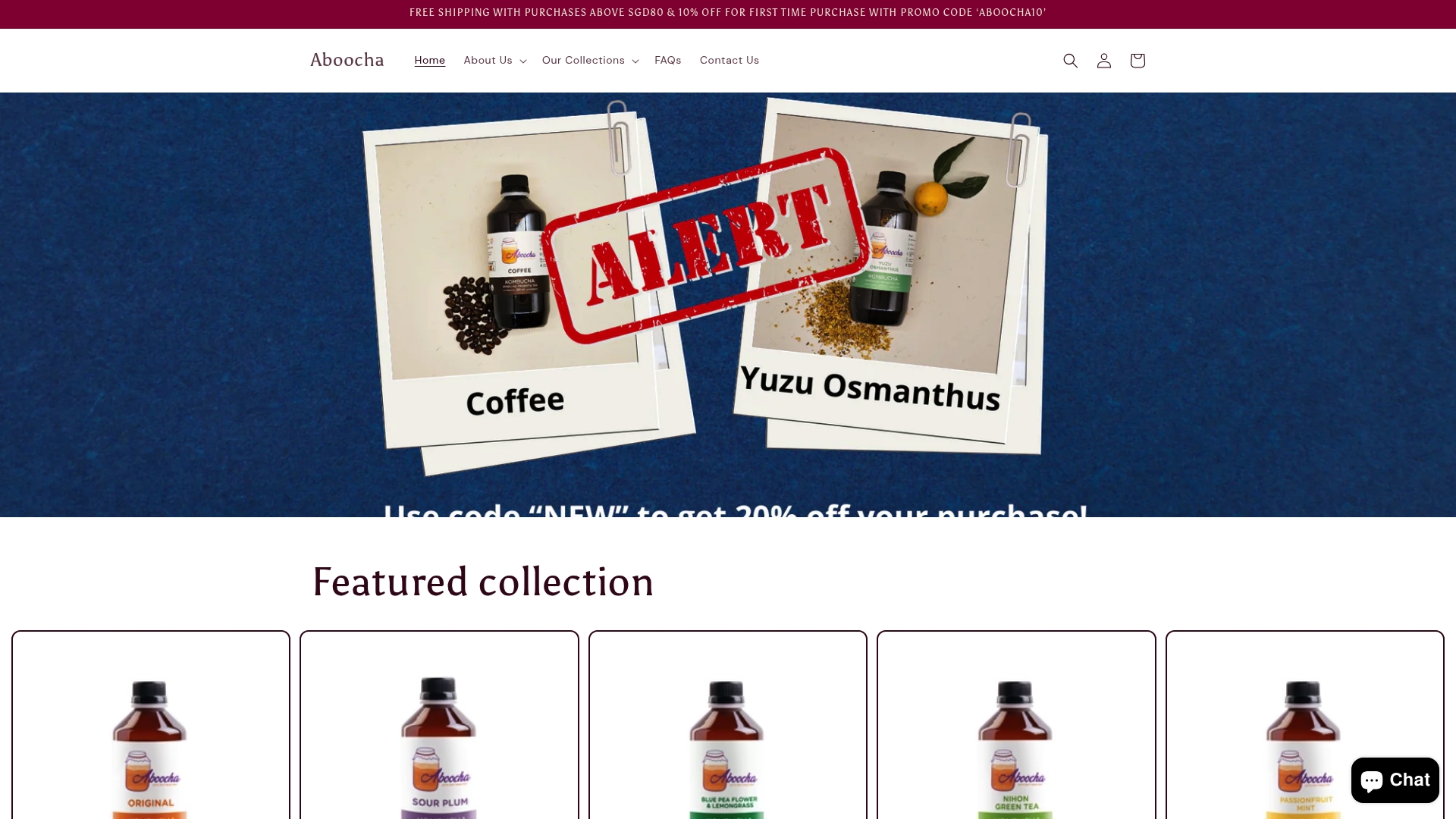
Flavors like Sour Plum and Yuzu Osmanthus reflect the kind of layered taste profiles that only careful fermentation and aging can produce. Aboocha keeps sugar content low so the nuanced flavor compounds developed during aging actually come through, rather than being masked by sweetness. If you want to taste what thoughtful fermentation aging produces in a finished beverage, explore Aboocha’s kombucha lineup and see how each flavor reflects a distinct stage of fermentation flavor evolution.
FAQ
Why do aged ferments taste more complex than fresh ones?
Aged ferments undergo ongoing ester hydrolysis, Maillard reactions, and oxidation that build layered flavor compounds over time. Fresh ferments have not had enough time for these secondary chemical transformations to develop.
What causes the sour taste in long-aged kombucha?
Extended aging increases acid concentrations as residual sugars are consumed and ester compounds break down. The result is a drier, more vinegar-forward profile compared to short-fermented kombucha.
Is it safe to drink heavily aged kombucha?
Aged kombucha with a stable pH, no off-putting sulfur or acetone smell, and no visible mold is generally safe to drink. Crystal formation and increased acidity are normal signs of maturation, not spoilage.
Can you speed up the aging process with heat?
Raising temperature to accelerate aging typically produces off-flavors rather than true complexity. Slow ambient aging is necessary for the balanced esterification and oxidation that create desirable aged character.
What are the visible signs that a ferment has aged well?
Crystal formation such as tyrosine or calcium lactate deposits, a deepening color, and a progressively more complex aroma are all positive indicators. These signal that advanced chemical maturation has occurred inside the vessel.