
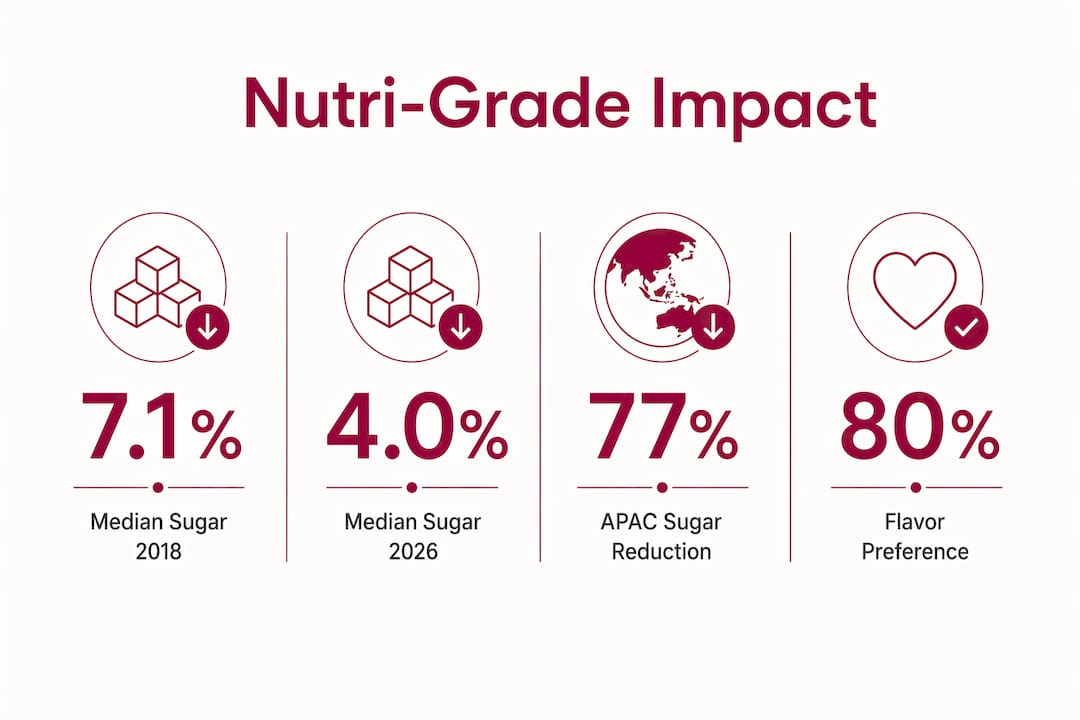
Singapore’s shift toward low-sugar consumption is defined by three converging forces: a diabetes crisis, government-mandated labeling, and a generation of consumers who refuse to trade flavor for health. The reasons why Singapore consumers prefer low sugar go beyond personal willpower. The Nutri-Grade system, introduced by the Health Promotion Board, reduced median sugar in pre-packaged drinks from 7.1% to 4.6% between 2017 and 2023. That single policy shift reshaped what sits on supermarket shelves and what Singaporeans reach for every day.
Why do Singapore consumers prefer low-sugar products?
The preference for low-sugar products in Singapore is rooted in a public health reality that touches nearly every family. One in three Singapore residents lives with hyperlipidaemia or hypertension, and diabetes prevalence remains one of the highest in Asia. These are not abstract statistics. They are the conditions that push people to read labels at the grocery store and swap their usual sugary drink for something lighter.
Structural barriers make healthy eating harder than it sounds. Singapore’s culture of dining out means most people have limited control over what goes into their meals. Hawker centers, convenience stores, and fast food outlets dominate daily food access. When home cooking is rare, the beverage aisle becomes one of the few places where consumers can make a deliberate, low-sugar choice.
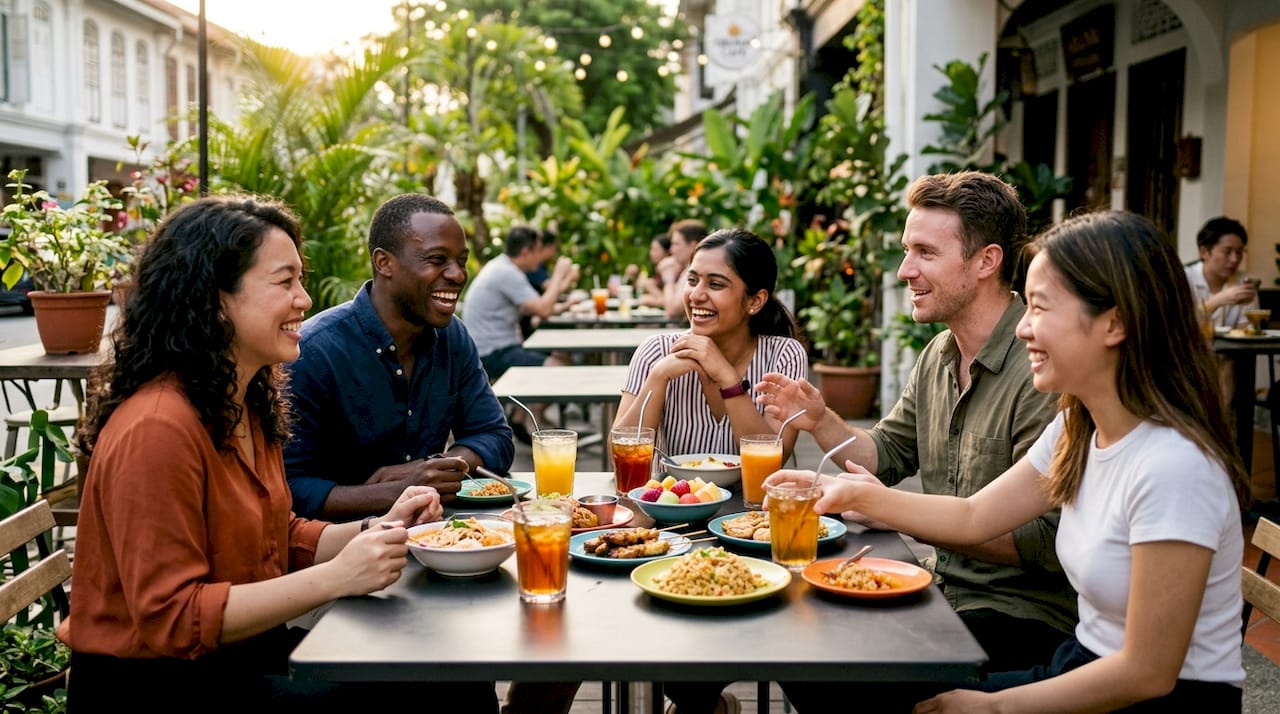
The wellness shift is also generational. A 2026 survey found that 80% of Singapore residents focus on wellness as a personal priority. That number signals a cultural turn, not a passing trend. Younger Singaporeans treat reduced sugar intake as part of a long-term lifestyle, not a short-term diet fix.
Information overload also plays a role. Health content online is contradictory and often confusing. Consumers gravitate toward simple, trusted signals rather than parsing ingredient lists. Government-backed labels cut through the noise and give shoppers a fast, reliable answer.
- Diabetes and hypertension drive urgency around sugar reduction
- Dining-out culture limits control over daily sugar intake
- 80% of residents prioritize wellness as a sustained lifestyle goal
- Consumers rely on trusted labels to simplify complex health decisions
Pro Tip: If you eat out most days, your best low-sugar lever is your beverage. Swapping one sugary drink per day for a low-sugar alternative is one of the most measurable changes you can make.
How does Singapore’s Nutri-Grade system shape sugar preferences?
The Nutri-Grade system is Singapore’s most direct tool for changing sugar consumption habits at scale. It grades pre-packaged and freshly prepared beverages from A (lowest sugar) to D (highest sugar), and the results are measurable. Household purchases of unhealthy beverages dropped 44% after the system took effect. Daily sugar intake fell from 60g in 2018 to 56g in 2022. These are not marginal changes. They represent a genuine shift in what Singaporeans buy and consume.
Grade D beverages face advertising restrictions that limit their visibility across digital and physical channels. That restriction forces brands to reformulate or lose market reach. The commercial pressure is as powerful as the public health message.
| Nutri-Grade | Sugar content | Advertising status |
|---|---|---|
| A | Lowest sugar | Unrestricted |
| B | Low sugar | Unrestricted |
| C | Moderate sugar | Unrestricted |
| D | High sugar | Advertising restricted |
Consumers respond positively to this kind of transparent labeling. Clear, government-backed labels reduce cognitive load and increase trust in healthier product claims. When a label is simple and credible, shoppers act on it. The Nutri-Grade system works precisely because it removes ambiguity from the purchase decision.
The policy also creates a feedback loop. Brands reformulate to reach Grade A or B. Consumers see more Grade A and B products on shelves. Those products normalize lower sugar as the default, not the exception. Over time, the market standard shifts.
What sweetener innovations support Singapore’s low-sugar trend?
Reducing sugar in a beverage is technically harder than it sounds. Sugar does more than sweeten. It adds body, texture, and mouthfeel. Remove it without a replacement, and the drink tastes thin and flat. This is why ingredient technology sits at the center of Singapore’s low-sugar shift.
Sweet proteins represent the most significant recent advance. Sweelin, developed by Amai Proteins through precision fermentation, delivers sweetness 3,000 times that of sugar with minimal blood glucose impact. It is approved for use in the Singapore market. A product using Sweelin can reduce its sugar content by 40–70% while maintaining a satisfying taste profile. That range makes it practical across a wide category of beverages.
The challenge is not just sweetness. Formulators must also replicate the structural role sugar plays in beverages, including viscosity and carbonation stability. New fermentation-based ingredients address these gaps by mimicking sugar’s physical properties without the caloric load. This is where brands that invest in ingredient engineering gain a real edge over those that simply reduce sugar and hope consumers adjust.
Pro Tip: When reading a low-sugar beverage label, look beyond the sugar gram count. Check whether the product uses natural fermentation or sweet proteins rather than synthetic sweeteners. Natural sources tend to deliver better flavor and a cleaner finish.
Consumer demand shapes what formulators prioritize. 77% of APAC consumers are actively trying to cut back on sugar, while 82% still want great flavor. Those two numbers create the central challenge for every beverage brand in Singapore. The solution is not less sugar alone. It is better formulation that makes less sugar taste like more. Aboocha’s approach to low-sugar fermented drinks reflects this principle, using natural fermentation to build flavor depth without relying on added sugar.
How do Singaporeans balance health goals with flavor expectations?
Singaporeans are not willing to drink something that tastes medicinal just because it is healthy. 80% of APAC consumers say they would pay up to 30% more for products labeled “no added sugar,” but only if the flavor holds up. Price tolerance disappears fast when the taste disappoints.
The purchase decision is also situational. Consumers do not always choose low-sugar products out of strict dietary discipline. They often choose them because the product fits the moment. At a social event, a low-sugar option signals inclusiveness, not restriction. Inclusive positioning consistently achieves better market traction than products marketed as diet or deprivation-based alternatives. Brands that frame their products as “for everyone” rather than “for the health-obsessed” reach a wider audience.
Marketing strategies that normalize low-sugar choices also matter. Gamified campaigns and interactive sampling programs, supported by government health initiatives, help consumers build low-sugar habits without feeling lectured. The goal is to make the healthier choice feel natural, not effortful.
Several factors shape whether a consumer actually picks up a low-sugar product:
- Flavor must match or exceed the sugary alternative
- The label must be simple and credible, not cluttered with claims
- Price must feel fair relative to the perceived health benefit
- The product must feel familiar, not clinical or niche
- Social context matters. Low-sugar options at shared events drive trial
Understanding these drivers helps explain why low-sugar drink alternatives that lead with flavor, not health warnings, consistently outperform those that lead with restriction messaging.
Key Takeaways
Singapore consumers prefer low sugar because of health urgency, regulatory clarity, and the growing availability of products that taste as good as their sugary counterparts.
| Point | Details |
|---|---|
| Nutri-Grade drives real change | Median sugar in pre-packaged drinks fell from 7.1% to 4.6% between 2017 and 2023. |
| Health conditions create urgency | One in three Singapore residents has hypertension or hyperlipidaemia, making sugar reduction personal. |
| Flavor remains non-negotiable | 82% of APAC consumers want great taste alongside reduced sugar, so formulation quality determines success. |
| Sweet proteins enable better products | Sweelin reduces sugar by 40–70% while maintaining taste, making low-sugar beverages genuinely competitive. |
| Inclusive positioning wins | Low-sugar products framed for everyone, not just dieters, achieve broader market adoption. |
Singapore’s low-sugar shift is deeper than a diet trend
I have followed food and wellness trends across Asia for years, and Singapore’s low-sugar movement stands apart from every other market I have watched. Most countries see health trends arrive, peak, and fade within a product cycle or two. Singapore’s shift feels structurally different because it is backed by policy, not just consumer sentiment.
The Nutri-Grade system is the clearest example of government and market forces working in the same direction. When advertising restrictions hit Grade D beverages, brands did not wait for consumers to change. They reformulated. That top-down pressure, combined with genuine bottom-up demand from health-aware consumers, creates a self-reinforcing cycle that is hard to reverse.
What I find most interesting is the flavor expectation. Singaporeans are among the most food-literate consumers in the world. They will not accept a low-sugar product that tastes like a compromise. That standard is actually good for the category. It forces brands to invest in real ingredient innovation rather than just cutting sugar and hoping no one notices. The brands that survive this shift will be the ones that treat flavor as seriously as nutrition.
My honest view is that the consumers who will benefit most are those who stop treating low sugar as a sacrifice and start treating it as a baseline. The products are better than they were five years ago. The labels are clearer. The choice is easier. The only thing left is habit.
— Luna
Aboocha’s low-sugar kombucha fits Singapore’s health goals
Singaporeans looking for a beverage that meets Nutri-Grade standards without giving up flavor have a strong option in Aboocha. Aboocha crafts kombucha using natural fermentation, which builds genuine flavor complexity without relying on added sugar. Flavors like Sour Plum and Yuzu Osmanthus deliver the kind of taste experience that makes low-sugar feel like a reward, not a restriction.
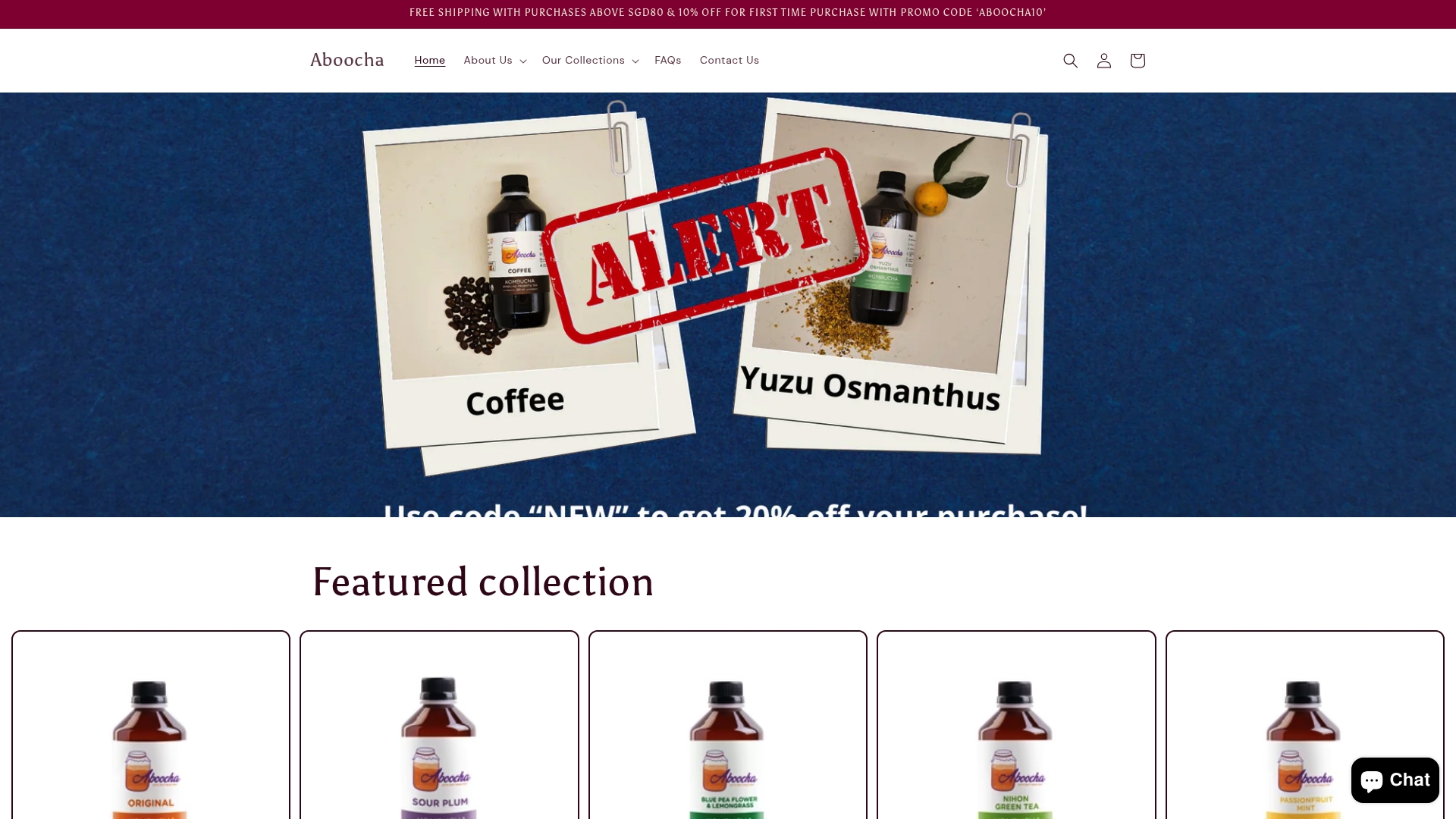
Aboocha’s products align directly with what Singapore consumers want: lower sugar, natural ingredients, and a drinking experience that holds up socially and sensory. Whether you are managing your daily sugar intake or simply looking for something that tastes good and supports gut health, Aboocha’s beverage bundles offer a practical starting point. The Aboocha x Deefruit collaboration is worth trying if you want a curated low-sugar selection that reflects Singapore’s best flavor instincts.
FAQ
Why do Singapore consumers prefer low-sugar beverages?
Singapore consumers prefer low-sugar beverages because of high rates of diabetes and hypertension, strong government labeling through the Nutri-Grade system, and growing personal commitment to long-term wellness over short-term indulgence.
What is the Nutri-Grade system in Singapore?
Nutri-Grade is a government-mandated labeling system that grades beverages from A to D based on sugar and saturated fat content. Grade D beverages face advertising restrictions, which pushes brands to reformulate and gives consumers a clear signal at the point of purchase.
Do low-sugar drinks in Singapore taste as good as regular drinks?
The best low-sugar beverages in Singapore use natural fermentation or sweet proteins like Sweelin to maintain flavor and mouthfeel. Products that invest in ingredient technology deliver taste that matches or exceeds their sugary counterparts.
How much has sugar consumption dropped in Singapore?
Daily sugar intake in Singapore fell from 60g in 2018 to 56g in 2022, and household purchases of unhealthy beverages dropped 44% following the introduction of Nutri-Grade labeling.
Are low-sugar snacks and drinks more expensive in Singapore?
Price varies by product, but 80% of APAC consumers say they are willing to pay up to 30% more for products labeled “no added sugar,” suggesting that Singaporeans accept a modest premium when the quality and labeling are credible.