
Kombucha does show measurable anti-inflammatory activity in lab studies, animal models, and at least one human trial, but it works more like a supporting player than a cure. The strength of that effect depends heavily on the tea base (green tea consistently outperforms black or white tea), how carefully it’s fermented, and how much you actually drink. If you’re pregnant, immunocompromised, or managing a chronic condition, talk to a clinician before making it a daily habit.
TL;DR:
- The anti-inflammatory effects of kombucha are most potent when made with green tea and consumed in moderation, typically one small serving daily.
- Variability in tea base, fermentation time, SCOBY composition, and residual sugar significantly influence the chemical profile and health benefits of each batch.
- Human evidence is limited to small trials and animal studies, making it a supportive habit rather than a proven treatment for inflammation.
- Proper brewing practices and quality control are crucial, as improper fermentation can lead to contamination or inconsistent health effects.
- People with pregnancy, immune compromise, or chronic conditions should consult a healthcare professional before regular kombucha consumption.
Table of Contents
- What Kombucha Is and Which Compounds Might Affect Inflammation
- The Evidence: What Studies Actually Show About Kombucha and Inflammation
- How Kombucha May Reduce Inflammation at a Molecular Level
- Why Tea Base and Fermentation Quality Change the Results
- Safety, Contraindications, and When to Be Cautious
- How Much Kombucha to Drink and What to Look For
- Where Aboocha Fits Into the Science
- The Gap Between Kombucha’s Reputation and Its Evidence
- A Lower-Sugar Way to Put the Research Into Practice
- Sources
- FAQ
What Kombucha Is and Which Compounds Might Affect Inflammation
Kombucha starts as sweetened tea fermented by a SCOBY, a symbiotic colony of bacteria and yeast that converts sugar into a cocktail of acids, gases, and trace alcohol. That fermentation process is where the interesting chemistry happens. The SCOBY doesn’t just sour the tea. It manufactures a set of metabolites that show up again and again in research on inflammation and oxidative stress.
The tea base matters as much as the fermentation itself. Black, white, and green tea all carry different starting levels of catechins, and green tea tends to hold onto more of them through fermentation. That’s a running theme throughout the research on kombucha and inflammation, not a one-off finding.
The compounds worth knowing:
- Organic acids (acetic, gluconic, glucuronic): byproducts of fermentation tied to antimicrobial and antioxidant activity, with acetic acid and D-saccharic acid 1,4-lactone correlating strongly with antioxidant and NO-inhibiting effects in biochemical analyses.
- Phenolic compounds (gallic acid, chlorogenic acid): plant-derived antioxidants that neutralize free radicals and appear at higher concentrations depending on the substrate and fermentation parameters used.
- Catechins, especially EGCG: concentrated in green tea and linked to some of the strongest anti-inflammatory signals in kombucha research.
- B vitamins: produced by the SCOBY during fermentation, contributing to the drink’s nutritional profile beyond its acid content.
- Exopolysaccharides: complex sugars generated by the fermenting culture that may support gut barrier function.
None of these compounds work in isolation. What makes kombucha interesting to researchers is that fermentation concentrates and transforms plant polyphenols into forms that may be more bioavailable than the original tea leaf. That’s the working theory behind why a fermented tea might do more for inflammation than the same tea steeped and left unfermented. You can read more about what organic acids in kombucha actually do if you want the deeper biochemistry.
The Evidence: What Studies Actually Show About Kombucha and Inflammation
Here’s where the science gets specific, and where a lot of health articles get sloppy. Kombucha’s anti-inflammatory reputation rests on three tiers of evidence, and they don’t carry equal weight.
In vitro studies test kombucha’s effects on cells or isolated pathways in a dish, and this is where the strongest, most consistent numbers show up. A 2025 study measured nitric oxide (NO) inhibition, a common marker of inflammatory activity, across kombucha made from different tea bases.
Green tea kombucha strongly inhibited nitric oxide production in test conditions, outperforming both white and black tea versions. That’s a substantial gap, and it’s the clearest evidence yet that tea base isn’t a minor detail. It’s a determining factor in how much anti-inflammatory activity you’re actually getting in the bottle.
The same research measured antioxidant capacity using standard assays like DPPH, ABTS, and FRAP, all of which gauge how effectively a compound neutralizes free radicals. Kombucha performed well across these assays, particularly the green tea variants, reinforcing the idea that antioxidant activity and inflammation control are linked mechanisms here, not separate claims.
Animal models move the question from a test tube to a living system, and the results have been encouraging. Research using LPS-induced sepsis in mice found that kombucha reduced proinflammatory cytokines including TNF-α and IL-6, while also improving survival outcomes and showing signs of inhibited NF-κB signaling, a pathway central to the body’s inflammatory response. Other animal work on diet-induced obesity models has shown similar patterns: kombucha supplementation correlating with improved metabolic markers alongside reduced inflammatory signaling.

Human trials are where the evidence gets both more relevant and more limited. The strongest available data comes from a 2024 randomized controlled trial testing green tea kombucha in adults with excess body weight. Participants who drank green tea kombucha over the trial period showed improvements in select inflammatory markers along with shifts in salivary microbiota composition compared to controls.
That’s a genuinely useful data point, but it’s one trial, with a specific population, a specific tea base, and a specific dose. It doesn’t tell you what happens with black tea kombucha, or in people at a healthy weight, or over a longer timeframe. This is the tier of evidence health-conscious readers should weigh most carefully, because it’s tempting to extrapolate a single positive RCT into a universal claim.
Where does that leave the overall picture? The mechanistic and animal data is genuinely promising and consistent across multiple research groups. The human evidence is real but thin, limited to small samples and short durations. Researchers reviewing the substrate and fermentation literature have flagged high variability between studies and a lack of standardized dosing protocols as the biggest barrier to drawing firm clinical conclusions. Kombucha and inflammation research is moving in a clear direction, but it hasn’t arrived at a destination yet.
How Kombucha May Reduce Inflammation at a Molecular Level
The mechanisms researchers point to fall into three overlapping categories, and understanding them helps explain why product quality matters so much.
Antioxidant and pathway effects. Phenolic compounds in kombucha appear to reduce reactive oxygen species and downregulate NF-κB and COX-2 signaling, two pathways that drive much of the body’s inflammatory cascade when they’re overactive. This is the same pathway machinery targeted by several conventional anti-inflammatory approaches, though kombucha’s effect size is far more modest.
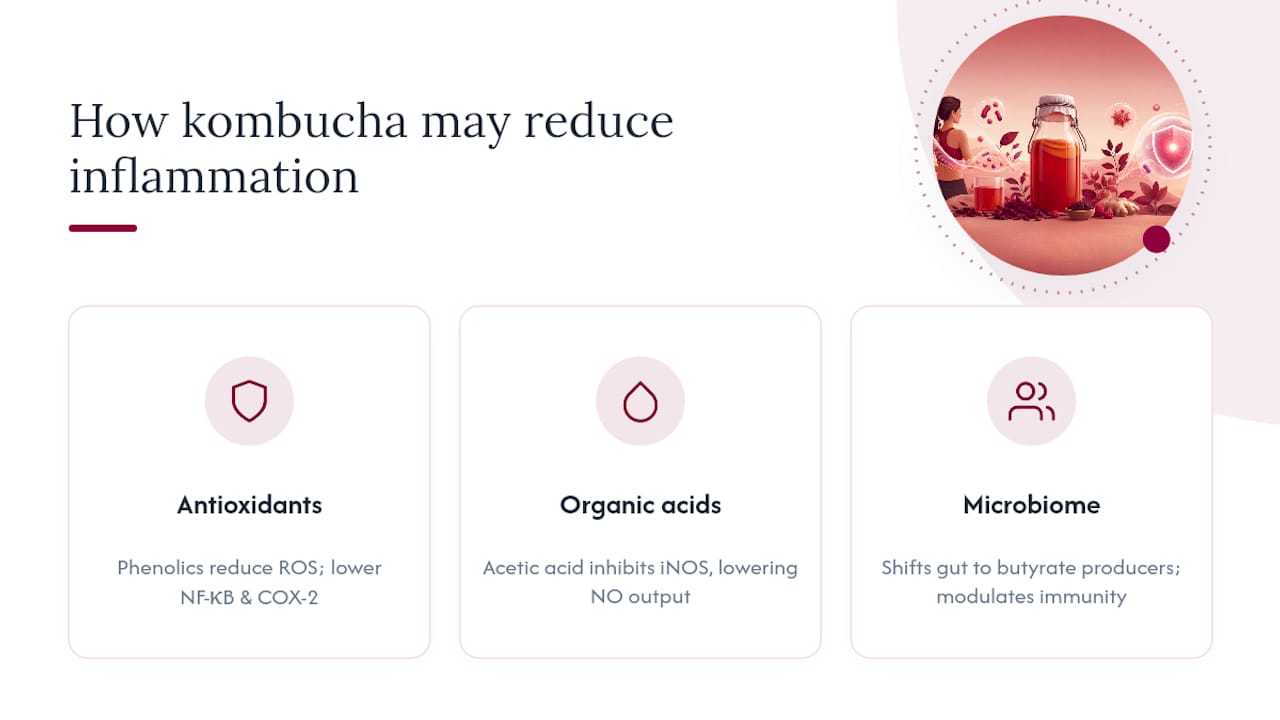
Organic acid activity. Acetic acid and related fermentation byproducts correlate with inhibited nitric oxide synthase (iNOS) activity in cell studies, which translates to lower NO output and, by extension, less inflammatory signaling at the cellular level.
Gut microbiome effects. This might be the most interesting mechanism long term. Kombucha may function less like a direct anti-inflammatory agent and more like an immunomodulator that shifts gut bacterial populations toward short-chain fatty acid producers, particularly butyrate-producing strains. Butyrate feeds colon cells and has documented roles in regulating immune activity from within the gut, which is a very different mechanism than a phenolic compound mopping up free radicals directly.
Pro Tip: Don’t think of kombucha as a drug with a single mechanism. It’s closer to a multi-pathway nudge: modest antioxidant support, modest gut microbiota shift, modest pathway modulation. Each piece is small; the pattern across all of them is what researchers find compelling.
None of this amounts to proof of a clinical effect at standard serving sizes. Mechanistic plausibility explains why kombucha might help. It doesn’t confirm how much it helps a specific person drinking one bottle a day, which is exactly the gap the human trials haven’t closed yet.
Why Tea Base and Fermentation Quality Change the Results
If you take one practical lesson from the research on kombucha for immunity and inflammation, it’s this: not all kombucha is chemically the same drink wearing different labels.
- Green tea versus black or white tea: Green tea preserves more catechins, including EGCG, through the fermentation process, which lines up with its stronger nitric oxide inhibition in comparative studies. Black and white tea kombucha still ferment into a similar acid profile, but they start with a lower catechin ceiling.
- Non-tea substrates: Kombucha brewed on hibiscus, fruit, or herbal bases changes the phenolic profile entirely, sometimes for better, sometimes for worse, depending on the plant material’s own antioxidant load.
- Fermentation time and pH: Longer fermentation raises acidity and organic acid concentration, but it also increases the risk of overfermentation, which can tip a batch toward excess acetic acid without adding proportional benefit.
- SCOBY composition and pasteurization: Different bacterial and yeast strain ratios produce different metabolite yields, and pasteurized products lose some live-culture activity that unpasteurized versions retain.
- Residual sugar and alcohol: Both are quality signals. A poorly fermented batch either leaves excess sugar behind or lets alcohol content creep up past trace levels, and neither supports the anti-inflammatory story you’re paying for.
A narrative review of substrate and fermentation studies found that these variables account for a lot of the inconsistency between studies. It’s a big part of why one kombucha brand’s claims don’t necessarily apply to another’s bottle, even if both say “kombucha” on the label.
Safety, Contraindications, and When to Be Cautious
Kombucha is a fermented food, and fermented foods carry a different risk profile than a sealed supplement capsule. That’s not a reason to avoid it, but it is a reason to pay attention to a few specific groups and situations.
- Rare but documented adverse events. Case reports have linked kombucha to liver injury and metabolic acidosis in isolated instances, almost always tied to contaminated brews or improper fermentation practices rather than the beverage itself when properly made. Causality in these cases is hard to pin down, but the pattern is consistent enough to warrant caution.
- Pregnancy, breastfeeding, and immunocompromised states. The same safety review recommends these groups consult a clinician before regular kombucha consumption, largely because of trace alcohol content and the theoretical risk of live-culture contamination in an already fermented product.
- Home-brew contamination risk. Improperly maintained SCOBYs or unsanitized equipment can allow harmful mold or bacteria to take hold. Brewing in metal or low-quality ceramic vessels also raises the risk of acid leaching into the drink, especially during extended or overfermentation, so glass containers are the safer standard.
- Interactions worth knowing about. Kombucha’s acid content and trace alcohol can matter for people managing gout flare-ups or taking medications sensitive to fermented-food interactions. If you’re on a strict low-purine diet or blood-thinning medication, that’s a conversation for your doctor, not a guess.
None of this makes kombucha dangerous for the average healthy adult in normal serving sizes. It does mean the people most likely to be told “try kombucha for inflammation” by a well-meaning friend, meaning those with chronic conditions, are also the people who most need a professional’s input first.
How Much Kombucha to Drink and What to Look For
Moderation isn’t a throwaway line here. It’s the actual dose-response variable that separates a helpful habit from an unnecessary risk.
Most of the research supporting anti-inflammatory effects used modest daily amounts, generally in the range of a single serving per day, not multiple bottles. Start with a single serving and see how you feel before increasing frequency. If you notice digestive discomfort, stop and scale back. There’s no clinical case for drinking more kombucha to get proportionally more benefit.
When you’re reading a label, check for:
- Tea base: green tea if you want the strongest anti-inflammatory signal based on current evidence.
- Sugar per serving: lower is better for both blood sugar and overall health goals; this is one of the biggest differentiators between brands.
- Pasteurized versus unpasteurized: unpasteurized retains more live culture activity, but pasteurized offers a longer, more predictable shelf life.
- Alcohol percentage: trace amounts are normal from fermentation, but check the number if you’re pregnant, sober, or sensitive to alcohol.
- Ingredient list: substrates like hibiscus or specific herbs change the phenolic profile, so know what you’re actually drinking beyond “kombucha.”
Pro Tip: If you’re building an anti-inflammatory eating pattern around fiber, omega-3s, and polyphenol-rich produce, kombucha fits best as an addition, not a substitute for any of those. It won’t offset a diet otherwise heavy in processed food.
For most people, a quality-controlled commercial product beats a homebrew on consistency and safety alone, since batch-to-batch variability at home is much harder to manage without lab testing.

Where Aboocha Fits Into the Science
Luna’s guides on organic acids and how kombucha fermentation actually works exist because the chemistry behind kombucha deserves better explanations than most product labels give it. Understanding what a SCOBY produces, and why it matters, changes how you shop for this drink.
Aboocha’s product decisions track closely with what the research actually supports. Lower sugar content matters because excess sugar dilutes any potential benefit while adding a metabolic downside. Curated tea bases, including green tea options, matter because that’s where the strongest anti-inflammatory signals show up in the literature. Quality control during fermentation matters because inconsistent brewing is the single biggest reason kombucha studies produce mixed results in the first place. None of that is marketing language. It’s a direct response to what the evidence says separates a genuinely useful kombucha from a sugary soda with bacteria in it.
The Gap Between Kombucha’s Reputation and Its Evidence
Kombucha’s health halo has outpaced its clinical data for years, and that gap is worth naming directly. The internet treats it as a cure-all for gut health, immunity, and now inflammation, when the honest picture is a beverage with real, modest, mechanistically plausible benefits that depend enormously on how it’s made.
What gets overlooked most often is tea base. People obsess over “is kombucha good for me” as a yes-or-no question when the more useful question is “which kombucha, made how.” A green tea kombucha from a quality producer and a black tea kombucha loaded with residual sugar are not interchangeable products, even though they share a name and a fermentation process.
If you take one thing from this research, prioritize the fundamentals before you prioritize the hype: tea base, sugar content, and consistency of fermentation. Those three variables explain more of the variation in outcomes than any debate about whether kombucha “works.” It’s a supporting habit for people already eating reasonably well, not a replacement for medical care or an anti-inflammatory diet done right.
— Luna
A Lower-Sugar Way to Put the Research Into Practice
If you’ve read this far, you already know that tea base and sugar content are the two variables doing most of the work in whether a kombucha delivers on its anti-inflammatory reputation. Aboocha builds around exactly that: lower sugar across the lineup, tea bases including green tea, and quality controls at every fermentation batch instead of guesswork.
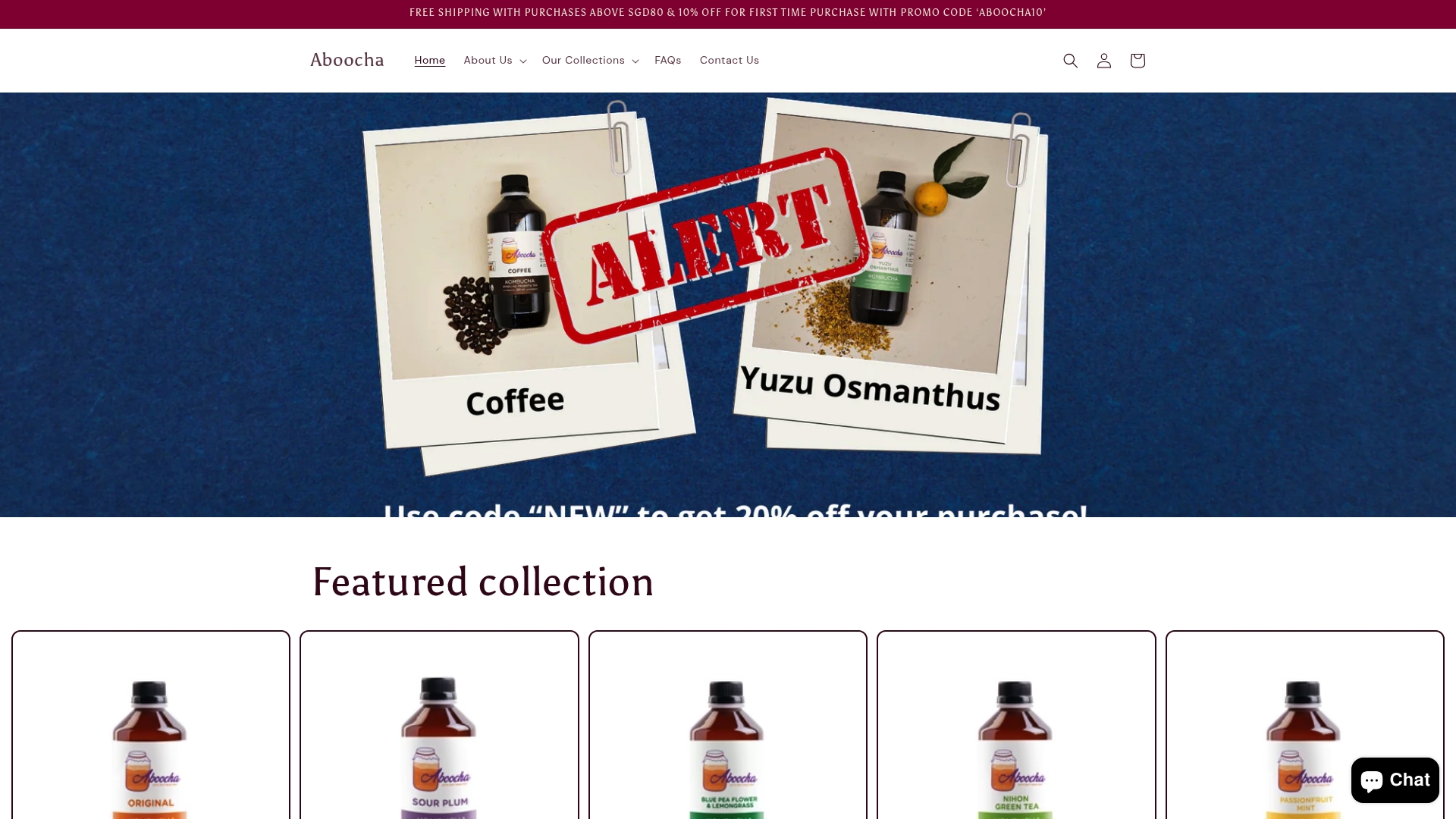
Flavors like Sour Plum and Yuzu Osmanthus aren’t just there for variety. They’re built on the same fermentation discipline that the research points to, so you’re not choosing between flavor and function. For readers who want to drink it consistently rather than as a one-off experiment, the subscription plans make regular, moderated consumption simple without a bottle-by-bottle reorder every week. If the serving guidance above sounds like a habit worth building, check out Aboocha’s current flavor lineup and start with a set that matches what the evidence actually supports.
Sources
- Green Tea Kombucha Impacts Inflammation and Salivary Microbiota in Individuals with Excess Body Weight: A Randomized Controlled Trial
- Functional metabolites and inhibitory efficacy of kombucha beverage on pathogenic bacteria, free radicals and inflammation
- Shaping the bioactive properties of kombucha drinks by using raw materials alternative to tea
- Health, wellness, and safety aspects of the consumption of kombucha
FAQ
Is Kombucha Good for Inflammation?
Kombucha shows anti-inflammatory activity in lab and animal studies, plus at least one human trial using green tea kombucha, but it works as a modest supporting habit rather than a treatment for existing inflammatory conditions.
Does Kombucha Flush Out Toxins?
There’s no clinical evidence that kombucha “flushes toxins” in the way that phrase implies. Its documented effects relate to antioxidant activity and gut microbiota support, not detoxification.
Can Kombucha Cause a Gout Flare Up?
Kombucha’s organic acid content and fermentation byproducts could theoretically interact with gout management, so anyone managing gout should ask a doctor before adding it as a regular drink.
Is It Okay to Drink Kombucha Every Day?
Regular daily servings fall within the range used in most supportive research, though pregnant, immunocompromised, or medically managed individuals should check with a clinician first.
Does Kombucha Boost the Immune System?
Kombucha appears to act more as an immunomodulator, shifting gut bacteria toward beneficial short-chain fatty acid producers, rather than directly “boosting” immune function in a measurable way.