
The safest approach is to avoid kombucha during pregnancy. Three risks drive this recommendation: trace alcohol from fermentation, added caffeine from the tea base, and contamination risk in raw or homebrewed batches.
Here’s what to do right now:
- Stop homebrewing or drinking raw kombucha until after delivery.
- Read the label for pasteurization status and a numeric ABV, not just “alcohol-free.”
- Swap in pasteurized alternatives like yogurt or decaf tea when a craving hits.
- Ask your OB or midwife before adding any fermented drink back into your routine.
Quick fact: There’s no established safe threshold for alcohol in pregnancy, which is exactly why “just a little kombucha” isn’t a settled question. It’s an open one, and caution wins by default.
Key Takeaways
Kombucha carries real alcohol, caffeine, and contamination risks in pregnancy, so precaution and label literacy matter more than moderation.
| Point | Details |
|---|---|
| Default to avoidance | Skip kombucha during pregnancy unless a product is verified pasteurized and labeled 0.0% ABV. |
| No safe alcohol threshold | The CDC confirms no amount of alcohol is proven safe in pregnancy, including trace fermentation alcohol. |
| Caffeine counts | Kombucha’s tea base adds caffeine that counts toward your daily pregnancy limit. |
| Pasteurization is the safety hinge | Raw and homebrewed kombucha carry variable alcohol and listeria risk; pasteurization controls both. |
| Choose transparent brands | Aboocha’s lower-sugar, clearly labeled kombucha supports informed decisions once your clinician clears regular consumption. |
This article is general information, not a substitute for advice from a qualified doctor. Consult a qualified healthcare professional about your own circumstances before acting on anything here.
Table of Contents
- What Kombucha Is and Why Fermentation Matters for Pregnancy
- The Real Risks: Alcohol, Caffeine, Contamination, and Acidity
- How to Read a Kombucha Label Before You Buy
- Safer Swaps and What to Do If You Still Want Kombucha
- How Aboocha Thinks About Labeling and Pasteurization
- What Actually Matters Here, and What Gets Overblown
- Find Kombucha You Can Feel Good About, Before and After Pregnancy
- Sources
- FAQ
What Kombucha Is and Why Fermentation Matters for Pregnancy
Kombucha starts as sweetened black or green tea, then a SCOBY (a symbiotic culture of bacteria and yeast) ferments it over days or weeks. That process is where things get complicated for pregnant readers.
As the yeast consumes sugar, it produces carbon dioxide, organic acids like acetic and gluconic acid, and, unavoidably, small amounts of ethanol. Most commercial bottles land under 0.5% ABV, but homebrewed batches vary widely and can run higher depending on fermentation time and temperature.
There’s also a live-culture tradeoff worth understanding upfront:
- Raw, unpasteurized kombucha keeps active probiotic cultures but carries more variable alcohol content and contamination risk.
- Pasteurized kombucha loses most live cultures but gains a controlled, verifiable safety profile.
That single distinction, live versus pasteurized, is the hinge the rest of this guide swings on.
The Real Risks: Alcohol, Caffeine, Contamination, and Acidity
Four separate issues make kombucha worth thinking twice about in pregnancy, and they don’t all carry equal weight.
- Alcohol. The CDC states plainly that no amount of alcohol has been proven safe during pregnancy, because it crosses the placenta directly and has been tied to fetal alcohol spectrum disorders. Kombucha’s typical 0.5% ABV or lower sounds trivial next to a glass of wine, but “trivial” isn’t the same as “zero,” and ACOG’s guidance on pregnancy counseling reflects that same abstinence-first stance.
- Caffeine. Kombucha’s tea base contributes real caffeine, often somewhere between a few milligrams and over 25mg per serving depending on brew strength. NIH-summarized research links moderate daily caffeine intake in pregnancy to smaller birth size, which is why every cup, kombucha included, needs to count toward your daily total.
- Contamination. Raw and homebrewed kombucha ferments in open or loosely sealed vessels, and MotherToBaby notes that inconsistent conditions raise the risk of harmful bacteria like listeria, a pathogen pregnant people are specifically more vulnerable to.
- Acidity. Kombucha’s organic acids can aggravate reflux, nausea, and tooth sensitivity, three things already common in pregnancy without help from a tart, carbonated drink.
None of these four risks is theoretical. Together, they’re the reason precaution, not moderation, is the guidance most public-health bodies land on.
How to Read a Kombucha Label Before You Buy
Not all bottles carry equal risk, and the label tells you almost everything you need to know in ten seconds.
Look for these specifics:
- An explicit “pasteurized” statement, not just a health claim about probiotics.
- A numeric ABV, ideally printed as “0.0%” rather than the vague phrase “alcohol-free.”
- Clear refrigeration and storage instructions, which pasteurized products handle consistently.
Be wary of anything labeled “raw,” “unpasteurized,” or “living culture” with no ABV listed at all. In many regions, regulatory definitions of “alcohol-free” can permit up to 0.5% ABV, so the word alone doesn’t guarantee zero alcohol. A bottle with no ABV number, inconsistent batch labeling, or a homebrew origin is a pass during pregnancy, full stop.
Pro Tip: Take a photo of any label before you drink it. If a question comes up at your next prenatal visit, your clinician can review the exact ABV and pasteurization claim instead of relying on your memory of “some kombucha brand.”
Safer Swaps and What to Do If You Still Want Kombucha
You don’t have to give up gut-health habits just because kombucha is off the table for now.
For probiotics, reach for pasteurized options instead of raw fermented drinks:
- Pasteurized yogurt with live active culture claims added post-pasteurization.
- Pasteurized kefir products, which follow the same safety logic.
- A probiotic supplement your clinician has specifically cleared for pregnancy use.
If you’re trying to manage caffeine intake generally, the same strategies that work for cutting back on coffee apply here.
- Confirm the label states both “pasteurized” and a numeric 0.0% ABV.
- Keep your portion small, a few ounces rather than a full bottle.
- Log which product and batch you drank in case questions come up later.
- Flag it to your clinician sooner rather than later if you have a higher-risk pregnancy, are immunocompromised, or have had prior complications.
That checklist—label, ABV, pasteurization, personal risk factors—is exactly what your OB or midwife needs to give you a real answer instead of a generic one.
Resuming Kombucha After Birth and While Breastfeeding
Alcohol clears from breast milk on roughly the same timeline it clears your blood, often cited as about two to two and a half hours per standard drink, so spacing a kombucha away from a feeding session matters. Caffeine also passes into breast milk in smaller amounts, so timing it after a feed rather than right before one is the simpler play. If you’re unsure how your body is processing either, a quick check with your clinician or a lactation consultant settles it faster than guessing.

How Aboocha Thinks About Labeling and Pasteurization
Transparency about tradeoffs matters more than marketing claims when a reader is pregnant, so here’s the honest version. Pasteurization does remove live cultures, and that’s a real loss for anyone drinking kombucha specifically for probiotic benefit. But during pregnancy, that tradeoff shifts: microbial safety certainty outweighs live-culture benefit, which is exactly why checking pasteurization status matters more than chasing “raw” claims right now.
Lower sugar, clear labeling, and flavor variety don’t replace a clinician’s guidance, but they do make it easier to evaluate a bottle honestly before you decide anything.
What Aboocha brings to that decision:
- A lower-sugar formulation focus across the flavor lineup, including Sour Plum and Yuzu Osmanthus.
- Ongoing blog resources on fermentation and label literacy for readers comparing products.
- A subscription model for when regular, verified kombucha becomes appropriate again.
Always confirm pasteurization and ABV status with your own clinician before making a final call.
What Actually Matters Here, and What Gets Overblown
The conventional wisdom on kombucha in pregnancy tends to swing to one of two unhelpful extremes: either “it’s basically tea, don’t worry about it” or blanket panic over anything fermented. Neither is useful. The alcohol content is real but small, the caffeine is real but countable, and the contamination risk is real but almost entirely tied to raw and homebrewed batches, not commercial pasteurized ones.
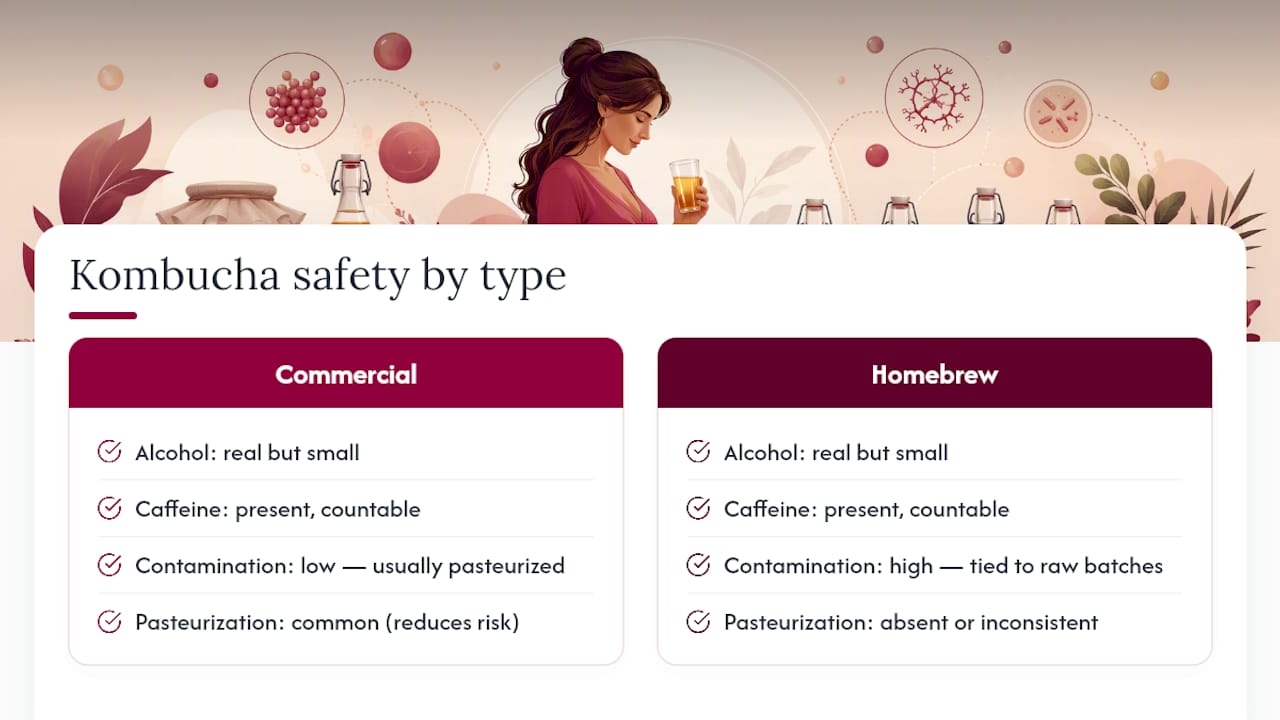
What gets underrated is how much the pasteurization question does the heavy lifting here.
If I had to prioritize one action for a reader to take today, it’s this: stop treating “kombucha” as one product. Read the bottle.
— Luna
Find Kombucha You Can Feel Good About, Before and After Pregnancy
Once you’re past the pregnancy window, or your clinician has cleared a specific verified product, the flavor-and-formulation side of kombucha is where Aboocha does its best work. Aboocha’s lineup runs lower in sugar than most conventional brands while still leaning into bold, unusual flavor pairings like Sour Plum and Yuzu Osmanthus, so cutting sugar doesn’t mean settling for a bland bottle.
For readers rebuilding a gut-health routine postpartum, or planning ahead for when regular kombucha is back on the table, Aboocha’s subscription plans deliver a rotating variety straight to your door without the guesswork of scanning labels every time you shop. Browse the current flavor lineup and start a subscription whenever you’re ready to bring kombucha back into your routine.
Sources
- ACOG — Tobacco, alcohol, drugs, and pregnancy FAQ
- NIH — Research on caffeine intake during pregnancy
- MotherToBaby — Kombucha & pregnancy answers
FAQ
What Should You Avoid Early in Pregnancy Besides Kombucha?
Raw fermented foods, unpasteurized dairy, high-mercury fish, and alcohol all carry similar contamination or fetal-exposure risks and are typically flagged in the same early-pregnancy conversation.
Is Kombucha Considered Safe in Pregnancy by Health Authorities?
No major health authority endorses raw kombucha as safe in pregnancy; MotherToBaby specifically flags variable alcohol content and contamination risk as the reasons for caution.
Are Fermented Drinks Generally Safe During Pregnancy?
It depends entirely on pasteurization status. Pasteurized fermented drinks carry far lower contamination risk than raw or homebrewed versions, which is why checking the label matters more than the “fermented” label itself.
When Can I Start Drinking Kombucha Again After Giving Birth?
Once you’re no longer pregnant, regular commercial kombucha is generally fine, and if you’re breastfeeding, spacing it a couple of hours from a feeding session, along with counting its caffeine, is the simplest way to stay cautious.