
Excessive sugar intake harms gut bacteria by disrupting the microbial balance that keeps your digestive system healthy. The scientific term for this disruption is gut dysbiosis, a state where harmful bacteria outnumber beneficial ones. Research published in 2026 confirms that high sugar consumption favors bacteria with specialized sugar ABC transporter genes, allowing them to rapidly outcompete protective species. The result is increased gut permeability, chronic inflammation, and weakened immune regulation. Understanding why sugar harms gut bacteria, and how much sugar is actually too much, is the first step toward protecting your gut.
How does excess sugar change gut microbiome composition?
Bacteria with sugar ABC transporter genes outcompete other species the moment sugar intake rises. These genes act like a fast lane for sugar absorption, giving certain bacteria a growth advantage that beneficial microbes simply cannot match. The result is a rapid shift in who dominates your gut.
The bacteria that win this competition are not the ones you want in charge. Sugar-induced microbiome shifts favor pro-inflammatory Proteobacteria over protective Bacteroidetes. Proteobacteria produce compounds that trigger immune responses and damage the gut lining. Bacteroidetes, by contrast, produce short-chain fatty acids that feed gut cells and regulate inflammation.
This shift does not happen gradually. Studies show that dietary changes can alter microbiome composition within 24–48 hours. A high-sugar meal does not just affect your blood glucose. It immediately changes which bacteria thrive in your intestines.
- Beneficial bacteria decrease: Species like Lactobacillus and Bifidobacterium lose ground when sugar floods the gut.
- Harmful bacteria expand: Proteobacteria and other pro-inflammatory species fill the gap.
- Microbial diversity drops: Lower diversity is directly linked to poor digestive health and higher disease risk.
- Immune signaling shifts: Fewer beneficial microbes means less production of compounds that regulate your immune system.
Pro Tip: Tracking your added sugar intake for just one week using a food diary app often reveals hidden sources, like salad dressings, flavored yogurts, and packaged snacks, that add up faster than you expect.
What are the impacts of sugar-induced dysbiosis on gut barrier and inflammation?
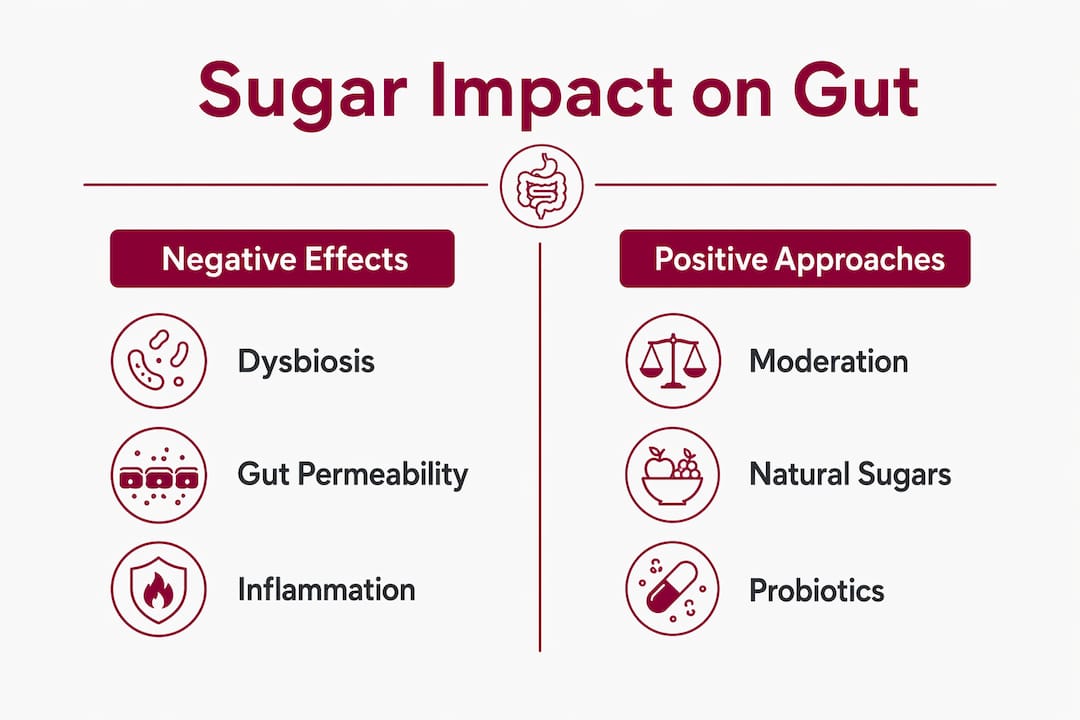
Gut dysbiosis caused by excess sugar does not stay contained in the intestines. Excess dietary sugar causes gut permeability, a condition commonly called “leaky gut,” where the tight junctions between intestinal cells loosen. Bacterial toxins called lipopolysaccharides then cross into the bloodstream, triggering systemic inflammation.

The immune consequences are significant. Sugar-driven dysbiosis decreases regulatory T cells, the immune cells responsible for keeping inflammation in check. Fewer regulatory T cells mean the body’s inflammatory response runs hotter and longer. This raises the risk of metabolic diseases, autoimmune conditions, and recurring infections.
The gut lining itself suffers structural damage. The mucus layer that protects intestinal cells thins when beneficial bacteria decline, because those bacteria produce the compounds that maintain it. A thinner mucus layer exposes cells to direct contact with bacteria and their byproducts.
| Effect | Mechanism | Health consequence |
|---|---|---|
| Increased gut permeability | Tight junction breakdown | Toxins enter bloodstream |
| Reduced regulatory T cells | Dysbiosis alters immune signaling | Chronic inflammation |
| Mucus layer thinning | Loss of beneficial bacteria | Gut lining exposure |
| Proteobacteria overgrowth | Sugar transporter advantage | Inflammatory compound production |
High-sucrose diets combined with additives like carrageenan make this worse. Carrageenan, found in many processed dairy alternatives and packaged foods, synergistically increases intestinal permeability and colon inflammation when paired with high sugar intake. The combination is more damaging than either factor alone.
Why can completely cutting sugar from your diet be harmful to gut health?
Eliminating sugar entirely sounds logical, but the research says otherwise. Complete sugar removal starves helpful gut microbes that depend on simple sugars for energy. These microbes use that energy to maintain the mucus layer and regulate gut barrier function. Without their fuel source, they decline, and the gut lining weakens.
Animal research presented at the Endocrine Society’s 2026 meeting found that removing sucrose completely from a low-fat diet for 16 weeks caused impaired glucose control, insulin resistance, intestinal inflammation, and microbial imbalance in mice. That is a striking result. It means a zero-sugar diet can produce some of the same metabolic problems that a high-sugar diet causes.
Beneficial bacteria also support hormone signaling and appetite regulation. When they decline from lack of fuel, these functions suffer. The gut becomes less efficient at absorbing nutrients and communicating satiety signals to the brain.
- Beneficial microbes need fuel: Species like Akkermansia muciniphila use simple sugars to produce compounds that reinforce the gut lining.
- Leaky gut can result from restriction: Starving these bacteria weakens the mucus barrier just as excess sugar does.
- Metabolic dysfunction follows: Insulin resistance and glucose control problems emerge even without high sugar intake.
- Harmful bacteria fill the void: Aggressive restriction creates an ecological gap that opportunistic species exploit.
Pro Tip: Rather than cutting sugar cold turkey, reduce added sugars by 25% each week over a month. This gradual approach gives your gut microbiome time to adapt without the disruption that sudden elimination causes.
How much sugar intake is recommended to support healthy gut bacteria?
Current dietary guidance sets a clear limit. Limit dietary sugar to no more than 10% of daily calories, with an ideal target below 5%, to maintain a healthy gut microbiome. For a 2,000-calorie diet, 5% equals about 25 grams of added sugar per day. Most Americans consume far more than that through processed foods alone.
The source of sugar matters as much as the amount. Natural sugars in whole fruits and vegetables come packaged with fiber, which slows absorption and feeds beneficial bacteria. Added and refined sugars, stripped of fiber and nutrients, reach the gut quickly and fuel the wrong bacteria.
Context also shapes the impact. Food additives like carrageenan worsen sugar’s negative effects on gut integrity. Reading ingredient labels for both sugar content and additives gives you a more complete picture of what a food actually does to your gut.
| Sugar source | Effect on gut bacteria | Recommendation |
|---|---|---|
| Whole fruit | Feeds beneficial bacteria via fiber | Eat freely in whole form |
| Vegetables | Provides prebiotic fiber with natural sugars | Prioritize at every meal |
| Added refined sugar | Fuels pro-inflammatory bacteria | Keep below 25g per day |
| Sugar with carrageenan | Synergistic gut barrier damage | Avoid in combination |
Understanding the difference between natural and added sugars helps you make choices that protect your microbiome rather than harm it.
What dietary strategies support gut microbiome balance?
Protecting your gut microbiome requires more than reducing sugar. It requires replacing what you remove with foods that actively feed beneficial bacteria.
-
Prioritize fiber-rich whole foods. Vegetables, legumes, and whole grains provide prebiotic fiber that feeds Bacteroidetes and other protective species. Aim for at least 25–30 grams of fiber daily.
-
Choose natural sugar sources over refined ones. Whole fruit delivers fructose alongside pectin and other fibers that slow its absorption. A piece of fruit feeds your gut very differently than a fruit-flavored candy does.
-
Add fermented foods to your daily routine. Foods and beverages with live cultures, including yogurt, kefir, kimchi, sauerkraut, and fermented drinks like kombucha, actively replenish beneficial bacteria. They also produce organic acids that lower gut pH and make it harder for harmful bacteria to thrive.
-
Read labels for additives, not just sugar. Carrageenan, certain emulsifiers, and artificial sweeteners each carry their own risks for gut integrity. A low-sugar product that contains carrageenan is not automatically gut-friendly.
-
Make changes gradually. Sudden dietary shifts, whether adding large amounts of fiber or eliminating sugar entirely, can cause bloating, cramping, and temporary dysbiosis. Incremental changes let your microbiome adapt and stabilize.
-
Diversify your plate. Microbial diversity tracks dietary diversity. Eating 30 or more different plant foods per week is associated with a richer, more resilient microbiome. Variety protects you in ways that any single superfood cannot.
Exploring probiotic-rich beverage options is one practical way to add live cultures without overhauling your entire diet.
Key Takeaways
High sugar intake disrupts gut bacteria by fueling harmful species, increasing gut permeability, and reducing immune regulation, while extreme sugar elimination carries its own risks by starving beneficial microbes.
| Point | Details |
|---|---|
| Sugar drives dysbiosis | Bacteria with sugar ABC transporter genes outcompete beneficial species when sugar intake rises. |
| Gut barrier weakens | Excess sugar increases intestinal permeability, allowing bacterial toxins to enter the bloodstream. |
| Zero-sugar diets backfire | Complete sugar elimination starves beneficial microbes and can cause insulin resistance and inflammation. |
| 5% daily calorie limit | Keeping added sugar below 5% of daily calories best supports a healthy gut microbiome. |
| Fermented foods help | Live-culture foods and low-sugar fermented beverages actively restore beneficial bacteria. |
Sugar and your gut: why moderation beats extremes
The research on sugar and gut health has a clear message that most popular diets ignore: both ends of the spectrum cause harm. I have seen people swing from daily soda habits to zero-sugar elimination diets and wonder why their digestion does not improve. The gut does not respond well to extremes in either direction.
What actually works is less dramatic but more durable. Reducing added sugars steadily, eating a wide variety of plant foods, and adding fermented foods to your routine creates conditions where beneficial bacteria can thrive. Your microbiome is not fragile, but it is responsive. It reflects your dietary patterns over weeks and months, not just individual meals.
The most overlooked piece of advice I can offer is this: pay attention to additives as much as sugar content. A product labeled “low sugar” that contains carrageenan or certain emulsifiers can still damage your gut lining. Reading the full ingredient list, not just the nutrition facts panel, gives you the real picture.
Gut health is not about perfection. It is about consistent, informed choices that favor diversity and balance over restriction and rigidity.
— Luna
Aboocha and your gut health goals
Choosing what you drink matters as much as what you eat when it comes to gut bacteria. Aboocha crafts low-sugar, live-culture kombucha beverages designed specifically for people who want to support their gut microbiome without loading up on added sugar.

Flavors like Sour Plum and Yuzu Osmanthus deliver the live cultures your gut needs in a form that is genuinely enjoyable to drink. Aboocha’s subscription plans make it easy to keep low-sugar fermented beverages in your routine consistently, which is exactly how fermented foods deliver their benefits. Explore the full range at Aboocha and find a flavor that fits your gut health goals.
FAQ
Why does sugar harm gut bacteria specifically?
Sugar gives bacteria with specialized transport genes a rapid growth advantage, allowing pro-inflammatory species to outcompete beneficial ones. This shift, called dysbiosis, weakens the gut lining and triggers inflammation.
How quickly does sugar affect gut bacteria?
Dietary changes can alter microbiome composition within 24–48 hours. A consistently high-sugar diet produces lasting dysbiosis that takes weeks of dietary change to reverse.
Is cutting out all sugar good for gut health?
No. Complete sugar elimination starves beneficial gut bacteria and can cause leaky gut, insulin resistance, and inflammation. Moderation and dietary diversity produce better outcomes than total restriction.
What is the recommended daily sugar limit for gut health?
Current guidance recommends keeping added sugar below 10% of daily calories, ideally below 5%. For a 2,000-calorie diet, that equals roughly 25 grams of added sugar per day.
Do fermented drinks help counteract sugar’s effects on gut bacteria?
Yes. Live-culture fermented beverages replenish beneficial bacteria and produce organic acids that lower gut pH, making it harder for harmful bacteria to dominate after sugar exposure.